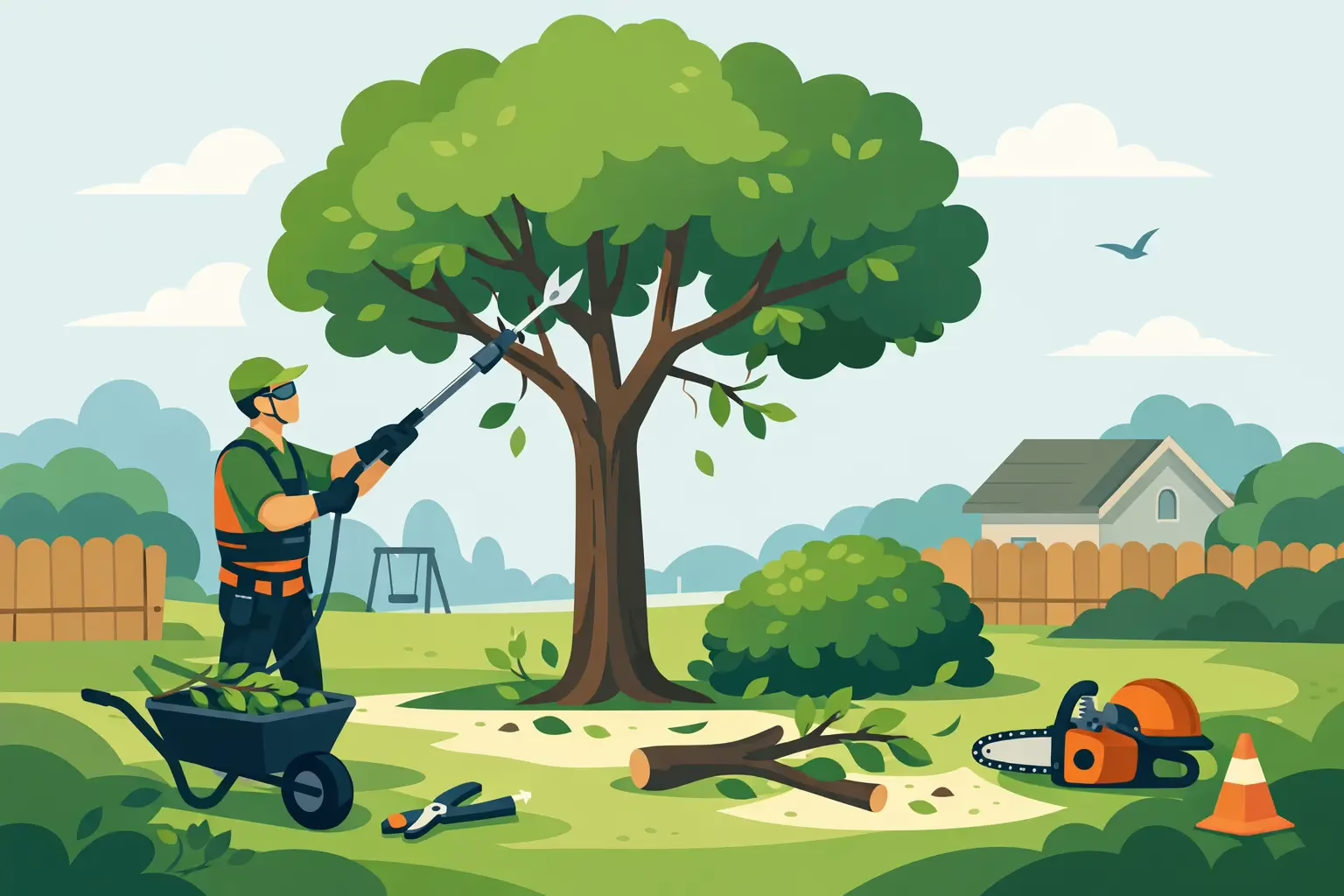
A limb hanging over your roof is easy to ignore until the wind picks up. The same goes for branches crowding power lines, rubbing against siding, or blocking light from the yard. Professional tree pruning services help solve those problems before they turn into property damage, safety hazards, or costly emergency work.
For homeowners and property managers, pruning is not just about appearance. Done correctly, it improves structure, reduces risk, and supports long-term tree health. Done poorly, it can weaken a tree, create unstable growth, and leave behind wounds that invite decay. That is why qualified pruning matters.
What tree pruning services actually include
Tree pruning is a targeted process, not random branch cutting. A professional crew evaluates the species, size, age, condition, and location of the tree before making any cuts. The goal is to remove what should go while preserving the strength and natural form of the tree.
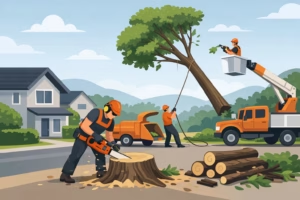
In most residential settings, tree pruning services are used to remove dead, diseased, broken, or crossing limbs. They are also used to reduce overextended branches, clear roofs and driveways, open up sightlines, and improve spacing in the canopy. On younger trees, pruning may focus more on training strong structure. On mature trees, the work often centers on risk reduction and weight management.
The right approach depends on the tree and the setting. A maple near a home may need crown thinning to reduce sail effect in storms. A street-facing ornamental tree may need selective shaping for clearance and visibility. A large conifer with storm-damaged limbs may require immediate hazard pruning. Good service is never one-size-fits-all.
Why professional pruning matters
Pruning looks simple from the ground. In practice, it combines safety planning, climbing or lift work, species knowledge, and proper cutting techniques. Every cut affects how the tree responds.
Improper cuts can do more harm than the original problem. Topping, over-thinning, flush cuts, and excessive limb removal can stress the tree and lead to weak regrowth. That may leave the tree more likely to fail later, especially during heavy rain, snow, or wind. In the Pacific Northwest, where storm systems can arrive fast, that risk is not theoretical.
Professional pruning also protects the people and property around the tree. Crews should work with a clear understanding of drop zones, rigging, fall protection, and equipment safety. That is especially important around homes, fences, garages, vehicles, and utility corridors. When a company follows recognized industry standards and safe work practices, customers can feel more confident that the job will be done correctly.
Signs you may need tree pruning services
Some pruning needs are obvious. A split limb, dead branch, or canopy pushing into your roofline usually gets attention quickly. Other signs are easier to miss until the tree becomes a larger issue.
If branches are rubbing together, you may hear or see bark damage where the limbs cross. If one side of the crown is getting too heavy, the tree may start to look unbalanced. If lower limbs are sagging over walkways, driveways, or patios, clearance becomes both a usability and safety concern. Dense canopies can also block airflow and sunlight, which may contribute to moisture retention and make fungal issues worse in some species.
Trees near structures deserve extra attention. Branches that touch a roof can damage shingles and create access points for pests. Limbs too close to siding or windows can scrape during wind events. Trees close to service lines or neighboring property lines often need careful, controlled pruning before they become a dispute or a hazard.
Tree pruning services and storm risk
Storm damage cleanup often begins with a problem that routine pruning could have reduced. That does not mean every failure is preventable. Trees are living structures, and weather can be unpredictable. Still, regular pruning can lower the chances of broken limbs and canopy overload.
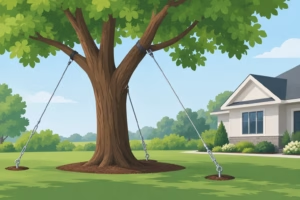
Weak branch unions, deadwood, overextended limbs, and dense crowns are common contributors to storm damage. Selective pruning can reduce excess weight, remove compromised branches, and improve how wind moves through the canopy. For some trees, structural support such as cabling and bracing may also be worth considering when pruning alone is not enough.
This is where experience matters. A crew should know when pruning is the right answer, when support systems are appropriate, and when a tree may be too compromised to keep safely. Honest recommendations protect both the customer and the property.
Timing matters, but urgency matters too
One of the most common questions is when a tree should be pruned. The answer depends on species, health, and the reason for the work. Some trees respond best to pruning during dormancy. Others can be pruned safely at different times of year, especially when the priority is hazard reduction.
If a branch is cracked, hanging, or threatening a structure, waiting for the ideal season is usually not the right call. Immediate safety concerns come first. On the other hand, if the goal is routine maintenance or growth management, a professional can recommend the best timing for the tree’s condition and long-term health.
Homeowners should also be cautious about delaying obvious issues. A limb that seems stable in dry weather may fail under heavy rain or wind. Pruning early is often more affordable and far less stressful than emergency response after damage has already occurred.
What quality tree pruning services should look like
A reliable pruning job starts before the first cut. The company should assess the tree, explain the scope of work, and be clear about the intended outcome. Customers should understand whether the focus is clearance, health, weight reduction, structure improvement, or hazard removal.
On-site professionalism matters too. Crews should arrive with the right equipment, protect the surrounding property, and work with attention to safety from start to finish. For higher-risk jobs, especially near structures or elevated targets, compliance with recognized standards such as ANSI practices and OSHA safety requirements is a strong sign that the company takes the work seriously.
Clean-up is also part of the service. Branches, brush, and debris should not be left piled across the lawn unless that has been discussed in advance. A quality company leaves the property safer and more usable than it was before the job started.
Not every tree needs aggressive pruning
More cutting does not mean better results. In fact, over-pruning is a common problem. Removing too much canopy at once can stress the tree, reduce energy production, and trigger weak regrowth. That can create a cycle where the tree becomes more difficult and more expensive to manage over time.
Good pruning is selective. It respects the species, the natural growth habit, and the limits of what the tree can tolerate. Sometimes the best recommendation is light maintenance now and reevaluation later. In other cases, a tree that has been neglected for years may need staged work over more than one visit.
That kind of judgment is part of professional tree care. It is also one reason property owners should be cautious about hiring solely on the lowest price. Cheap cutting can become expensive correction.
Choosing a local company for tree pruning services
When you hire a tree service, you are trusting a crew to work around some of the most valuable parts of your property. Reliability matters. So does local knowledge.
A company serving Vancouver, Washington and nearby communities should understand regional weather patterns, common residential tree issues, and the practical concerns homeowners face after storms or during seasonal growth surges. Responsive scheduling, clear communication, and fair pricing all matter, but they mean more when backed by real field experience and a strong safety culture.
M & R Tree Services approaches pruning the way it should be approached – as skilled arboricultural work that protects your home, improves your landscape, and reduces future risk. For customers who want dependable service without guesswork, that level of professionalism makes a difference.
When to make the call
If a tree is overgrown, unbalanced, damaged, or getting too close to your home, it is worth having it evaluated now rather than later. Pruning is often most effective when problems are still manageable. Waiting usually gives the tree more time to create a larger, more expensive issue.
A well-pruned tree should not look butchered or bare. It should look safer, healthier, and better suited to the space around it. That is the value of professional tree pruning services. They are not just about cutting branches. They are about protecting what is underneath them.