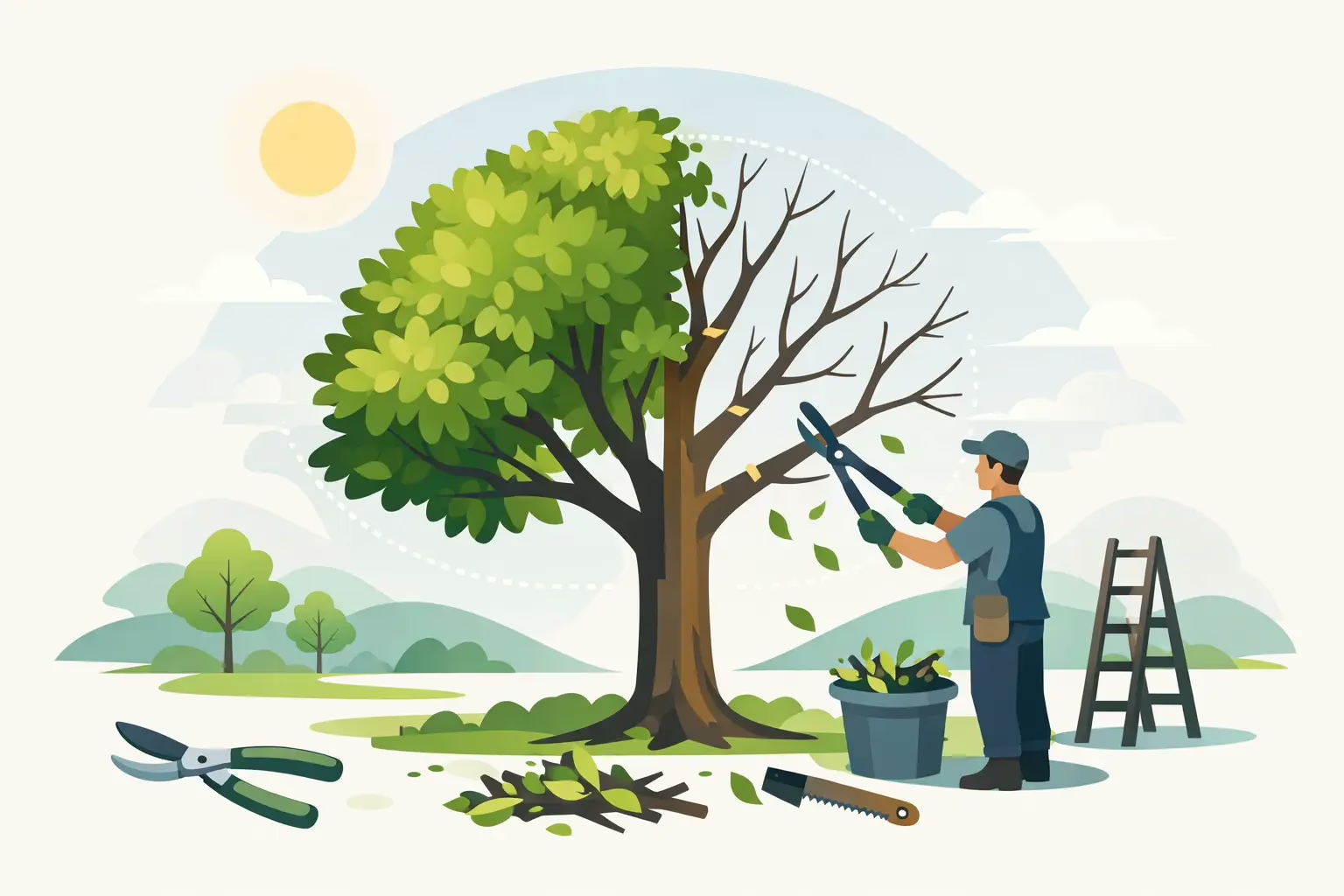
If a tree on your property is starting to look overgrown, dropping limbs, or reaching too close to your roof, timing matters more than most people realize. Prune at the wrong time, and you can stress the tree, reduce flowering, or create avoidable safety risks. Prune at the right time, and you improve structure, appearance, and long-term health.
When should a tree be pruned?
For many trees, the best time to prune is during the dormant season, usually in late winter to early spring before new growth begins. At that point, the tree is not spending energy on leaves or active growth, and cuts are often easier for the tree to manage as the growing season begins.
That said, there is no one answer that fits every species or every property. The right timing depends on the tree type, its age and condition, the reason for pruning, and whether there is an immediate hazard. A dead limb over a driveway should not wait just because the calendar says it is not the ideal season.
Why timing matters
Pruning is not just about appearance. Every cut affects how a tree responds. Well-timed pruning can encourage healthy growth, improve branch spacing, reduce weight on weak limbs, and help a tree stay clear of structures and traffic areas.
Poor timing can do the opposite. It may leave a tree more vulnerable to pests, slow recovery, increase sap loss in some species, or remove buds that would have produced seasonal flowers. In some cases, heavy pruning at the wrong time can also trigger weak, fast regrowth that creates new structural problems.
For homeowners and property managers, the goal is simple – keep trees safe, healthy, and appropriate for the space they occupy. That is why pruning decisions should be based on both tree biology and site conditions.
The best time of year for most pruning
Late winter is often the preferred window for structural pruning on many deciduous trees. With leaves gone, it is easier to see the branch framework and identify crossing limbs, weak attachments, and deadwood. Trees also tend to respond well as spring growth starts.
Early spring can still be a good time, especially before full leaf-out. In many cases, this is when homeowners notice issues after winter weather and start planning seasonal maintenance.
Summer pruning can also have a place. It is often useful for removing damaged limbs, reducing light growth, or slowing overly vigorous branches. But heavy pruning during hot, dry periods can add stress, especially if a tree is already dealing with drought, compacted soil, or pest pressure.
Fall is usually not the first choice for major pruning. Many trees are beginning to slow down, and cuts may not seal as effectively before wet, cold weather arrives. In the Pacific Northwest, that matters. Moist conditions can make timing more important, especially for trees that are already under stress.
When should a tree be pruned for safety?
If a limb is dead, cracked, hanging, storm-damaged, or interfering with a structure, pruning should happen as soon as it can be done safely. Hazard reduction does not follow an ideal seasonal schedule.
This is especially true after windstorms, heavy rain, or snow and ice events. Trees may look stable from the ground while hiding split unions, partially failed branches, or root movement. Waiting too long can turn a manageable issue into property damage or an emergency call.
In those cases, the question is less about the best season and more about safe assessment. A qualified tree care team can determine whether the problem calls for selective pruning, structural support, or full removal.
Different trees have different pruning windows
Flowering trees often need more careful timing than shade trees. If a tree blooms on old wood, pruning too late can remove the buds that would have opened in spring. In those cases, pruning soon after flowering is often the better option.
Fruit trees are another category where timing and technique matter. Pruning affects airflow, sun exposure, fruit production, and branch strength. A poor cut in the wrong spot can lead to weak growth or reduced yield.
Evergreens are also different from deciduous trees. Some tolerate shaping well, while others do not respond well to aggressive cuts into older wood. That is one reason topping or random shearing is rarely the right approach.
Because species vary so much, broad advice only goes so far. If you are dealing with mature trees near a home, fence line, driveway, or neighboring property, it is worth getting the timing right the first time.
Signs your tree should be pruned now
You do not need to know the exact species to spot warning signs that a tree needs attention. Dead branches, rubbing limbs, low clearance over walkways, branches contacting the house, and canopy sections that look split or unbalanced are all reasons to schedule an inspection.
Fast-growing trees often need periodic pruning to maintain clearance and structure. Younger trees may benefit from formative pruning that helps prevent larger problems later. Mature trees may need selective thinning or weight reduction to reduce stress on major limbs.
A tree can also need pruning even when it still looks green and full. Dense interior growth, included bark, long overextended branches, and poor branch spacing are structural issues that may not stand out until a storm exposes them.
What homeowners should avoid
The biggest mistake property owners make is waiting until a tree becomes urgent. The second biggest is hiring someone who cuts without a clear pruning objective.
Good pruning is selective. It should improve structure, health, or clearance while preserving the natural form of the tree. Over-pruning can weaken the canopy, expose bark to sun damage, and stimulate unstable regrowth. Topping is one of the clearest examples. It may seem like a fast fix for height, but it often creates larger safety and health issues over time.
There is also the safety side. Trees near power lines, roofs, garages, or shared property lines should not be handled casually. Large limbs carry significant weight, and tension in storm-damaged wood is not always visible. Professional equipment and proper work practices matter.
Pruning in Vancouver, WA conditions
Local climate plays a role in timing. In the Vancouver, Washington area, trees deal with wet winters, occasional wind events, and long growing seasons. That means trees can put on substantial growth, and defects may become more noticeable after storms.
It also means there is no one-month answer that works for every yard. A healthy ornamental tree in a sheltered backyard may have a different pruning window than a large mature maple overhanging a driveway or a conifer showing storm damage near a fence.
At M & R Tree Services, pruning decisions are based on the tree, the season, and the risk involved – not just a generic rule. That approach helps property owners avoid unnecessary cuts while addressing the issues that actually affect safety and tree performance.
How often should trees be pruned?
That depends on age, species, growth rate, and location. Young trees may need more frequent structural pruning to guide healthy development. Mature trees often benefit from periodic evaluations rather than routine cutting on a fixed schedule.
Some trees may go several years between pruning visits. Others, especially fast-growing trees near homes or access areas, may need more regular attention. The right interval is based on condition and risk, not just appearance.
If you are unsure whether your tree needs work now or later, an on-site evaluation is the best next step. It is far easier to plan pruning than to respond to a failed limb after the fact.
The right time is before a small problem becomes a costly one
So when should a tree be pruned? Usually during dormancy for general health and structure, immediately when there is a safety concern, and according to species needs when flowering or fruit production is a factor.
If you have a tree that looks overgrown, damaged, or too close to your home, waiting rarely improves the situation. The better move is to have it evaluated by a qualified team that can recommend the right timing and the right scope of work for your property.
A well-pruned tree should look natural, stay safer in rough weather, and fit its space without becoming a constant concern.