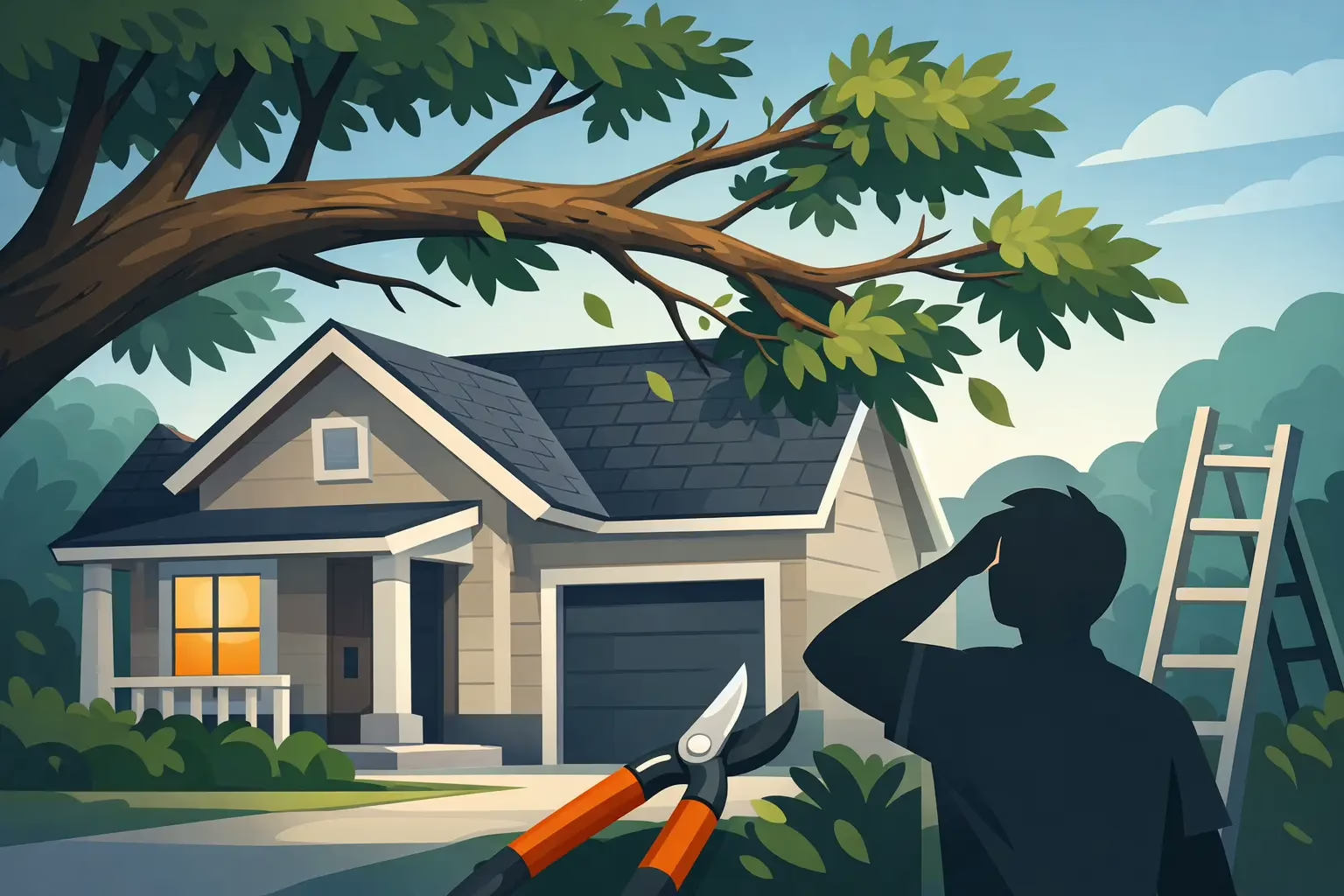
A limb can look harmless for years right up until the first hard wind, heavy rain, or wet spring snow puts real weight on it. When you have tree branches hanging over house structures, the question is not just how it looks. The real issue is risk to your roof, gutters, siding, windows, and the people inside.
For homeowners in Vancouver, Washington and nearby areas, overhanging limbs are a common concern. Mature trees add shade, privacy, and value to a property, but branches that extend over a home need closer attention than branches growing out over a yard. The stakes are simply higher.
Why tree branches hanging over house areas are a bigger problem
A branch over open lawn may drop leaves, twigs, or even a small limb without causing much damage. A branch over a roof is different. Even routine movement from wind can scrape shingles, wear down roofing materials, clog gutters, and create entry points for water over time.
The branch itself is only part of the issue. Trees are living structures, and risk changes with species, age, past pruning, storm exposure, and internal decay that may not be visible from the ground. A limb that appears solid can still be weak at the attachment point, hollow in sections, or overloaded by uneven growth.
That is why overhanging branches should be evaluated based on condition, structure, and location, not just size alone.
What makes an overhanging branch hazardous
Not every limb over a roof needs to be removed. In some cases, selective pruning is enough to create proper clearance and reduce weight. In other cases, the branch is a sign of a larger structural problem with the tree.
One common warning sign is contact. If limbs are touching shingles, rubbing siding, pressing against gutters, or hanging close enough to strike the home during wind, the risk is already active. You may also notice cracked bark where a limb joins the trunk, dead wood in the canopy, or branches that have grown long and heavy beyond their natural support.
Storm history matters too. Trees that have lost limbs before, leaned more over time, or show splitting after wind events deserve immediate attention. Fast-growing species can create long, extended branches that look full and healthy but develop weak attachment angles. Older trees may have internal decline that is not obvious until a major limb fails.
A branch does not have to fall completely to cause expensive damage. Repeated scraping and moisture retention can shorten the life of roofing materials. Leaves and small debris can cause drainage problems that lead to gutter overflow and rot around fascia boards.
Signs you should call a tree professional soon
If you are trying to decide whether this is urgent, a few conditions usually move it out of the wait-and-see category. Dead or hanging limbs, visible cracks, storm-damaged branches, limbs resting on the roof, or branches suspended over bedrooms, driveways, or entry points should be inspected promptly.
The same is true if the tree canopy is becoming unbalanced. When one side stretches heavily over the house, the issue may involve more than simple trimming. Weight distribution, trunk movement, and root stability can all affect whether pruning alone is the right fix.
This is where professional evaluation matters. Proper tree care is not just about cutting back what looks too long. It requires understanding how much can be pruned safely, where reduction cuts should be made, and whether the tree can remain healthy and structurally sound afterward.
Why DIY is a bad bet around a roofline
Overhanging limbs are one of the most common situations where homeowners underestimate the complexity of the work. From the ground, the job can look simple. Once ladders, power lines, roof angles, rigging, and branch weight come into play, it becomes a high-risk operation.
Improper cuts can make the tree less stable, encourage weak regrowth, or create wounds that invite decay. Poor technique can also shift weight unexpectedly and send a limb into the roof instead of away from it. That is especially true when branches are large, decayed, or entangled with nearby limbs.
For work above homes, safety standards are not a formality. They are the difference between controlled pruning and costly property damage. A qualified tree company should approach this work with proper equipment, a clear plan, and practices aligned with ANSI standards and OSHA regulations.
Pruning, cabling, or removal – what depends on the tree
There is no single answer for every tree branches hanging over house situation. The right solution depends on the species, health, structure, and how close the limbs are to the home.
If the tree is healthy and the issue is limited to a few extended limbs, professional pruning may solve the problem. Strategic reduction can improve clearance, reduce end weight, and lower the chance of failure without over-thinning the canopy.
If the tree has a valuable structure but shows weakness at a union or major limb, cabling or bracing may be worth considering. Structural support systems can help reduce movement and relieve stress in select situations. They are not a cure-all, but for the right tree, they can extend safe retention.
If the tree has extensive decay, repeated storm damage, severe lean, or major structural defects, removal may be the safer long-term decision. That can be a difficult call for homeowners who want to preserve mature trees, but protecting the home and the people around it has to come first.
Seasonal risk in the Pacific Northwest
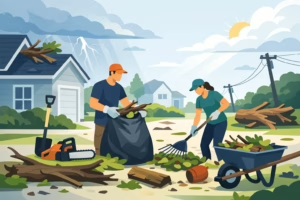
In this region, overhanging branches deserve attention before storm season rather than after it. Rain-saturated wood, strong wind, and occasional snow or ice loading can expose weaknesses quickly. A branch that has tolerated summer conditions may fail in winter when the canopy is heavier and movement is more severe.
Spring and summer growth can also create new clearance issues faster than many property owners expect. Trees that were not touching the roof a year ago may now be close enough to scrape or drop debris consistently. Regular inspection helps catch that change before it turns into emergency service.
For landlords and property managers, this is especially important. If a branch is clearly hazardous and hangs over a residence, delaying action can increase both property risk and tenant concerns.
What a professional inspection should cover
A good inspection goes beyond measuring how far a limb extends over the roof. It should look at branch attachment points, deadwood, canopy density, previous pruning cuts, signs of decay, trunk condition, and overall tree balance.
The surrounding site matters too. Nearby utility lines, driveway access, fencing, roof slope, and neighboring structures all affect how the work should be performed. In some cases, the safest solution involves sectional removal with controlled rigging rather than simple cut-and-drop trimming.
Homeowners also benefit from honest guidance about timing. Some issues need immediate action. Others can be scheduled as preventive maintenance. What matters is getting a clear assessment before a close call becomes a claim.
Choosing the right company for the job
When a branch is hanging over your house, this is not the time to shop by price alone. You want a company that treats safety, property protection, and tree health as part of the same job.
Ask whether the crew is experienced with residential pruning over structures. Ask how they plan to protect the roof, landscaping, and surrounding property. Make sure they understand proper pruning standards, not just basic cutting. For more serious structural concerns, it also helps to work with a team that can advise on support systems, storm response, and removal if conditions warrant it.
For local homeowners who want dependable service, M & R Tree Services handles pruning, removal, storm cleanup, and structural support with a strong focus on safe, professional work. You can learn more at https://mandrtreeservices.com/.
A branch over your roof may stay quiet for years, but waiting for obvious failure is rarely the best plan. If something looks too close, too heavy, or simply not right, trust that instinct and get it looked at before the next storm tests it for you.