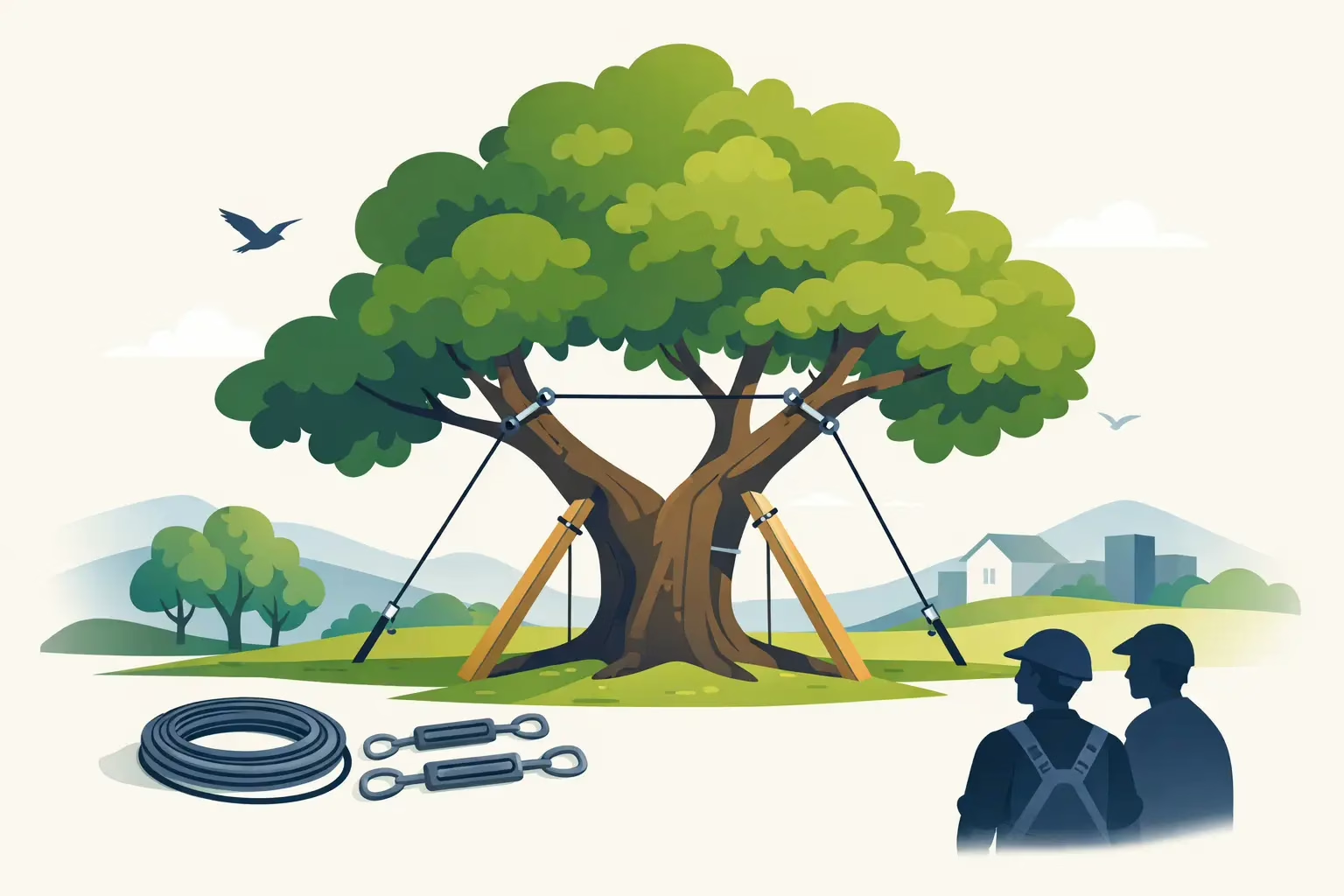
A mature tree can add shade, privacy, and curb appeal for decades – until one weak attachment point or split stem turns it into a real concern. If you have a valued tree with heavy limbs, a wide canopy, or visible structural weakness, waiting through another windstorm is not a plan. In many cases, a professional tree cabling and bracing service can reduce risk and help preserve a tree that might otherwise fail.
Tree support systems are not a cosmetic fix. They are a specialized arboricultural service used to improve stability in trees with specific structural problems. The goal is often to keep a healthy, important tree standing safely for longer while reducing the chance of limb or stem failure.
What a tree cabling and bracing service actually does
Cabling and bracing are related, but they are not the same thing. Cabling typically involves installing flexible steel cables high in the canopy to limit how far weak limbs or co-dominant stems can move during wind or heavy loading. Bracing usually involves threaded rods installed through a split, crack, or weak union to add rigid support where the tree needs reinforcement.
Used correctly, these systems can reduce stress on vulnerable parts of the tree. They do not make a defective tree perfect, and they do not guarantee a tree will never fail. What they can do is lower the likelihood of failure when the tree is otherwise worth preserving and still has the health and structure to justify support.
That distinction matters. A support system is only effective when it is selected for the right tree, installed properly, and paired with pruning and ongoing monitoring. A tree with advanced decay, severe root problems, or major storm damage may not be a good candidate for support at all. In those cases, removal may be the safer option.
Signs your tree may need cabling and bracing
Some warning signs are obvious, while others are easy to miss from the ground. One of the most common issues is co-dominant stems – two trunks or major leaders growing from the same point with a tight attachment. These unions often trap bark between stems, which creates a weak connection that can split apart under load.
Long, overextended limbs are another common concern, especially on mature shade trees. A limb may be healthy overall but still carry too much weight too far from the trunk. Cracks where major limbs attach, a history of storm-related limb drop, and visible separation in the canopy can also point to structural weakness.
Sometimes the issue is about the tree’s value to the property. If a large tree shades the house, anchors the landscape, or stands near a driveway, fence, or roofline, support may be worth considering before failure becomes an emergency. A professional inspection can determine whether support, pruning, removal, or a combination of services makes the most sense.
When support makes sense – and when it does not
The best candidates for cabling and bracing are often mature trees with good overall health and one or two identifiable structural defects. In that situation, support can extend the useful life of the tree and reduce hazard exposure without removing a major landscape asset.
But there are trade-offs. Cabling and bracing are not one-time fixes you forget about forever. Trees continue to grow, react to weather, and change over time. Support systems need periodic inspection, and the tree may still need pruning to reduce end weight and improve canopy balance.
There are also cases where support is not the responsible recommendation. If decay has significantly weakened the trunk, if root damage has compromised stability, or if the tree is already failing, hardware will not solve the underlying problem. A trustworthy company should tell you when a tree is no longer a good candidate for preservation.
Why professional installation matters
A tree support system is only as good as the assessment behind it. Installing cables too low, bracing the wrong point, or supporting a tree that should have been removed can create a false sense of security. This is one reason homeowners and property managers should not treat cabling as a hardware job. It is tree risk management.
Professional arboricultural work involves looking at species, growth pattern, defect type, limb weight, target area, and the tree’s overall condition before any hardware goes in. Installation should also be performed with safety procedures and work practices that align with recognized industry standards. For property owners, that means less guesswork and more confidence that the recommendation fits the actual condition of the tree.
At M & R Tree Services, the focus is on safe, reliable work that follows ANSI standards and OSHA regulations. That matters with any tree service, but especially with structural support work where both climbing safety and correct installation affect the outcome.
What to expect from a tree cabling and bracing service
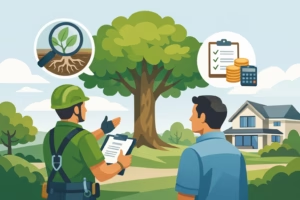
The process usually starts with an on-site evaluation. A trained professional looks at the tree’s structure, visible defects, surrounding targets, and whether the tree is worth retaining. Not every weak tree should be cabled, and not every heavy limb needs a brace rod. The recommendation should be specific to the tree in front of you.
If cabling or bracing is appropriate, the service may also include selective pruning. This step is often important because reducing excess weight can lower stress on the weak attachment or cracked area. In many situations, pruning and support work together better than either one alone.
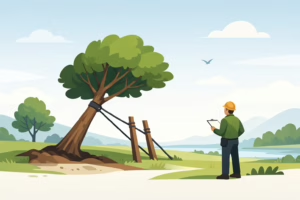
Installation itself depends on the defect being addressed. A dynamic or static cable may be placed higher in the canopy to limit movement between stems or limbs. Brace rods may be installed through a split union or cracked branch attachment to reinforce a weak point. The exact hardware and placement vary based on the tree’s size, condition, and structural needs.
After installation, the job should not be treated as finished forever. Trees with support systems should be re-evaluated periodically, especially after storms or as they continue to grow. Hardware may need inspection, adjustment, or replacement over time.
Common situations around homes and small properties
In residential settings, support systems are often recommended for large trees near homes, garages, driveways, patios, and play areas. A heavy leader hanging over a roof is a different level of concern than the same defect over an open lawn. Risk is not just about the tree. It is also about what the tree could hit if it fails.
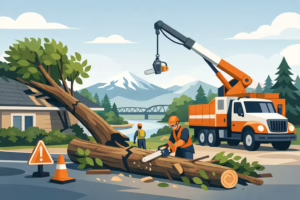
Property managers and landlords often deal with another factor: liability. If a visible structural problem has already been noticed, delaying action can become expensive. A planned tree cabling and bracing service is usually far easier to manage than emergency storm cleanup, property damage, or a tenant safety issue.
Vancouver and the surrounding area also see weather patterns that can expose weak unions and overextended limbs. Wind, saturated soil, and seasonal storms all increase the value of proactive inspections. A tree may look stable in calm weather and still have a defect that shows up under pressure.
How cabling compares with pruning or removal
Homeowners sometimes ask whether support is better than pruning or cheaper than removal. The honest answer is that it depends on the tree and the risk. Pruning can reduce weight and improve structure, but it cannot always compensate for a cracked union or a weak co-dominant stem. Cabling and bracing can add support, but they do not remove decay or correct every hazard.
Removal is sometimes the safest and most cost-effective recommendation, especially when a tree has multiple serious defects or poor overall health. On the other hand, if the tree is mature, healthy, and important to the property, preserving it with structural support may be the better long-term decision.
That is why a one-size-fits-all answer does not work here. Good tree care balances safety, tree health, site conditions, and the owner’s goals.
Choosing the right company for support work
If you are comparing service providers, ask how they evaluate structural defects and whether they follow ANSI standards and OSHA regulations. Ask whether pruning is part of the recommendation and what kind of follow-up inspections are advised. A credible company should be comfortable explaining why support is appropriate, where hardware will go, and what limitations the system has.
You also want a company that understands local properties and responds clearly when safety is involved. Tree support work is not just about preserving a tree. It is about protecting the people, structures, and spaces around it while making a sound long-term decision.
If you have a tree that looks questionable but still seems worth saving, getting it inspected before the next storm is the smart move. The right support system, installed for the right reason, can make a meaningful difference – and if support is not the answer, it is better to know that now than after a limb comes down.