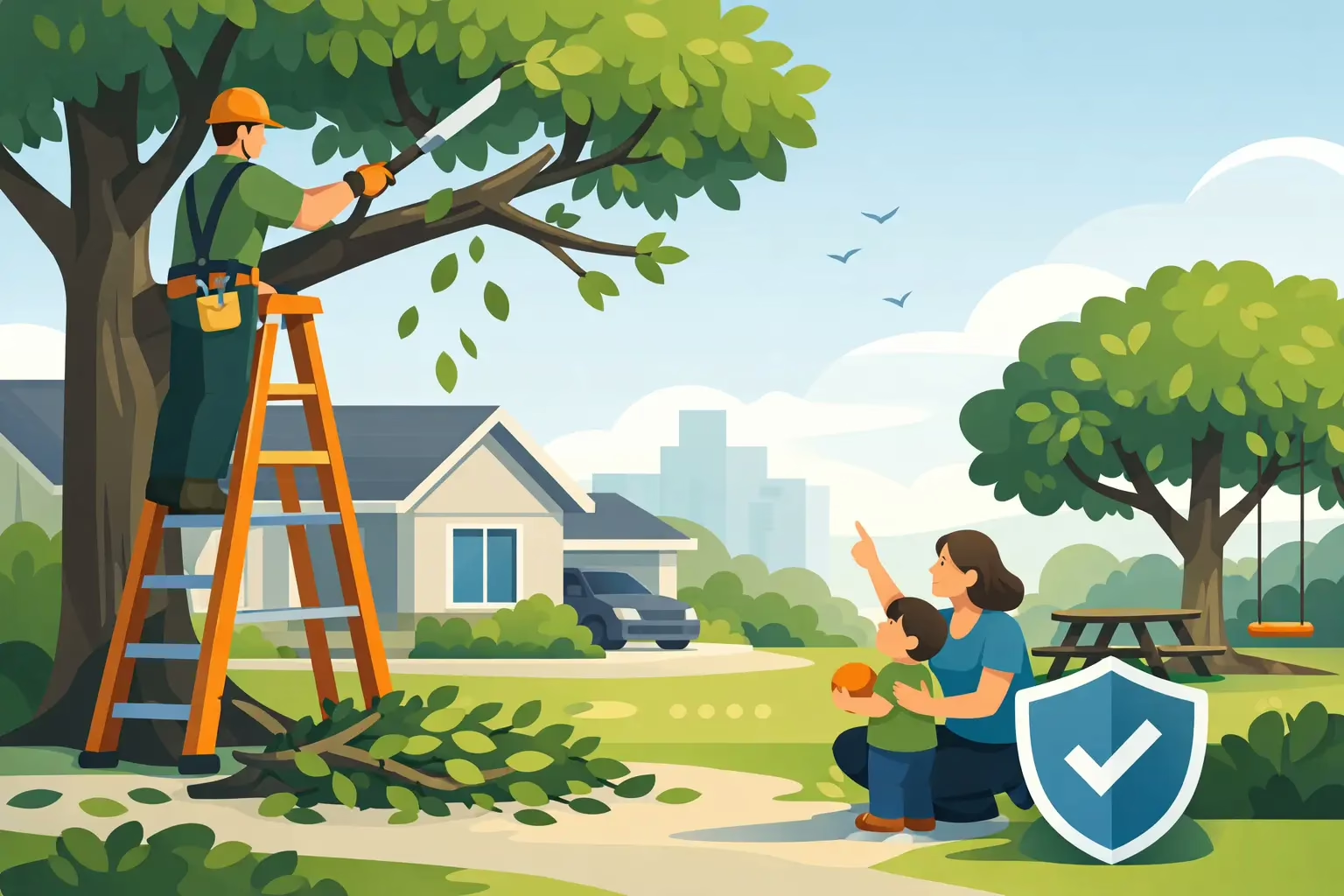
A heavy limb does not usually give much warning before it comes down. It may look fine from the ground, then fail during a windstorm, overhang a driveway, or crack over a roofline without much notice. That is exactly how tree pruning improves safety – it removes risk before it turns into property damage, injury, or an emergency call.
For homeowners and property managers, pruning is not just about appearance. A well-maintained tree is less likely to drop deadwood, scrape a structure, block sightlines, or place extra weight on weak branch unions. When pruning is done correctly, it supports the long-term structure of the tree while making the surrounding property safer for people, vehicles, and buildings.
How tree pruning improves safety around your property
The most immediate safety benefit is the removal of dead, dying, cracked, or hanging limbs. These branches are often the first to fail under wind, rain, or snow load. In the Pacific Northwest, where wet weather and seasonal storms can add stress to already vulnerable trees, those limbs can become serious hazards over homes, fences, parked cars, and walkways.
Pruning also reduces contact between trees and structures. Branches that rub against a roof, siding, gutters, or windows may seem minor at first, but they can create ongoing damage and become more dangerous during storms. A limb that presses against a roofline in calm weather can break or shift suddenly when wind picks up.
Another key issue is visibility. Overgrown trees can block sightlines near driveways, sidewalks, intersections, and entry points. That creates avoidable risk for pedestrians, drivers, delivery vehicles, and anyone entering or leaving the property. Strategic pruning helps restore clear views without removing the value and shade a tree provides.
The hazards pruning can prevent
Not every tree poses the same level of risk, and not every branch should be cut. Safety-focused pruning starts with identifying what is structurally unsound, poorly positioned, or likely to fail.
Deadwood and weakened branches
Dead branches are among the most common tree hazards on residential properties. They become brittle over time and can fall with little force. Even a smaller limb can cause injury if it drops over a patio, play area, or front walk. Larger deadwood over a house or garage raises the stakes considerably.
Weakened branches are another concern. These may be damaged by storms, insects, decay, or previous improper cuts. Sometimes they are still alive, which makes them easy for property owners to miss. A professional inspection can often spot cracks, included bark, cavity formation, and other signs of failure before a branch breaks.
Overextended limbs over roofs and driveways
Long, heavy limbs that stretch beyond the tree’s balanced canopy can place excess stress on attachment points. The farther a branch extends, the more leverage and weight it carries. If that limb reaches over a roof, driveway, or neighboring space, the exposure increases.
Pruning can reduce end weight and improve balance, but this is where experience matters. Cutting too much from one area can make the tree unstable or encourage weak regrowth. The goal is not to over-thin the canopy. It is to reduce risk while preserving sound structure.
Low clearance and obstructed access
Branches hanging too low over walkways, driveways, and service areas can interfere with normal use of the property. That may mean scraped vehicles, blocked access for larger trucks, or trip and visibility hazards near entrances.
In some cases, low limbs can also interfere with emergency access or utility visibility. While pruning near utility lines requires special caution and sometimes utility coordination, maintaining safe clearance elsewhere on the property helps reduce everyday risk and improves usability.
Why proper pruning is safer than reactive tree work
One of the biggest advantages of routine pruning is timing. It is usually safer, less costly, and less disruptive to manage a tree before it fails than after a branch has already come down. Emergency calls often happen after storm damage, structural breakage, or a near miss. At that point, the work is more urgent and conditions may be less stable.
Proactive pruning allows the tree to be evaluated under controlled conditions. That means better decision-making about which limbs to remove, which branches to reduce, and whether the tree has larger structural issues that pruning alone will not solve. Sometimes a tree needs cabling, bracing, or removal rather than another trim. A reliable assessment matters because safety is not improved by cosmetic cutting that leaves the real hazard untouched.
Good pruning supports tree health too
Safety and tree health are closely connected. Trees with strong branch structure, balanced growth, and properly spaced limbs are generally more resilient than trees that have been neglected or cut incorrectly. Pruning can help reduce competing stems, remove rubbing branches, and improve canopy structure so the tree is better able to handle wind and seasonal stress.
That said, more cutting is not always better. Over-pruning can weaken a tree, expose it to sunscald, trigger excessive sucker growth, and create new defects over time. Topping is a common example of harmful cutting that can make a tree more dangerous, not less. It often leads to fast-growing, poorly attached shoots that are more prone to failure.
This is why professional pruning should follow accepted industry practices. Work performed to ANSI standards and with OSHA-focused safety procedures helps protect both the property and the crew doing the work. For homeowners, that translates to more confidence that the job is being handled correctly.
When a tree may need pruning for safety
Some signs are obvious, like a broken limb hanging in the canopy or branches touching the roof. Others are less visible from the ground.
If you notice dead branches, limbs extending too far over your home, repeated storm debris, blocked sightlines, or branch unions that look split or tight, it is worth having the tree evaluated. Trees near driveways, play areas, sidewalks, and structures deserve especially close attention because the consequences of failure are higher.
Season also matters, but safety concerns should not wait for an ideal pruning window. If a branch is cracked, hanging, or threatening a structure, prompt service is more important than timing for appearance. On the other hand, non-urgent pruning can often be scheduled in a way that supports the tree’s species, condition, and long-term health.
Why local conditions matter in Vancouver and nearby areas
In Vancouver, Washington and surrounding communities, trees are exposed to wet soil, strong seasonal weather, and periods of wind that can test weak branch attachments. Fast-growing species may put on canopy weight quickly, especially when they have not been maintained for several years. Moss, moisture, and hidden decay can also make problems harder to spot from the ground.
That is one reason local experience matters. A pruning plan should reflect the species, the location of the tree, how close it is to structures, and how the property is used. A backyard shade tree over open lawn presents one level of risk. The same tree leaning over a driveway, deck, or rental unit presents another.
For homeowners and small property managers, the right approach is usually straightforward: address hazards early, avoid unnecessary cutting, and use a qualified team that understands safe pruning practices. At M & R Tree Services, that means approaching every job with the same priorities our customers care about most – safety, reliability, and work done to professional standards.
If a tree on your property is starting to crowd the roofline, drop dead limbs, or raise concern before the next storm, it is better to ask questions now than wait for damage later. A careful pruning assessment can prevent a much larger problem and help you feel more secure every time the weather turns.