A heavy limb rarely gives homeowners much warning when it finally comes down. One windy afternoon, a branch that looked fine from the driveway can end up on a roof, a fence, a parked car, or worse, near people. That is why knowing how to spot unsafe tree limbs matters. You do not need to diagnose every tree problem yourself, but you should know the signs that call for professional attention.
For homeowners and property managers, the goal is not DIY tree work. The goal is to recognize risk early enough to avoid emergency damage, injuries, and more expensive repairs later. A quick visual check from the ground can tell you a lot if you know what to look for.
How to spot unsafe tree limbs before they fail
The first thing to watch for is deadwood. Dead limbs often have no leaves during the growing season, brittle twigs, loose bark, and a dull gray appearance compared with healthy branches. If a limb looks dry, hollow, or sheds bark easily, it may already be structurally compromised.
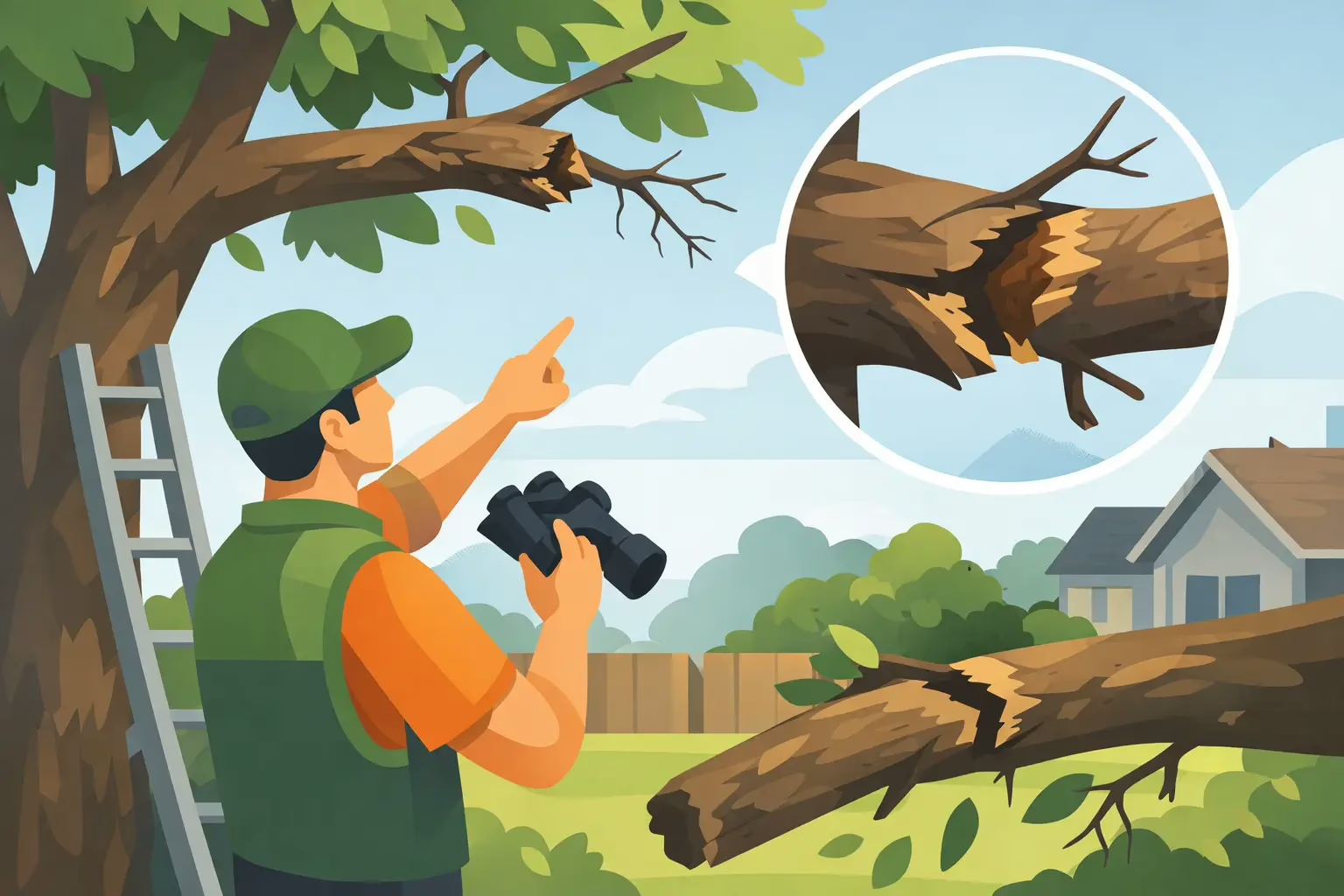
Cracks are another serious warning sign. A split along the branch itself, or at the point where the limb connects to the trunk, can mean failure is already in progress. Some cracks are obvious after wind or ice, while others are hidden by bark and only show as a seam, bulge, or separation line. If the branch appears to be pulling away from the tree, that is not something to monitor casually.
Pay attention to branches that sag more than they used to. Limbs can droop over time for harmless reasons, such as normal growth, but sudden or uneven sagging often points to excess weight, internal decay, or storm stress. This matters even more when the limb hangs over a house, driveway, sidewalk, play area, or neighboring property.
You should also look for broken stubs and torn branch attachments. When a tree has already lost one limb, the surrounding wood may be weakened too. A jagged tear where a branch snapped off can invite decay into the tree, which can spread beyond the original wound.
Common signs a limb may be unsafe
A branch does not have to be fully dead to be dangerous. In many cases, the problem is structural rather than obvious. One of the most common issues is included bark, which happens when two stems grow tightly together and bark gets trapped in the union instead of forming strong wood. From the ground, this may look like a narrow V-shaped attachment rather than a wider, stronger U-shaped one. These weak unions are more likely to split under wind, rain, or the weight of the limb itself.
Fungal growth can also signal trouble. Mushrooms or conks growing on or near a branch attachment may point to internal decay. Not every fungus means immediate failure, but it is never something to ignore. Tree limbs can look solid from the outside while the inside wood has already softened or hollowed out.
Leaf condition can offer clues too. If one large section of the canopy leafs out poorly, drops leaves early, or looks sparse compared with the rest of the tree, that branch may be in decline. The cause could be disease, root stress, or internal damage. It depends on the species and the season, but an uneven canopy is worth a closer look.
Insects can be part of the picture as well. Carpenter ants, beetles, and other wood-boring pests are often drawn to weakened or decaying wood. Their presence does not always cause the original issue, but it can confirm that a branch is no longer in sound condition.
Storm damage changes the risk fast
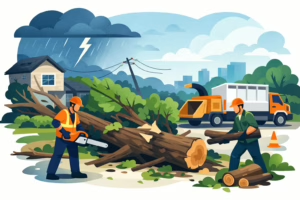
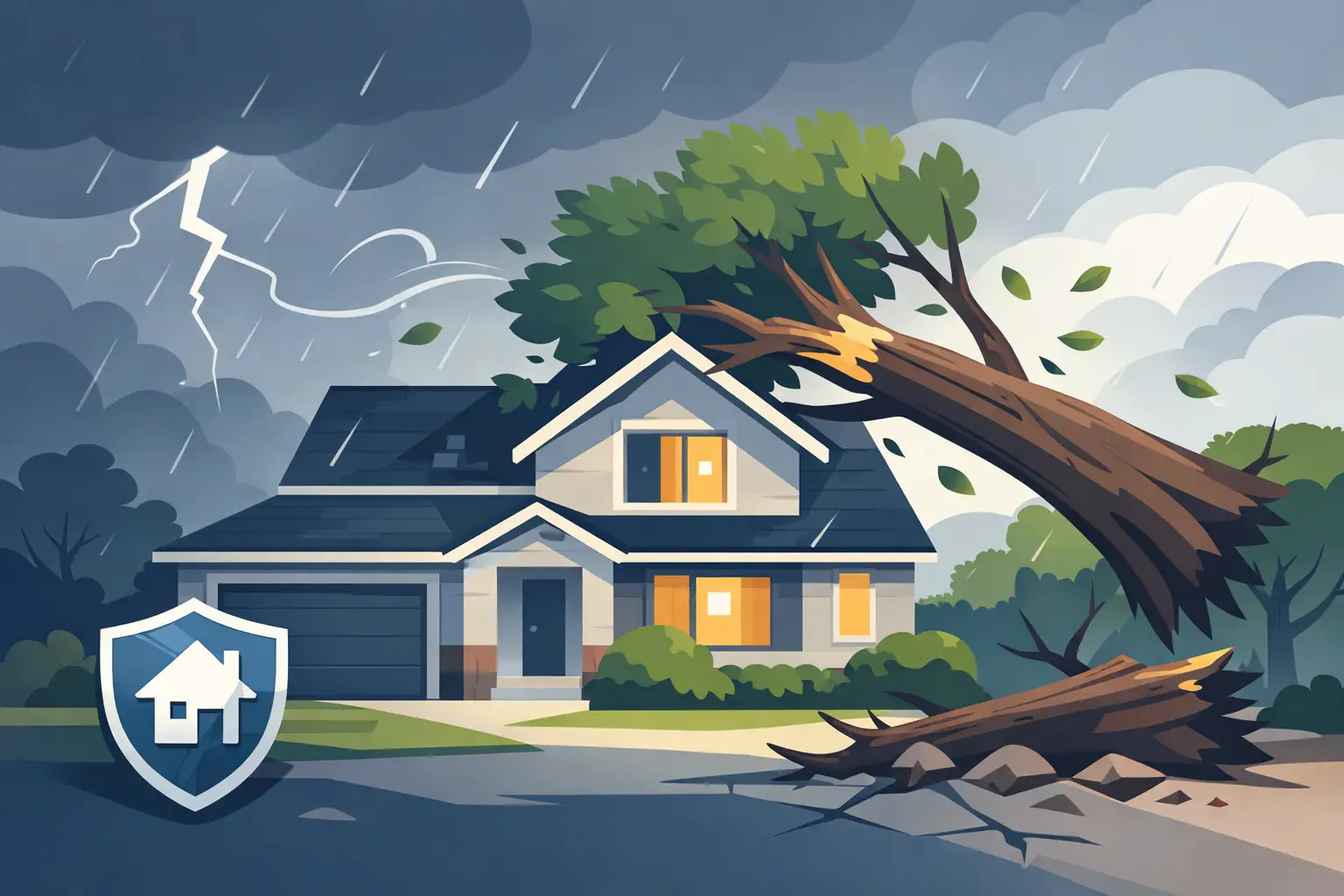
After wind, ice, or heavy rain, trees should be checked again even if nothing has fallen yet. Storm damage is not always dramatic. A limb may twist, crack, or partially separate without dropping right away. That delayed failure is what catches many property owners off guard.
Fresh splits, hanging branches, and limbs resting on other branches should all be treated as hazards. So should any branch that has shifted toward power lines, structures, or access areas. A tree can look mostly intact after a storm and still have one compromised limb ready to come down with the next gust.
This is where timing matters. Waiting a week or two can turn a manageable pruning job into an emergency call if the limb gives way. If you suspect recent damage, keep people away from the area and have the tree inspected promptly.
How to spot unsafe tree limbs near your house
Location changes the urgency. A questionable limb at the back edge of a large property is not the same as a questionable limb hanging over a bedroom, driveway, garage, or front walk. The same branch condition becomes more serious when there is a likely target underneath.
Branches over roofs deserve extra caution because even a moderate limb can damage shingles, gutters, skylights, and fascia. Over driveways and entry paths, the concern shifts to people and vehicles. Over play spaces, patios, and shared property lines, the liability risk rises too.
It is also worth looking at clearance around structures. Limbs rubbing against a roof or siding may not seem urgent, but repeated contact can weaken the branch and damage the building at the same time. Low limbs that obstruct visibility or access can create problems even before they fail.
What homeowners should not do
A lot of branch failures happen after people try to handle a risky situation themselves. If a limb is cracked, hanging, overextended, near a structure, or anywhere close to utility lines, do not try to cut it from a ladder. Home improvement tools are not a substitute for proper rigging, training, and safety procedures.
Even smaller branches can shift unpredictably once cut. Tension and compression inside the wood can cause a limb to spring, twist, or drop in a direction you did not expect. If decay is involved, the wood may fail earlier than it appears. That is why professional tree work is about much more than having a chainsaw.
If the branch is near power lines, stay clear and contact the utility company or a qualified tree service with the right training for that type of hazard. OSHA requirements, ANSI practices, and site-specific safety planning matter most when the risk is highest.
When it is time to call a professional
If you see deadwood larger than a few inches in diameter, visible cracking, a split branch union, hollow areas, fungal growth, storm damage, or a heavy limb over a target area, it is time to make the call. You do not need to wait until the situation becomes obvious to everyone on the block.
A qualified tree professional can assess whether the limb should be pruned, whether the tree needs structural support such as cabling or bracing, or whether the larger issue is tree decline that requires removal. Sometimes the answer is straightforward. Other times, it depends on species, load distribution, previous pruning, root condition, and the defect itself.
That is one reason property owners benefit from experienced help instead of guesswork. A branch that looks alarming may be manageable with proper pruning, while a limb that looks ordinary may be one storm away from failure.
At M & R Tree Services, we often talk with homeowners who noticed something felt off but were not sure if it was serious. That instinct is worth listening to. If a limb looks different, sounds hollow when struck, or has changed after a storm, there is value in having it checked before it becomes an emergency.
Tree safety is rarely about one perfect rule. It is about spotting patterns early, respecting the limits of what can be judged from the ground, and acting before gravity makes the decision for you. If something in your canopy does not look right, trust that concern and get a professional opinion.