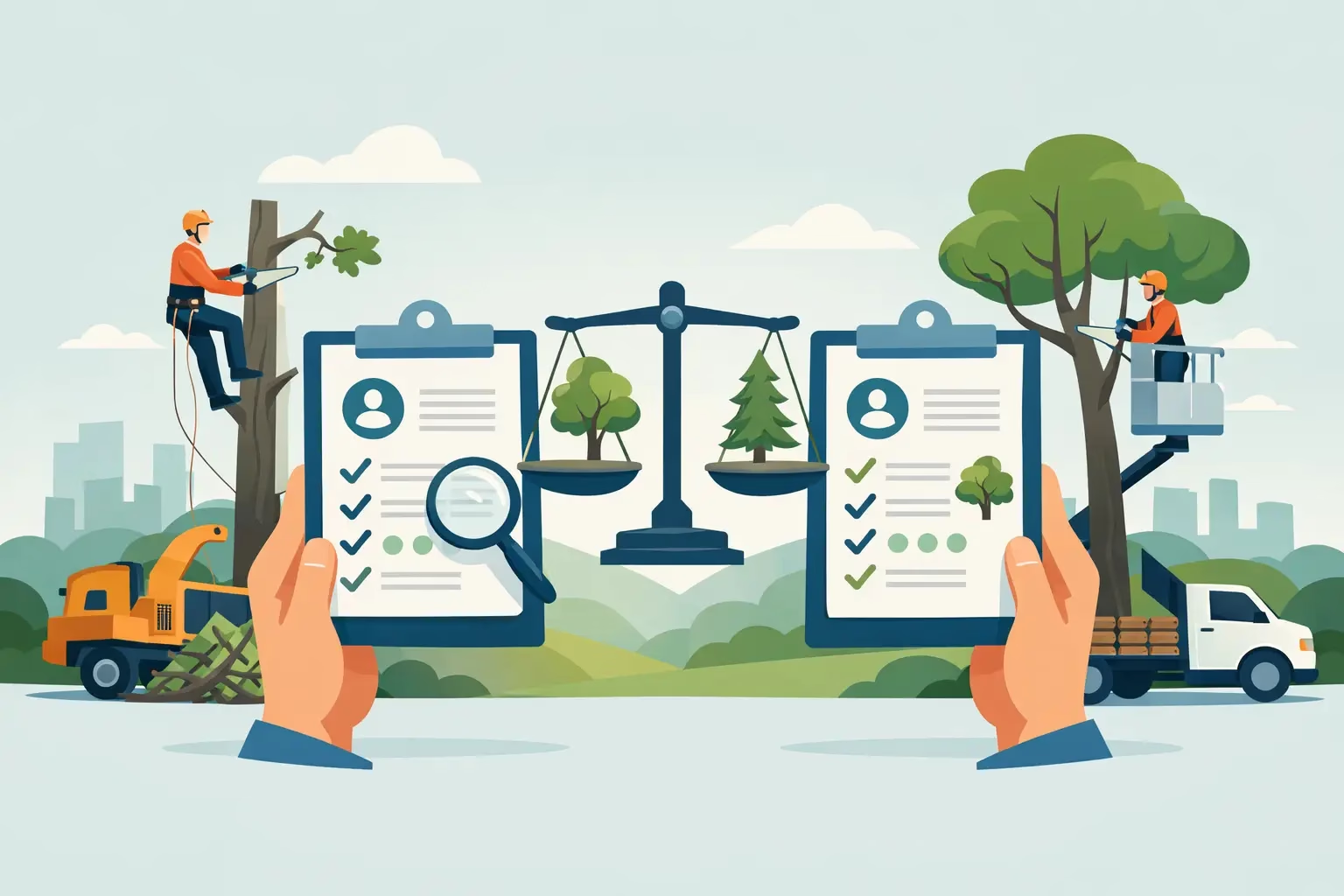
A low estimate can look appealing until a tree crew arrives without the equipment, planning, or insurance needed to protect your home. A professional tree service comparison should go beyond the final number on a quote. The right company protects people, structures, utilities, and the long-term health of the trees that remain.
For homeowners and property managers in Vancouver, Washington, tree work is often a high-stakes decision. A dead limb over a driveway, a leaning tree after heavy rain, or a stump interfering with a landscaping project needs a dependable response. Knowing what to compare helps you hire with confidence instead of making a rushed choice.
Professional Tree Service Comparison: Start With Safety
Tree care involves climbing, cutting, rigging, falling wood, heavy machinery, and overhead hazards. A qualified company should be prepared to explain how it approaches the work safely, not simply promise that it will be careful.
Ask whether the crew follows recognized ANSI tree care standards and OSHA safety requirements. These standards matter because they guide how professionals assess hazards, use equipment, establish work zones, and perform pruning or removal work. A crew that takes safety seriously will also consider the location of homes, fences, vehicles, power lines, neighboring properties, and pedestrian areas before work begins.
Insurance is another essential part of the comparison. Request proof of current liability coverage and workers’ compensation coverage. This protects you from unnecessary exposure if property damage or an injury occurs on the job. If a company is vague about coverage, cannot provide documentation, or pressures you to skip the question, consider that a warning sign.
Safety also affects how a company handles the worksite. Reliable crews use appropriate personal protective equipment, communicate with one another, and keep the area controlled while branches are lowered or equipment is operating. Those details may not be visible in a quick online estimate, but they are central to a professional job.
Compare Experience With the Work You Actually Need
Not every tree problem calls for the same solution. A company may be capable of routine pruning yet not equipped for a large removal near a house. Another may be excellent at removals but offer limited support for structural preservation, such as cabling and bracing. Compare each contractor’s experience against your specific situation.
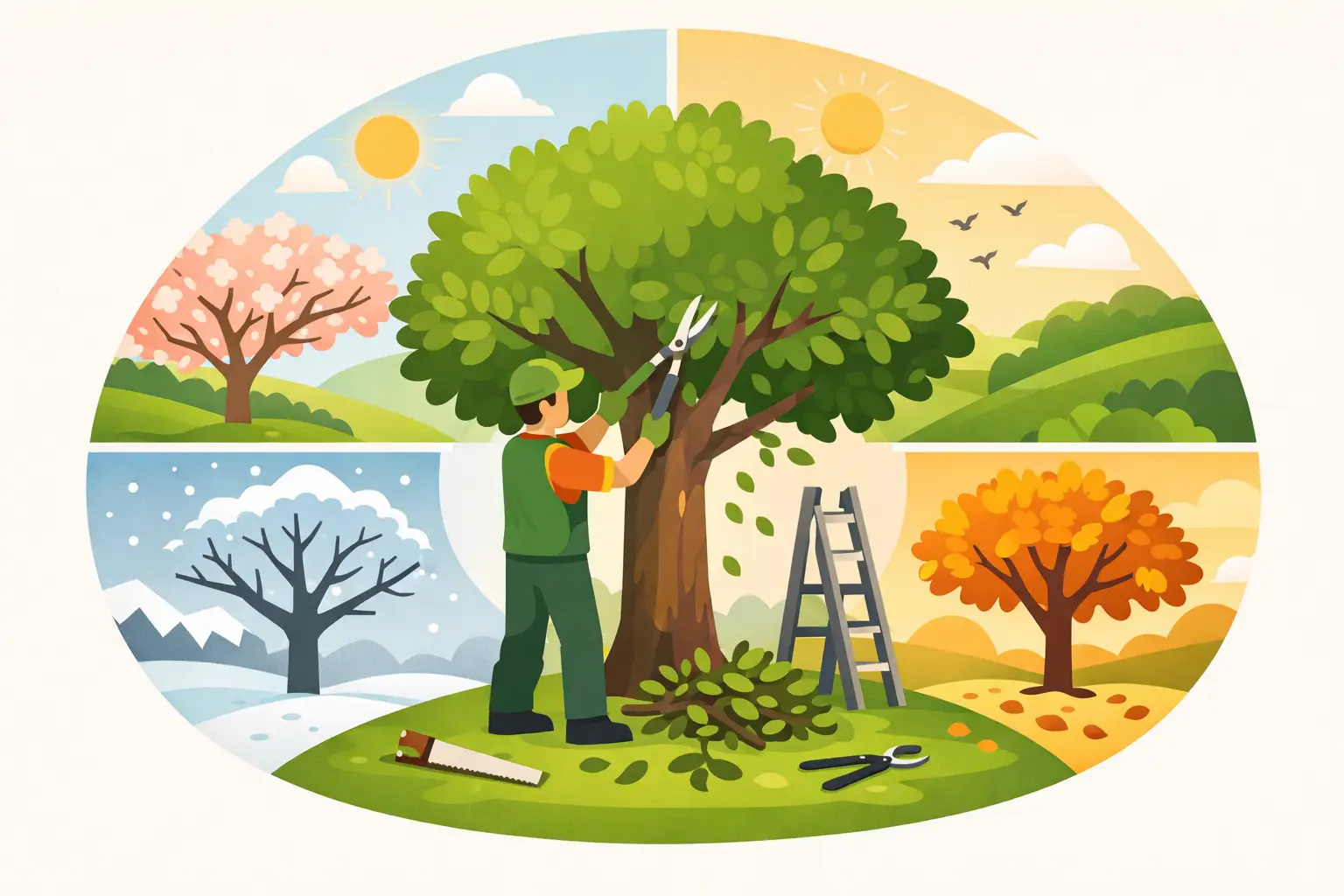
For example, pruning a mature ornamental tree requires a different approach than removing a storm-damaged fir over a roof. Proper pruning should improve clearance, remove hazardous or unhealthy growth, and respect the tree’s natural structure. Topping or indiscriminate cutting may create larger problems later, including weak regrowth, decay, and an unattractive canopy.
When removal is necessary, ask how the tree will be dismantled. Trees close to homes, sheds, fences, or utility lines often require controlled sectional removal rather than a simple drop. The answer should make sense for the site. A professional will assess access for equipment, identify obstacles, and explain whether branches and trunk sections will be lowered with ropes or removed by another controlled method.
Storm response deserves its own consideration. After wind or ice damage, the most visible broken branch is not always the only concern. A tree can have split leaders, loosened roots, hanging limbs, or cracks that are difficult to see from the ground. Look for a company that can respond promptly while still performing a careful assessment before cutting begins.
Look Closely at What Each Quote Includes
A written estimate is one of the most useful comparison tools because it defines the job before anyone arrives with saws and equipment. It should clearly identify the tree or trees involved, the planned service, and the scope of cleanup.
Two quotes may differ because they include different levels of service. One price might cover cutting only, while another includes debris hauling, log removal, raking, stump grinding, and restoration of the work area. Neither is automatically wrong, but you need to compare like for like.
Read the estimate for details such as access limitations, crane or lift use if needed, permits, utility coordination, and disposal of wood chips or logs. If you want firewood left on site, ask whether it will be cut to manageable lengths and placed in a specific location. If you need the stump removed, confirm whether stump grinding is included or quoted separately.
Be cautious with estimates that are unusually low and lack detail. The lowest price can become more expensive if cleanup is incomplete, the company is not properly insured, or additional charges appear after work begins. Fair pricing is not about choosing the cheapest number. It is about understanding the full value, scope, and level of protection you are receiving.
Ask How Changes Will Be Handled
Tree work can reveal conditions that were not visible during the initial visit. Hidden decay, inaccessible equipment routes, damaged underground irrigation, or a newly discovered utility conflict may change the plan. A dependable contractor will communicate those changes before proceeding whenever possible.
Ask how extra work is approved and documented. Clear communication prevents surprises and gives you control over decisions that affect your property and budget.
Evaluate Equipment, Staffing, and Job Planning
The right equipment improves both safety and efficiency. Depending on the job, a crew may need climbing gear, ropes and rigging equipment, chippers, stump grinders, lifts, loaders, or compact equipment that can access a backyard without causing unnecessary damage.
More equipment is not always better. A small backyard with narrow gates may require a crew that can perform careful manual rigging rather than bring in large machinery. On the other hand, a large hazardous tree may require specialized equipment to avoid putting climbers, structures, or nearby people at risk. The key is whether the company has a practical plan for your property.
Staffing matters as well. Tree work is a team activity. A safe removal often requires a trained climber or lift operator, ground crew members, traffic or property protection measures, and someone coordinating the operation. Ask who will be on site and whether the company uses its own trained crew or relies heavily on subcontractors.
A site visit is generally a better sign than a price given from a photo alone, especially for removals, large pruning projects, or trees near structures. Photos can help with an initial conversation, but they rarely show every hazard, access issue, or branch angle that affects the work.
Compare Communication and Local Reliability
The service experience matters before, during, and after the job. When a tree is threatening a roof or blocking a driveway, you need a company that answers the phone, explains next steps, and arrives when it says it will. Emergency availability outside standard business hours can be especially valuable after severe weather.
During your professional tree service comparison, pay attention to how each company communicates. Are your questions answered directly? Does the estimator explain why a tree should be pruned, supported, or removed? Are they willing to discuss alternatives when removal is not the only option? Professional advice should be clear enough for a property owner to understand without pressure or confusing technical language.
Local familiarity can also make a difference. Companies that regularly work in Southwest Washington and nearby Oregon communities understand the weather patterns, common tree species, access challenges, and property conditions found in the area. They are more likely to recognize when saturated soil, wind exposure, or nearby construction affects tree stability.
Reviews can provide useful context, particularly when they mention punctuality, cleanup, respect for property, and responsiveness after a storm. Read for patterns rather than focusing on one comment. A consistent record of reliable service says more than a single glowing or negative review.
Choose Value, Not Just a Number
The best tree service for your property may not be the lowest bid or the company that promises the fastest possible finish. It is the team that can clearly define the work, perform it safely, protect your property, and leave the site in the condition you expected.
Before you decide, compare safety practices, insurance, relevant experience, written scope, cleanup, equipment, and communication. If one estimate is unclear, ask for clarification rather than guessing. A reputable tree company should welcome informed questions.
When a tree requires professional attention, acting early can prevent a manageable concern from becoming an emergency. M & R Tree Services provides dependable tree care, removal, pruning, storm cleanup, stump grinding, and structural support with the careful planning local properties deserve. Request a clear quote, ask the right questions, and choose a crew you can trust around your home.