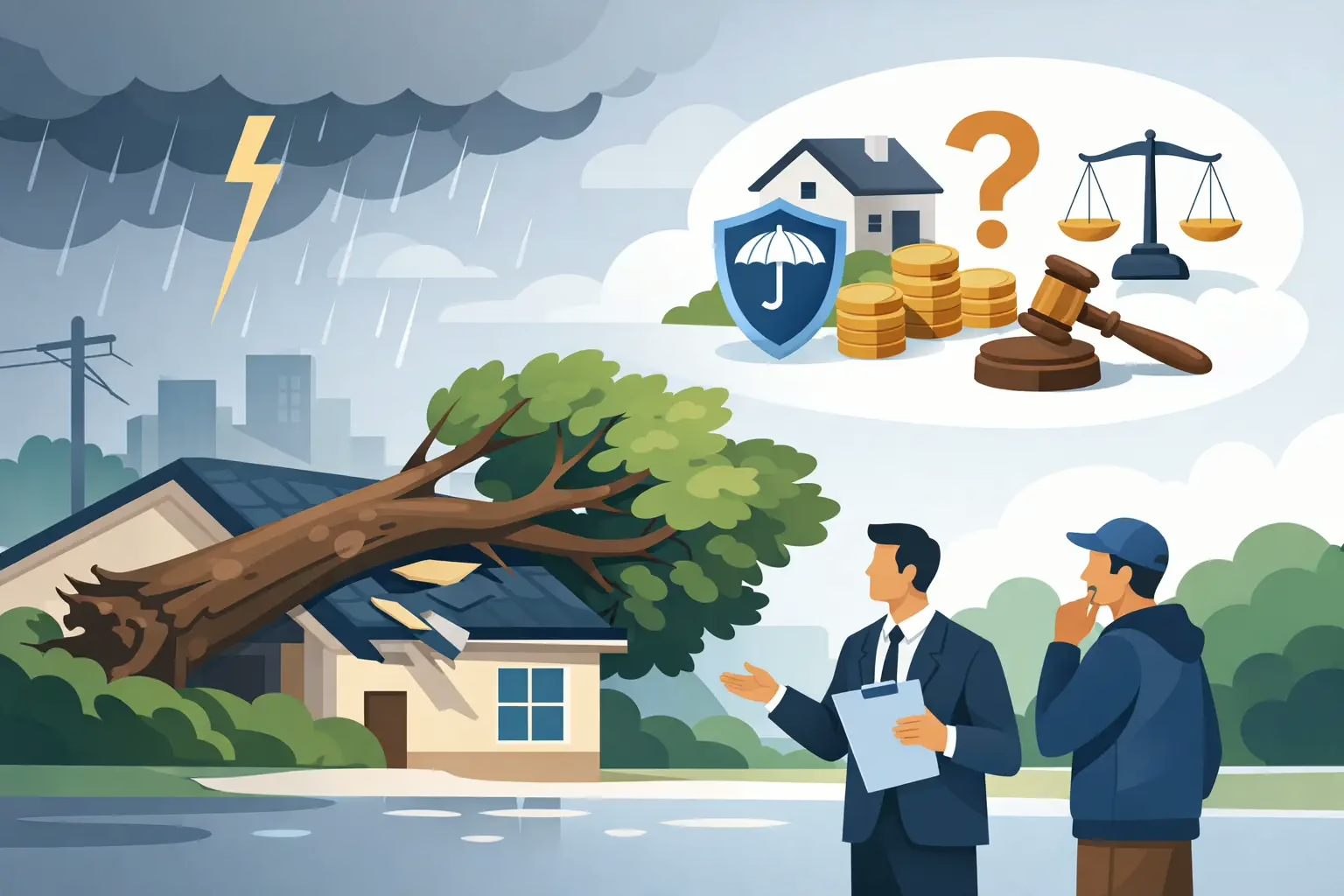
A tree comes down in the middle of the night, and by morning the real question is not just how bad the damage is – it is who pays for fallen trees. For homeowners, landlords, and property managers, the answer usually depends on where the tree landed, whether the owner knew it was hazardous, and what your insurance policy covers.
In many cases, the cost does not automatically fall on the owner of the tree. That surprises people. If a healthy tree falls during a windstorm and damages a neighbor’s fence, roof, or driveway, the affected property owner often files a claim with their own insurance company. If the tree was dead, clearly failing, or had obvious defects that were ignored, liability can shift back to the tree owner.
Who pays for fallen trees on your property?
If a tree or large limb falls onto your property, you are usually responsible for cleanup and repairs on your side, even if the tree started on someone else’s land. Homeowners insurance often helps if the fallen tree caused covered damage to a structure like a house, garage, or fence. It may also help with debris removal, but coverage limits vary.
If the tree falls in your yard and does not hit a covered structure, insurance may not pay for full removal. Some policies only cover tree removal when access is blocked, a driveway is obstructed, or the fallen tree creates a direct hazard. That means two neighbors can face very different costs from the same storm.
This is where documentation matters. Photos of the damage, the trunk location, and any preexisting condition of the tree can help support an insurance claim. If there is any question about whether the tree was already unsafe, professional assessment becomes even more important.
Who pays for fallen trees between neighbors?
When a tree falls across a property line, the rule is usually simple at first and more complicated once negligence enters the picture. Each property owner is commonly responsible for the portion of cleanup and damage on their own property. If the tree was healthy and came down because of wind, ice, or saturated soil, courts and insurers often treat it as an act of nature.
The exception is when the tree owner knew, or reasonably should have known, that the tree was dangerous. A dead tree, a split trunk, visible decay, root lifting, or repeated limb failure can all point toward prior notice of risk. If a homeowner ignored clear warning signs and the tree later fell onto a neighbor’s home, the neighbor may have grounds to pursue the tree owner or the tree owner’s insurance.
That is why communication matters before a failure happens. If you are concerned about a neighbor’s tree, raise the issue in writing and keep a record. A polite email or letter can become important if the tree later causes damage. It shows the hazard was identified, not just guessed after the fact.
When the tree owner is liable
Liability usually comes down to negligence, not ownership alone. A property owner is expected to take reasonable care of trees on their property. That does not mean they are responsible for every limb that breaks in a major storm. It does mean they may be responsible if they ignored obvious hazards.
Examples can include a tree that is fully dead, a trunk with major decay, storm-damaged limbs hanging for weeks, or root damage from recent construction that made the tree unstable. If a qualified tree professional recommended removal or pruning and the owner did nothing, that can also affect liability.
On the other hand, a tree can look sound and still fail under severe weather conditions. Wind load, saturated ground, hidden decay, and species-specific weaknesses can all contribute to sudden failure. That is one reason these situations are rarely black and white.
How insurance usually handles fallen tree claims
Insurance companies do not all handle claims the same way, but there are common patterns. If a fallen tree damages a covered structure, your homeowners policy may pay for repairs after your deductible. It may also pay a limited amount for tree removal. If the tree only lands in the yard with no structural damage, payment is less certain.
If your neighbor’s tree damages your house, you will often start with your own insurer. That feels unfair to some homeowners, but it is standard. Your insurance company may later seek reimbursement from the neighbor’s insurer if there is evidence of negligence.
Coverage can also differ for fences, sheds, vehicles, and detached structures. Vehicle damage is often handled through auto insurance rather than homeowners insurance. Rental properties can involve another layer if landlord policies apply. If a large tree blocks a shared driveway, private road, or access point, there may be additional questions about maintenance responsibility and emergency response.
The practical step is to call your insurance carrier early, before assuming who will or will not pay. Then arrange for a professional tree company to assess the hazard and remove it safely.
Fallen trees on public roads or utility lines
If a tree falls into a public street, onto a sidewalk, or across power lines, the first priority is safety. Stay clear and report it immediately to the proper utility or local public works agency. Do not attempt to cut or move any tree involved with energized lines.
Payment responsibility in these cases depends on location, ownership, and whether the tree was on private or public land. Even when a city or utility handles part of the emergency, the property owner may still need private cleanup for the remaining debris, stump, or damage inside the property line.
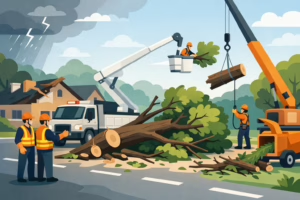
Emergency tree work is not the place for guesswork. Crews need the right equipment, training, and safety procedures to manage hanging limbs, broken tops, split trunks, and unstable root plates. ANSI-based work practices and OSHA-focused jobsite safety matter most when the tree is already compromised.
Why tree condition matters so much
Healthy trees fail less often, but no tree is risk-free. Regular pruning, structural support where appropriate, and timely removal of dead or unstable trees can reduce the chance of a costly dispute later. Waiting until after a storm warning is rarely the best time to address a tree that has been declining for years.
For property owners, the bigger issue is often not just removal cost. It is roof damage, fence replacement, tenant disruption, blocked access, and insurance paperwork. A tree that looked like a minor concern can become a major expense overnight.
That is why routine inspection has real value. You do not need to become an arborist, but you should pay attention to visible changes such as large dead limbs, fungal growth at the base, sudden lean, bark loss, cracks, or repeated branch drop. If something looks off, have it evaluated before weather turns it into an emergency.
What to do right after a tree falls
First, make sure everyone is safe and stay away from downed lines or hanging branches. Take photos from a safe distance, including where the trunk started and what was damaged. Contact your insurance company if structures, vehicles, or access points are involved.
Then call a qualified tree service. Storm-damaged trees are unpredictable, and partial failures can be more dangerous than complete ones. A professional crew can identify what needs immediate stabilization, what can be removed safely, and what information may help with your claim.
For homeowners in Vancouver, Washington and nearby communities, working with an experienced local company matters because storm response is not just about cutting wood. It is about safe access, proper cleanup, and knowing how to handle damaged trees without creating more property loss.
The short answer to who pays for fallen trees is that it depends on damage location, policy coverage, and whether anyone ignored a known hazard. The better answer is to deal with risky trees before they fail, because prevention is almost always less expensive than emergency cleanup, repairs, and a fight over responsibility.