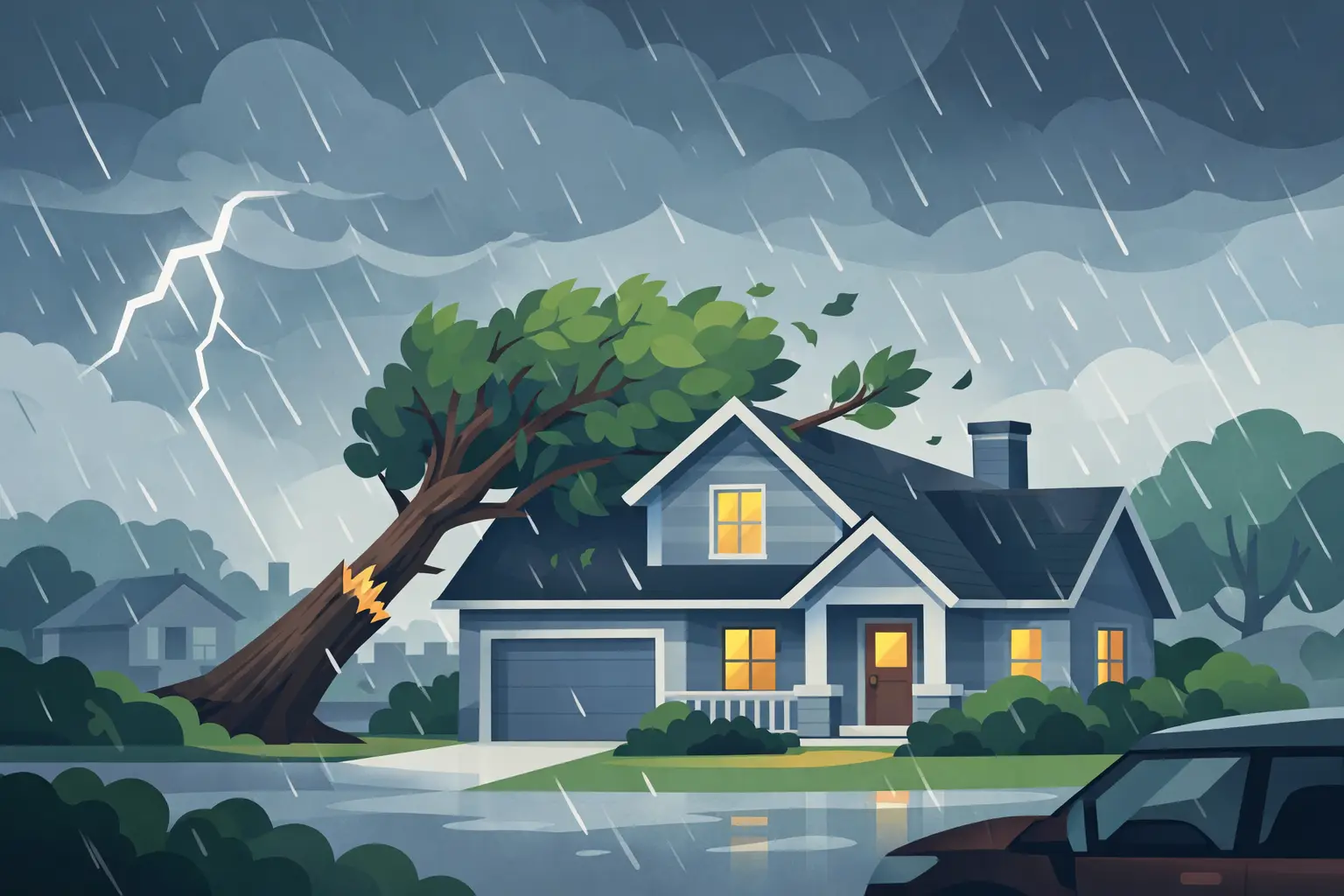
The limb that fails in a storm usually gives some warning first. A branch hanging over the roof, a trunk with a visible split, or roots lifting near the base can all point to storm season tree risks that get worse fast when wind and saturated soil arrive.
In Vancouver and surrounding areas, heavy rain, gusting wind, and wet ground create a rough combination for residential trees. A tree does not have to be dead to become dangerous. Even a tree that looks full and green can drop large limbs, lean suddenly, or fail at the base once the ground softens and the canopy starts catching wind.
That is why storm-related tree problems are best addressed before the weather does the deciding. For homeowners and property managers, the real question is not just whether a tree looks healthy. It is whether that tree is structurally prepared for the next round of weather.
Why storm season tree risks increase so quickly
Storm damage is rarely about one issue alone. Most failures happen when several weaknesses line up at the same time. A tree may already have internal decay, overextended limbs, or a poor branch attachment. Add wet soil, strong wind, and extra canopy weight from rain, and the margin for safety gets much smaller.
This is especially true for mature trees near homes, fences, driveways, power lines, and parked vehicles. The closer a tree is to something valuable, the less room there is for error. A branch that might be a minor issue in an open field becomes a serious property hazard when it hangs over a bedroom or access road.
Tree species also matter, but condition matters more. Some trees naturally hold up better in storms than others. Still, poor pruning, past topping, hidden decay, root disturbance, and co-dominant stems can make even a normally sturdy tree more likely to fail.
Signs of storm season tree risks on your property
Some hazards are obvious. Others are easy to miss until weather puts them under pressure. If you are walking your property before storm season, pay attention to the structure of the tree, not just whether it has leaves.
Dead or hanging limbs are one of the clearest warning signs. These branches may stay in place during calm weather and then break without much notice during a storm. Cracks in the trunk or major limbs also deserve immediate attention, particularly if they run deep or sit at a junction where two stems meet.
A sudden lean is another red flag. Trees do not always fail straight down. When soil becomes saturated, roots can lose their hold, and a lean can become a full uprooting event. If you see heaving soil, exposed roots, or fresh ground cracking near the base, the tree may already be shifting.
Cavities, decay pockets, fungal growth at the base, and bark separating from the trunk can all suggest internal weakness. Not every hollow tree is automatically hazardous, and not every fungus means imminent failure. Still, those are not signs to ignore during storm season.
You should also look at branch structure. Long, heavy limbs that extend over structures can create leverage that increases failure risk. Trees with multiple trunks or tight V-shaped unions often have weak attachment points, especially when those stems compete and press against each other over time.
Trees that need attention before wind and rain arrive
The highest-risk trees are not always the worst-looking ones. In many cases, the trees that need prompt service are those with one or two structural defects in high-impact locations.
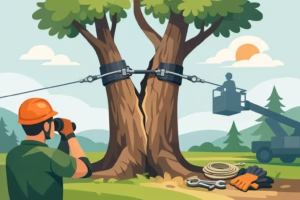
A tree close to the home with overextended limbs may need strategic pruning rather than removal. A tree with significant decay at the base may be a removal candidate because pruning cannot fix a failing foundation. A tree with split stems may benefit from cabling or bracing in some situations, but only if the structure is suitable and the remaining wood is sound enough to support it.
This is where professional assessment matters. There is a difference between a tree that looks messy and a tree that is likely to fail. There is also a difference between trimming for appearance and pruning for storm resilience. Removing the wrong limbs or cutting too aggressively can increase stress, stimulate weak regrowth, and make future storm performance worse.
What homeowners should not put off
Waiting through one more storm season is a gamble when a tree is already showing structural problems. Delays are common because the tree has not failed yet, the issue seems minor, or the weather forecast changes. But trees often fail during the first serious event after a period of decline, not after years of obvious warning.
If a branch is over the roof, if a trunk has a visible crack, or if the tree is leaning more than it used to, it is time to have it inspected. The same goes for trees damaged in a previous storm. Old storm wounds can become future failure points, especially if decay has started around the break.
Property managers should also think beyond the main house. Trees near garages, walkways, tenant parking, fences, and neighboring property can all create liability when maintenance is delayed. A preventable failure is far more costly than timely tree work.
How professional tree care reduces storm season tree risks
The right solution depends on the tree, the defect, and the target below it. That is why a one-size-fits-all approach does not work.
Professional pruning can reduce end weight on heavy limbs, remove deadwood, improve canopy balance, and lower wind resistance without over-thinning the tree. When done properly, pruning supports tree health and structure at the same time. It is not about cutting as much as possible. It is about making the right cuts in the right places.
In other cases, tree removal is the safest option. If a tree has advanced decay, severe root failure, a major split, or is no longer structurally reliable near occupied areas, removal may be the most responsible choice. Homeowners sometimes hope a hazardous tree can always be saved, but safety has to come first.
Structural support systems such as cabling and bracing can help selected trees with weak unions or multi-stem issues. These systems are not a shortcut or a cosmetic fix. They are installed for specific structural conditions and should be evaluated by experienced professionals.
When storm damage has already happened, emergency response becomes the priority. Broken limbs, partially failed trees, and storm-loaded branches can remain unstable after the weather passes. That work should be handled by a qualified crew using proper equipment and safe work practices.
Why experience and safety standards matter
Storm-related tree work is not routine yard maintenance. It involves heavy wood, unpredictable tension, fall zones, and in some cases nearby utilities or structures. A company handling this work should follow recognized safety standards and industry practices, not guesswork.
For homeowners, that means looking for professionals who take risk assessment seriously, explain the condition of the tree clearly, and perform work with attention to ANSI standards and OSHA regulations. It also means choosing a team that can respond when timing matters, especially if weather damage has already created an urgent hazard.
Affordable service still needs to be safe service. The lowest price is not a value if poor pruning, incomplete removal, or unsafe work leaves you with a bigger problem next season.
A smarter way to prepare your property
The best time to address storm season tree risks is before branches start falling. A proactive inspection can identify trees that need pruning, support, monitoring, or removal before weather turns a manageable issue into an emergency.
For many properties, the goal is not drastic change. It is targeted, professional tree care that reduces risk while preserving healthy trees where possible. Some trees need immediate action. Others may simply need maintenance on a regular schedule to stay safer and more stable over time.
If you are unsure about a tree on your property, trust that instinct and have it looked at. M & R Tree Services helps homeowners and property managers make practical, safety-focused decisions before storm damage forces a rushed one. A little attention now can protect your home, your budget, and your peace of mind when the next storm moves in.