A tree that suddenly starts leaning after a storm gets people’s attention fast. The big question is usually the same: can a leaning tree be saved, or is it now a hazard that needs to come down? The answer depends on why the tree is leaning, how far it has shifted, and whether the roots and trunk still have the strength to support it safely.
For homeowners and property managers, this is not a wait-and-see situation. A leaning tree can stay stable for years, or it can fail with very little warning. The difference is not always obvious from the ground, which is why a prompt professional assessment matters.
Can a leaning tree be saved if it has started to tip?
Sometimes, yes. But not every leaning tree is a good candidate for corrective work.
A tree that has always grown with a slight lean may be structurally sound. Many trees naturally angle toward sunlight, away from crowding, or because of prevailing winds over time. In those cases, the lean itself is not the whole story. What matters is whether the lean is stable, long-standing, and supported by healthy roots and sound wood.
A tree that recently shifted is a different situation. If the lean appeared after heavy rain, wind, soil movement, construction impact, or root damage, that can point to loss of support below ground. Once roots begin to lift or tear, the tree’s stability can change quickly.
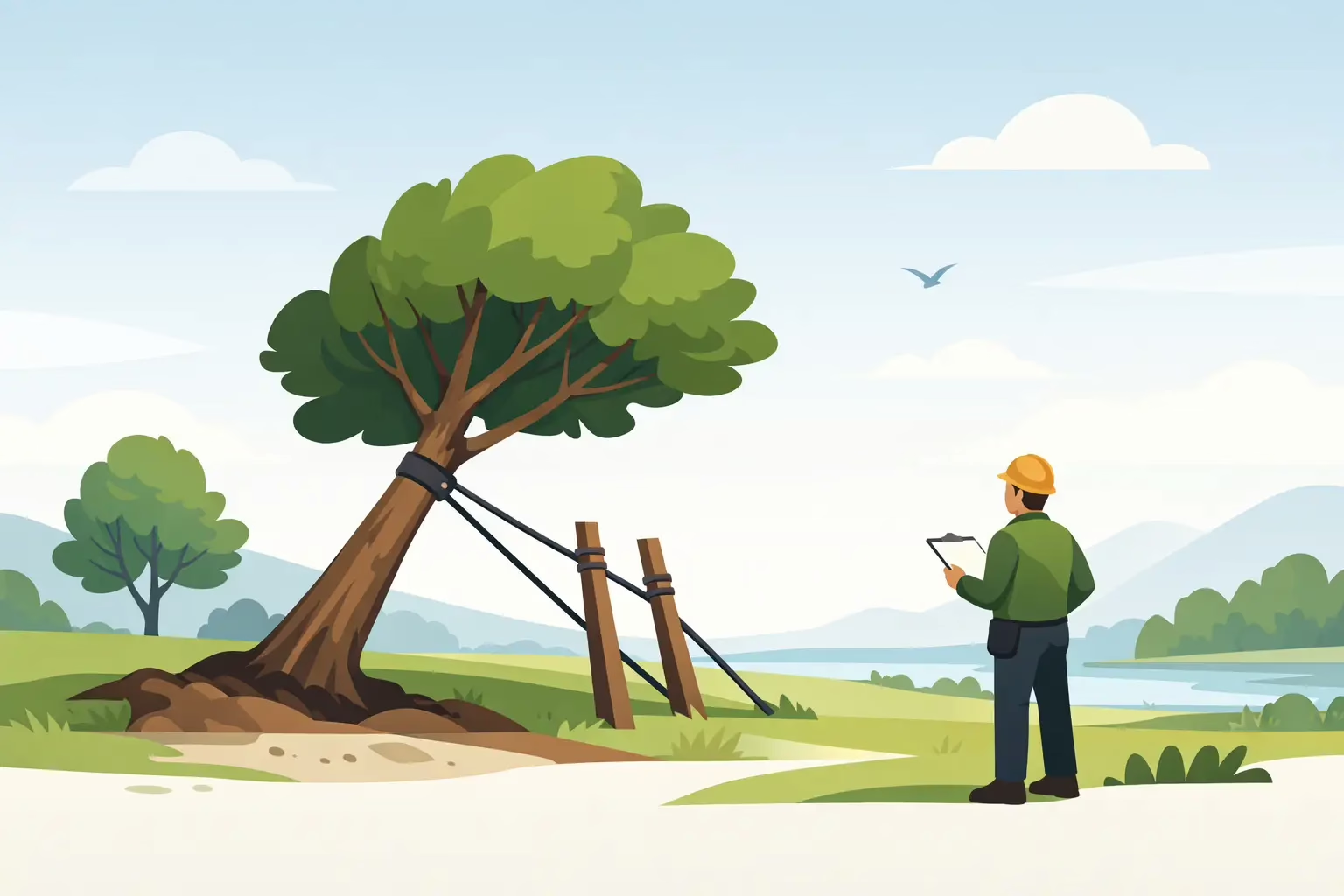
Corrective options like cabling, bracing, or in limited cases staking may help preserve a tree, but only when the tree still has enough structural integrity to justify the work. If the trunk is splitting, the root plate is lifting, or the canopy is putting too much weight on a compromised base, removal may be the safer choice.
Signs a leaning tree may still be saveable
The best candidates for saving are usually younger trees, recently planted trees, or established trees with a mild to moderate lean and limited root disturbance. Timing matters too. The earlier the issue is evaluated, the more options there may be.
A tree may be saveable if the lean is minor, the soil around the base is not heaving, and there are no visible cracks in the trunk or major scaffold limbs. Healthy foliage, normal annual growth, and no clear signs of root failure are also encouraging.
If a younger tree leaned because of wind but the root ball remains mostly intact, corrective staking and support may help it recover. That kind of work has to be done carefully. Over-staking or leaving supports in place too long can create other problems, including weak trunk development.
For mature trees, support systems such as cabling and bracing may reduce the risk of failure when there is a structural defect that can be managed. These systems are not a cure-all. They are part of a broader tree care plan and should be installed based on the tree’s condition, species, size, and site exposure.
When a leaning tree is more likely unsafe
The warning signs are often pretty clear once you know what to look for. If the ground is cracking or rising on one side of the tree, that suggests the root plate may be failing. If roots are exposed or torn, the tree may no longer have the anchoring it needs.
A fresh lean combined with a split trunk is especially serious. So is a tree leaning toward a house, driveway, sidewalk, play area, fence line, or utility corridor. Even if it has not fallen yet, the risk to people and property can be too high to ignore.
Decay also changes the equation. A hollow trunk, fungal growth near the base, soft wood, or large dead limbs can all point to internal weakness. In those cases, trying to save the tree may not be the responsible option.
It also depends on species and age. Some trees tolerate stress and corrective work better than others. Older trees with extensive root damage generally have a lower chance of long-term recovery than younger trees with a manageable lean.
What causes a tree to lean in the first place?
A leaning tree does not always mean poor maintenance. Trees can shift for several reasons, and some are not obvious until the tree starts showing stress.
Storms are one of the most common triggers. High winds can push against a full canopy, especially when the soil is saturated and roots lose some holding strength. Heavy rain can soften the ground enough for a tree to move. Snow and ice loading can also put uneven pressure on limbs and the trunk.
Root damage is another major factor. Trenching, excavation, driveway work, and utility installation can cut or compact roots. Once enough structural roots are damaged, the tree may begin leaning even if the canopy still looks healthy for a while.
Poor pruning can contribute too. An unbalanced canopy may leave more weight on one side than the other. That does not automatically cause failure, but when combined with wind, decay, or root problems, it can increase the risk.
Why professional inspection matters
Leaning trees are not good DIY judgment calls. The visible lean is only part of what an experienced tree professional evaluates.
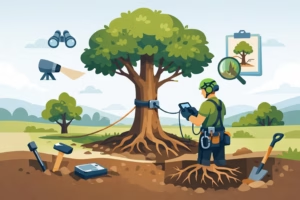
A proper inspection looks at root stability, trunk integrity, soil conditions, canopy balance, and site targets. It also considers whether corrective action would actually improve safety or only delay an unavoidable failure. That matters because support systems should never be used as a substitute for removing a dangerous tree.
At M & R Tree Services, inspections and recommendations are approached with safety in mind, using practices aligned with ANSI standards and OSHA regulations. For property owners, that means clearer answers about whether a tree can reasonably be preserved or whether removal is the safer investment.
Can a leaning tree be saved with cabling or bracing?
In some cases, yes, but only if the tree is a suitable candidate. Cabling and bracing are structural support methods used to reduce movement and help stabilize certain weak unions or partially compromised trees. They are most effective when the tree still has substantial sound wood and a root system that remains functional.
These systems do not reverse major root failure. They also do not make a severely decayed tree safe. If the lean is caused by advanced structural loss, support hardware may offer false confidence instead of real protection.
When used correctly, though, supplemental support can help preserve a valued tree that would otherwise be vulnerable in wind or under canopy load. That is why the decision should be based on the whole tree, not just one symptom.
What to do if you notice a tree leaning more than before
The safest move is to keep people away from the area and arrange for an inspection as soon as possible. Avoid parking under the canopy, and do not let children play nearby. If the tree is close to a home or access point, the urgency goes up.
It is also wise not to start cutting limbs on your own to reduce weight. Improper cuts can make the tree more unstable or create additional hazards. If roots are lifting or the tree appears to be actively shifting, treat it like an emergency.
Fast action matters after storms. A tree may remain standing after the initial event and still fail later once winds pick up again or the soil dries and settles unevenly. Emergency tree service exists for exactly these situations.
The real question is whether it can be saved safely
Homeowners often ask if a leaning tree can be saved because they want to protect both the tree and the property around it. That is the right instinct. But the better question is whether the tree can be saved safely, responsibly, and with a reasonable chance of long-term stability.
Sometimes the answer is yes, especially with younger trees or structurally sound trees that need corrective support. Sometimes the safest answer is removal, followed by replanting in a better location or with a better species choice for the site.
A leaning tree is not always a lost cause, but it is never something to ignore. If a tree on your property has shifted, started leaning more, or shows signs of root or trunk failure, getting expert eyes on it now can prevent a much bigger problem later. A timely inspection gives you options, and in tree care, options usually get smaller the longer you wait.