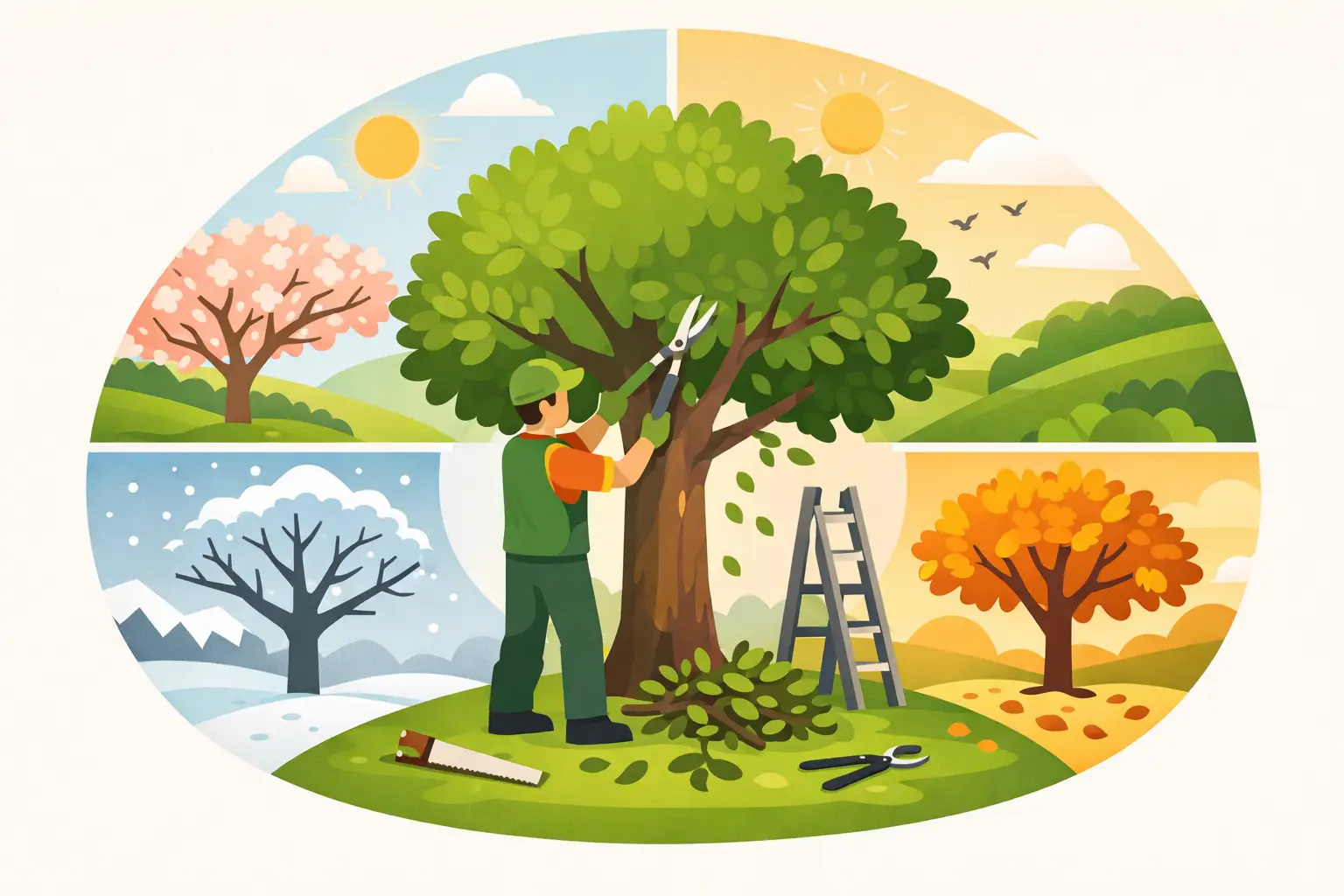
A tree can look fine from the ground and still be carrying dead wood, crossed limbs, storm stress, or growth that is starting to push too close to a roofline. That is why the best time of year to trim trees is not just a calendar question. It is a safety, health, and property-protection decision.
For homeowners and property managers in Vancouver, Washington, timing matters even more because our trees deal with heavy winter moisture, wind, and fast seasonal growth. Trim too late, too early, or too aggressively, and you can create unnecessary stress. Trim at the right time, and you help the tree stay stronger, safer, and better shaped for the long term.
The best time of year to trim trees depends on the goal
There is no single month that is perfect for every tree and every situation. In most cases, the best time of year to trim trees is during the dormant season, usually from late fall through winter. At that point, many trees have slowed their growth, leaf loss improves visibility, and pruning cuts tend to be less stressful for the tree.
Dormant-season trimming also makes it easier to identify structural problems. A trained crew can see weak branch unions, dead limbs, competing leaders, and limbs rubbing against each other without dense foliage getting in the way. For property owners, that often means a more accurate assessment and a cleaner result.
That said, dormant pruning is not a rule that overrides everything else. Hazard reduction, storm damage, disease concerns, species-specific timing, and clearance issues can all change the answer.
Why winter is often the best season
Winter trimming is often the preferred option for mature shade trees because the tree is resting. That lowers the demand on its system and helps direct energy toward healthy regrowth when spring arrives. It can also reduce sap loss in many species and limit exposure to some seasonal pests and pathogens.
From a property-maintenance standpoint, winter pruning can be smart planning. If limbs are hanging over a driveway, pressing toward a structure, or becoming overextended before spring growth, addressing them early can reduce the chance of problems during wind or heavy rain.
In the Pacific Northwest, however, weather still matters. Wet, icy, or stormy conditions can affect access and safety. Professional tree work should always be done with the right equipment, training, and jobsite controls, especially around homes, fences, and utility lines.
Spring and summer trimming can still make sense
Spring is not automatically the wrong time to prune, but it does require a more careful approach. As trees push new growth, heavy trimming can remove energy the tree has just spent producing. That is why major structural pruning is often better handled in dormancy.
Still, spring and summer trimming are common for specific needs. If a tree has dead limbs, storm damage, broken branches, or growth interfering with visibility or clearance, waiting may not be the safer choice. Selective pruning to remove risk can and should be done when needed.
Summer can also be useful when the goal is to slow overly vigorous growth or make light corrective cuts once the tree is fully leafed out. Because the canopy is visible, it becomes easier to see weight distribution and identify limbs causing imbalance. The trade-off is that trees are active, and poor pruning practices are more likely to create stress.
When you should not wait to trim a tree
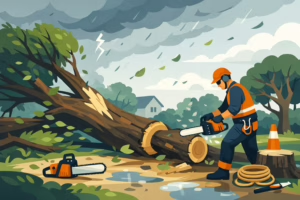
The best time of year to trim trees changes immediately when safety is involved. A cracked limb over a driveway, a storm-damaged top, or a branch pushing against a roof should not stay in place just because it is not the ideal season.
Emergency and hazard pruning is about risk reduction first. Dead, split, hanging, or structurally compromised limbs can fail without much warning, especially during wind or saturated soil conditions. In those cases, prompt professional service is more important than seasonal timing.
This is also true when clearance becomes an issue. Branches blocking sightlines, contacting a structure, crowding a service entrance, or interfering with safe access should be addressed before they create a larger property or liability problem.
Different tree species have different pruning windows
Not all trees respond the same way to trimming. Some species tolerate dormant pruning very well, while others are better handled after flowering or at another specific point in their growth cycle.
Flowering trees are a common example. If a tree blooms on old wood, pruning in winter may reduce spring flowers. If appearance is part of the goal, trimming soon after bloom is often the better choice. On the other hand, if the tree has safety issues or poor structure, health and risk management usually come first.
Maples, birches, and other heavy sap producers may bleed if pruned late in winter or early spring. While that can look dramatic, it is not always harmful. Even so, many property owners prefer pruning at a time that minimizes the mess.
Fruit trees are another category that benefits from more specific timing and technique. Their pruning schedule depends on whether the goal is shape, production, disease management, or size control. That is one reason a one-size-fits-all answer rarely works.
Signs your tree is ready for trimming
A tree does not have to look neglected to need professional attention. One of the most common issues we see is deferred maintenance, where small structural problems are left alone until they become larger and more expensive to correct.
Watch for dead branches, limbs crossing or rubbing, branches growing too close to the house, an uneven canopy, low limbs over walkways, or signs of storm damage. Trees with dense interior growth may also need selective thinning to improve structure and reduce end weight on extended limbs.
If a tree has suddenly started leaning, shedding large limbs, or showing cracks where major branches meet the trunk, that moves beyond routine trimming. It calls for a qualified assessment as soon as possible.
Why timing and pruning quality go together
Good timing helps, but technique matters just as much. Trees are often damaged not because they were trimmed in the wrong month, but because they were topped, over-thinned, or cut without regard to branch structure and tree biology.
Improper cuts can leave large wounds, encourage weak regrowth, and increase the risk of decay. Over-pruning can reduce a tree’s ability to produce energy, especially when too much live canopy is removed at once. That kind of stress can show up later as decline, dieback, or increased susceptibility to pests and disease.
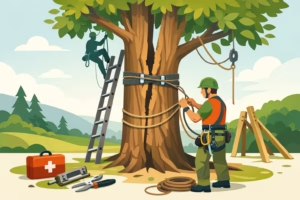
Professional pruning should be based on the tree’s species, age, condition, and location on the property. It should also be performed with safety standards in mind. When crews are working around homes, vehicles, neighboring properties, and high-risk limbs, experience and compliance are not extras. They are part of doing the job correctly.
What homeowners in Vancouver should keep in mind
In our area, tree growth can be quick, and weather can expose weak branches fast. Winter storms, saturated soil, and heavy limbs create a combination that makes proactive trimming a smart part of property care. Waiting until a branch fails often turns a manageable maintenance job into an urgent and more costly one.
For many local properties, the ideal approach is to schedule an evaluation before a tree becomes a problem. That allows trimming to be planned around both the season and the actual condition of the tree. It also gives you time to address clearance issues, structural defects, and dead wood before harsh weather raises the stakes.
M & R Tree Services works with homeowners and local property managers who want dependable, professional tree care without guesswork. That means looking at the tree in front of you, not just the month on the calendar.
So when is the right time to schedule tree trimming?
If the tree is healthy and the work is routine, late fall through winter is often the best window. If the tree is flowering, fruiting, stressed, or species-sensitive, timing may shift. If there is storm damage, dead wood, or a safety concern, the right time is as soon as possible.
The best answer is not the same for every property, and that is exactly why an on-site assessment matters. A qualified tree professional can tell you whether your trees should be trimmed now, later in the season, or only as needed for risk reduction.
If you are unsure whether your tree can wait, trust that instinct and have it looked at. A timely evaluation can protect the tree, your home, and the people who use your property every day.