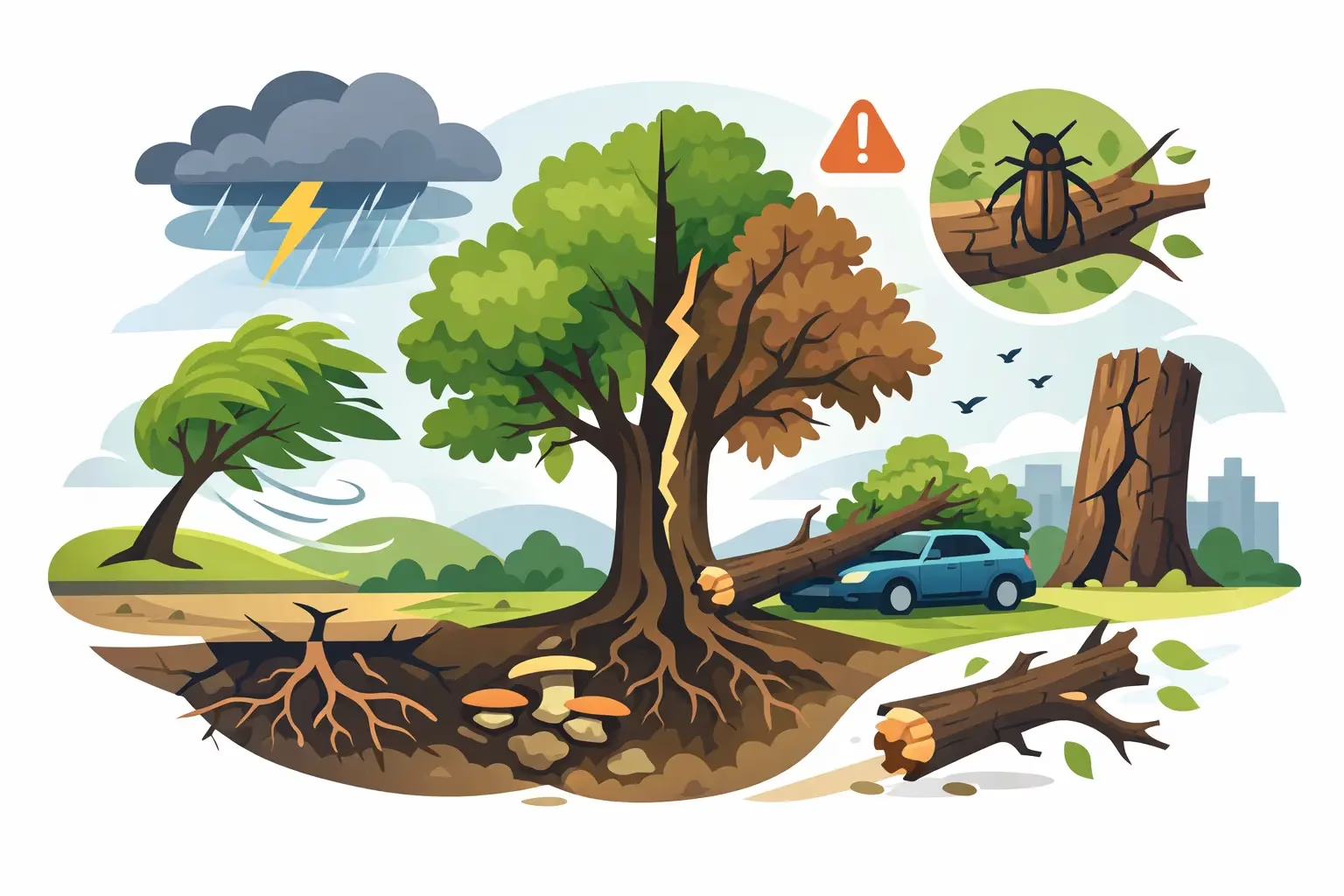
A tree can look healthy from the street and still pose a serious risk to a home, driveway, fence, or neighboring property. The top causes of tree failure are often hidden in the roots, trunk, or upper canopy until high wind, heavy rain, or snow places enough stress on the tree to expose the problem. For property owners in Vancouver, Washington, timely professional inspection can make the difference between planned tree care and emergency damage cleanup.
Tree failure does not always mean an entire tree falls. It can involve a large limb breaking, a trunk splitting at a weak union, roots lifting out of wet soil, or a dead tree dropping branches without warning. Knowing what creates these hazards helps you make informed decisions before the next storm arrives.
Top Causes of Tree Failure on Residential Properties
Root damage and restricted root space
Roots anchor a tree, absorb water, and support its long-term health. When roots are cut during construction, damaged by trenching, compacted by vehicles, or confined by pavement, the tree may gradually lose stability. The visible effects can take years to appear, which is why a tree may seem fine until it leans or uproots during a period of saturated soil and wind.
Root problems are especially concerning when a tree begins to lean suddenly, soil lifts around the base, or mushrooms appear near major roots. Mushrooms do not always mean a tree will fail, but they can indicate decay in the root system. A qualified tree professional can assess the site conditions, tree species, lean, and nearby targets to determine whether monitoring, pruning, support, or removal is the responsible choice.
Decay inside the trunk or major limbs
Wood decay weakens the structural strength of a tree from the inside out. Cavities, hollow areas, fungal growth, peeling bark, and soft or crumbly wood can all point to decay, but not every problem is visible from ground level. A tree can continue producing leaves while its trunk has lost a significant amount of sound wood.
The level of risk depends on where the decay is located and how much healthy wood remains. A small cavity in a low-risk area may be manageable, while decay at the base of a tree or where large limbs attach can require prompt action. Trees near homes, power lines, play areas, or busy sidewalks deserve a more conservative assessment because the consequences of failure are higher.
Weak branch unions and codominant stems
Some trees grow with two or more main stems that compete for dominance. These are called codominant stems. When the stems meet in a narrow V-shaped union with bark trapped between them, the connection may be weak and prone to splitting under weight, wind, or snow.
This type of failure is common because the tree can look full and balanced until the union separates. Early structural pruning can sometimes reduce the stress on weak stems. In other situations, professional cabling and bracing may provide additional support. These systems are not a cure for severe decay or a badly compromised trunk, but they can be useful when installed for an appropriate tree and maintained correctly.
Storms, wind, and saturated soil
Pacific Northwest weather can create the conditions for sudden failure. Extended rain saturates the soil and reduces its ability to hold roots firmly in place. Add strong wind, and even a healthy-looking tree may uproot, particularly if it has a broad canopy, shallow roots, prior root damage, or uneven exposure after nearby trees were removed.
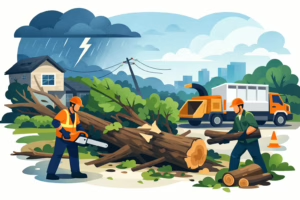
Wind also places major force on large limbs and weak unions. Storm damage is not always obvious after the weather clears. A cracked limb may remain lodged in the canopy, where it can fall later without notice. If a tree or branch is hanging, split, leaning over a structure, or tangled with utility lines, keep people away from the area and arrange professional emergency service. Never attempt to cut or pull down a storm-damaged limb yourself.
Dead, diseased, or declining trees
Dead trees are more likely to shed limbs and fail because the wood becomes dry, brittle, and progressively weaker. Disease and pest activity can accelerate that decline, although a diagnosis should not be based on one discolored leaf or seasonal needle drop alone. Some trees naturally shed interior foliage, and drought stress can resemble disease symptoms.
More meaningful warning signs include extensive dieback in the upper canopy, unusually small leaves, bark falling away, large dead limbs, visible fungal fruiting bodies, and a noticeable decline from one season to the next. A professional inspection considers the whole tree rather than one symptom. The goal is to identify whether the tree can be managed safely or whether removal is the better option for the property.
Poor pruning practices
Pruning should improve clearance, health, and structure without creating new problems. Topping a tree, removing too much live canopy, or making improper cuts can lead to decay, weak regrowth, and a less stable canopy. Fast-growing shoots that develop after topping are often poorly attached and more likely to break in future storms.
Proper pruning is not simply about making a tree smaller. It requires an understanding of branch attachment, growth patterns, species response, and how much foliage can be removed safely. Work performed to recognized ANSI pruning standards helps preserve tree structure while addressing practical concerns such as roof clearance, driveway access, and deadwood removal.
Excessive canopy weight and unbalanced growth
A dense, overextended canopy puts added leverage on limbs and trunk unions. This is common in mature trees that have not been pruned for years, especially when long branches grow toward open space, sunlight, or a nearby roofline. Ice and wet snow can add even more weight to those already stressed limbs.
Selective pruning may reduce end weight, improve airflow, and remove defective branches. However, aggressive thinning is not always the answer. Removing too much interior foliage can encourage excessive new growth and may alter how wind moves through the canopy. A careful evaluation helps determine where targeted pruning will provide a real safety benefit.
Soil erosion, grade changes, and site changes
A tree’s root system depends on stable soil conditions. Erosion near a slope, drainage changes, flooding, or soil added over the root flare can affect root health and stability. Even landscaping projects that seem minor can have long-term effects if they bury roots, change water flow, or damage the area around the trunk.
Watch for exposed roots, a newly visible root flare, standing water around the base, or cracks developing in soil on the side opposite a lean. These conditions do not automatically mean a tree must be removed, but they should not be ignored, particularly when a large tree stands near a structure.
Warning Signs That Call for a Professional Inspection
Homeowners do not need to diagnose a tree to recognize when something has changed. A sudden lean, cracked trunk, hanging limb, fresh split at a branch union, lifting soil, or large dead branch warrants prompt attention. The same is true when a tree has been struck by a vehicle, damaged in a storm, or altered by recent construction near its roots.
Keep a safe distance from a suspected hazard. Do not climb the tree, use a ladder near unstable limbs, or park beneath a damaged canopy. If utility lines are involved, contact the utility provider and keep the area clear. Tree work requires specialized equipment, trained crews, and job-site practices designed to protect people and property.
Choosing the Right Response Before Failure Happens
Not every mature tree with a cavity, lean, or dead branch needs immediate removal. The right approach depends on the tree’s condition, its location, the targets beneath it, and the likelihood of failure. In some cases, pruning or structural support can extend a tree’s useful life. In others, removal is the safest and most cost-effective decision before damage occurs.
M & R Tree Services provides professional assessments, pruning, removal, cabling and bracing, and emergency storm response for property owners who need dependable help. Our experienced crews follow strong safety practices and work to ANSI and OSHA requirements on every appropriate job.
If a tree on your property has changed, do not wait for the next windstorm to tell you what the risk is. A clear, professional evaluation gives you practical options and the confidence to protect your home, your neighbors, and the trees worth preserving.