A large limb hanging over a roof is not a job where “careful” means cutting and hoping it falls in the right direction. How tree crews protect property starts long before the first cut. It begins with a site-specific plan that accounts for the home, utility lines, fences, driveways, gardens, neighboring properties, and the people who may be nearby.
For homeowners in Vancouver, Washington, tree work often carries real stakes. Our wet seasons, windstorms, mature evergreens, and densely spaced residential lots can turn an overgrown or damaged tree into a property concern quickly. A professional crew’s job is not simply to remove or prune a tree. It is to manage the entire work area so the tree can be handled safely and with as little impact on your property as possible.
How Tree Crews Protect Property Before Work Begins
The most valuable property protection happens during the initial assessment. Before equipment is unloaded, an experienced crew evaluates the tree’s species, height, lean, canopy weight, visible decay, limb structure, and proximity to structures. They also look at the ground conditions. Saturated soil, a sloped yard, limited access, or a soft lawn can change how equipment is positioned and how material is removed.
The crew identifies what is beneath and around the tree. That can include roofs, skylights, power lines, sheds, patios, septic areas, irrigation heads, vehicles, landscape beds, and neighboring fences. A tree that looks easy to remove from the street may require a much more controlled approach once those details are considered.
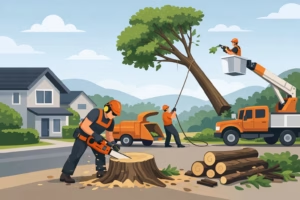
This assessment determines whether the tree can be safely felled in one direction or needs to be dismantled in sections. On an open lot, a controlled directional felling may be efficient and appropriate. In a tight backyard, near a home or over a fence, crews typically remove limbs and trunk sections piece by piece. That takes more time, but it dramatically reduces the risk of impact damage.
A professional team also discusses access with the property owner. The shortest path for equipment is not always the best path. Crews may use protective mats or carefully select staging areas to reduce wear on lawns, driveways, and landscaping. There can be trade-offs: protecting a delicate garden bed may mean carrying material farther or using a more labor-intensive removal method. The right choice depends on the site and the homeowner’s priorities.
Controlled Cutting Is More Than a Chainsaw Skill
Proper cuts are the foundation of safe tree work. When a crew removes a branch, it needs to know where that branch will travel, how it will react when released, and whether its weight is balanced or loaded in an unexpected direction. Branches can swing, roll, bounce, or break apart when they hit the ground. Those variables are why high-risk tree work requires training, communication, and the right equipment.
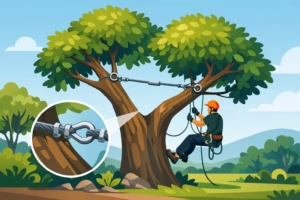
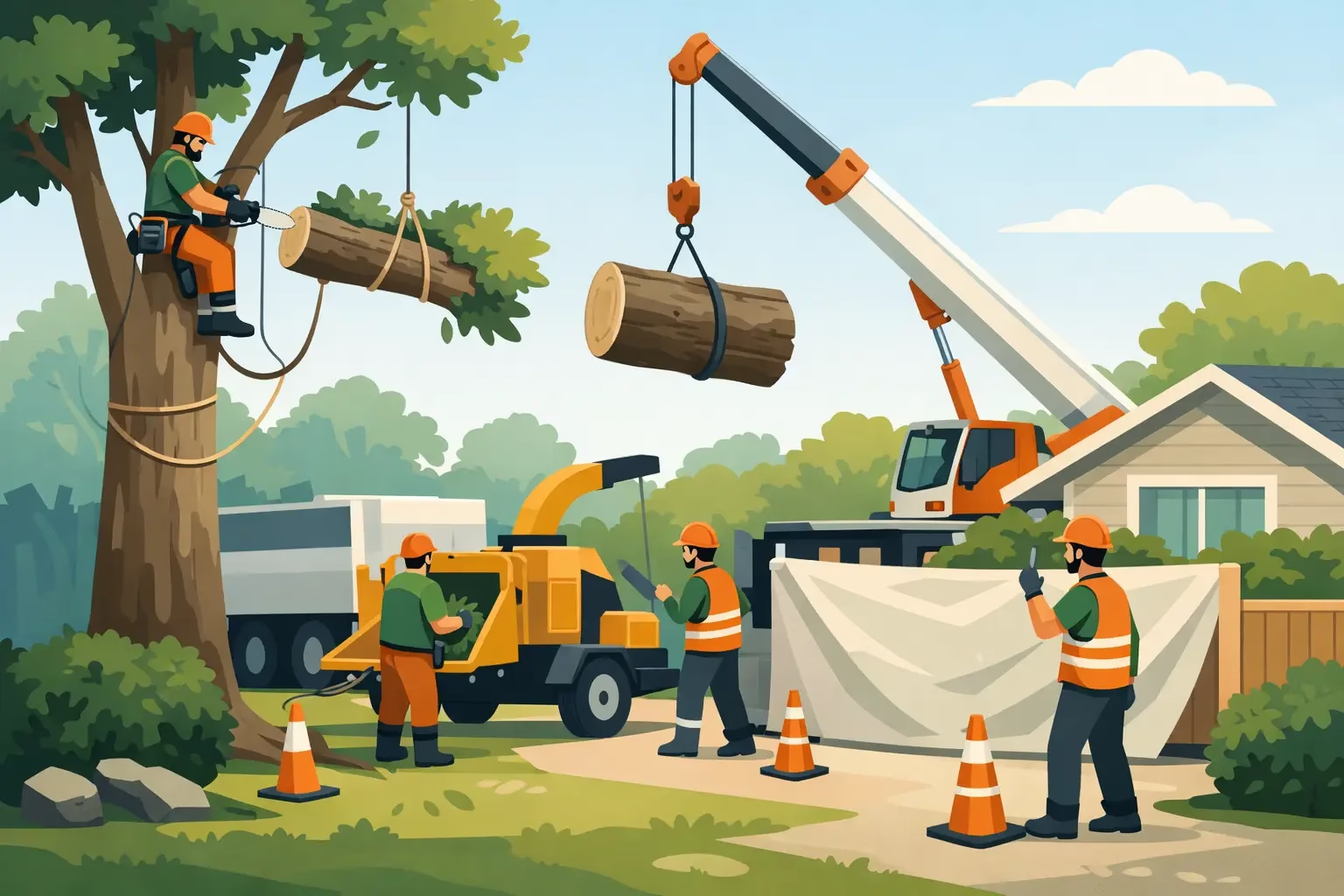
For limbs above a roof, deck, or landscape feature, crews often use ropes and rigging systems to lower pieces in a controlled way. A climber or aerial lift operator may secure a limb before cutting it, while a ground crew manages the rope and landing area. Rather than dropping a heavy section, the crew guides it into an open zone where it can be processed safely.
Rigging is especially useful when removing deadwood or storm-damaged limbs. Damaged wood is less predictable than healthy wood. It may split at a weak point, shed smaller branches, or fail sooner than expected. Controlled lowering helps reduce the chance that unstable material strikes the home, fence, or nearby plants.
Not every tree requires the same method. A small ornamental tree near a garden may be removed with hand tools and careful handling. A tall Douglas fir over a house may call for climbing, advanced rigging, an aerial lift, or specialized equipment. Professional crews choose the method that fits the tree, access, hazards, and condition of the property rather than forcing every job into one approach.
Protecting People and the Work Zone
Property protection and personal safety are connected. A crew that keeps workers, homeowners, pets, and neighbors out of the drop zone is also reducing the chance of vehicle damage, broken windows, or injuries caused by falling debris.
Before work begins, the crew establishes a controlled work area. Vehicles should be moved away from the tree whenever possible, and homeowners should keep children and pets indoors or well clear of the operation. Gates may need to remain closed, and access areas should stay open for the crew until the job is complete.
Clear communication matters throughout the job. Ground workers need to know when a cut is about to be made, where material is coming down, and when equipment is moving. The person making the cut must have a clear view or direct communication with the crew below. These procedures may sound basic, but consistent communication is one of the strongest safeguards on a busy residential work site.
At M & R Tree Services, work is performed with attention to applicable ANSI safety practices and OSHA regulations. These standards support safer work methods, proper personal protective equipment, hazard awareness, and organized job-site operations. For a property owner, that level of preparation provides reassurance that the crew is working from proven procedures, not improvising around a dangerous tree.
Careful Equipment Use Helps Prevent Surface Damage
Heavy equipment can make tree removal faster and safer, but it must be used thoughtfully. Trucks, chippers, lifts, stump grinders, and loaders all have weight, clearance, and access requirements. A qualified crew considers those factors before bringing equipment across a lawn or near a driveway edge.
Driveways deserve particular attention. Concrete can crack when heavy loads are placed near unsupported edges, while asphalt can soften in hot weather or deform under repeated pressure. Crews plan where trucks will park, where logs will be staged, and how debris will be moved so the work stays organized without creating unnecessary stress on paved surfaces.
Lawn and landscape protection also depends on realistic expectations. A large removal can leave temporary impressions in soft ground, especially after heavy rain. Carrying every branch by hand may protect the turf more fully, but it can add labor and cost. In other cases, plywood or ground protection mats offer a practical middle ground. A trustworthy contractor explains those conditions in advance instead of promising that a major tree removal will leave no trace.
Stump grinding is another service where planning matters. The grinder removes the visible stump and produces wood chips, but crews should identify nearby utilities, irrigation lines, edging, and hardscape before starting. Surface roots can extend farther than many homeowners expect, so the grinding area should be discussed clearly before work begins.
Storm Damage Requires a Different Level of Caution
After a windstorm, a tree can look stable while holding significant hidden tension. A limb may be suspended in another tree, partially split from the trunk, or resting against a roofline. Attempting to pull, cut, or climb on storm-damaged material without the proper training can make a dangerous situation worse.
Emergency tree crews assess what is holding the tree in place, what may move when weight is released, and whether utility hazards are present. If a limb is touching or near a power line, homeowners should stay away and contact the utility provider or emergency services as appropriate. Tree crews should not perform work within unsafe utility conditions without the proper clearance and coordination.
The goal during an emergency is to stabilize the immediate hazard first. That may mean removing a broken limb from a roof, clearing access to a driveway, or reducing a damaged tree to prevent further failure. Full cleanup, pruning, or long-term tree care can follow once the site is safe.
Cleanup Is Part of Protecting the Property
A professional tree job does not end when the last limb is on the ground. Crews remove brush, process logs as agreed, rake work areas, and check the yard for smaller debris. They should also inspect fences, roofing-adjacent areas, garden beds, and access routes before leaving.
Cleanup expectations should be clear in the quote. Some homeowners want wood chips left for mulch or firewood-sized rounds saved on site. Others prefer complete haul-away. Neither option is automatically better, but confirming the plan prevents surprises and helps the crew finish the job efficiently.
If a tree on your property is overhanging a roof, showing decay, dropping large limbs, or was damaged in a storm, do not wait for the next strong wind to reveal the risk. A qualified assessment can identify the safest path forward and help protect the home and landscape you have worked hard to maintain.