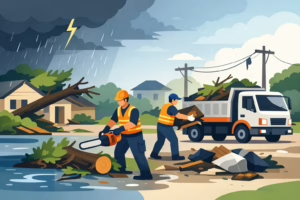
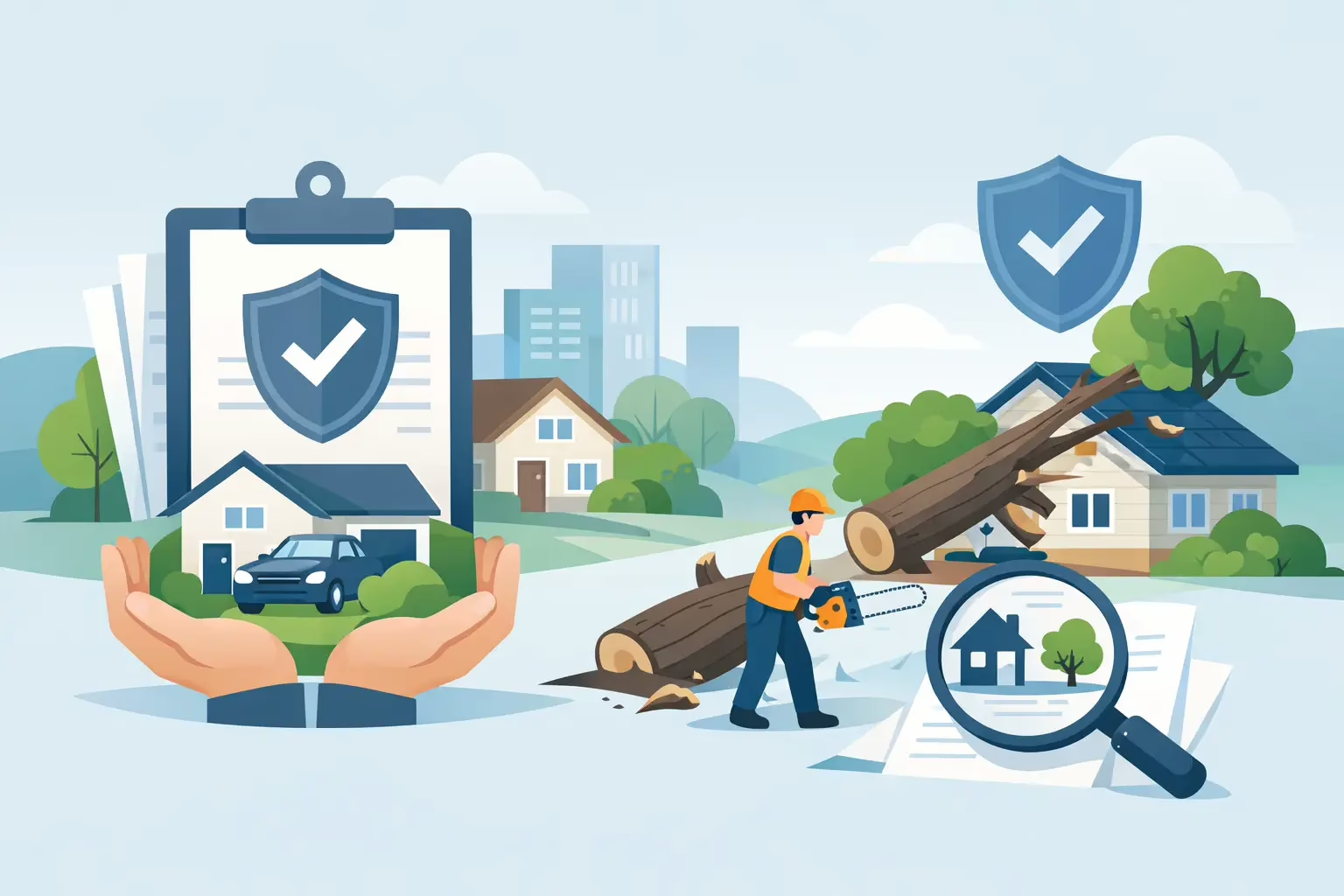
When a tree comes down, most property owners are not thinking about policy language first. They are thinking about a blocked driveway, roof damage, a fence pushed flat, or whether the tree is still shifting in the wind. That is exactly when tree removal insurance claims start to matter – because coverage often depends on why the tree fell, what it hit, and how quickly the situation is documented.
If you are dealing with storm damage in Vancouver, Washington or nearby areas, the first priority is safety. A damaged or partially fallen tree can be unstable, especially when it is resting on a structure, tangled in utility lines, or split at the trunk. Once the immediate risk is addressed, the insurance side becomes much easier to handle if you understand the basics.
How tree removal insurance claims usually work
Homeowners insurance does not automatically pay for every tree removal job. In many cases, the key question is whether the fallen tree caused covered property damage. If a windstorm knocks a tree onto your home, garage, fence, or other insured structure, your policy may help pay for both the damage and at least part of the tree removal.
If the tree falls in the yard and does not damage a covered structure, coverage is often limited or denied altogether. That surprises a lot of property owners. The tree may still be a serious cleanup problem, but insurers usually tie payment to covered damage, not just the cost of cutting up and hauling away a tree.
There are also policy limits to consider. Some insurers cap tree removal reimbursement per tree, per claim, or per event. Others may pay only when removal is necessary to access and repair the damaged structure. That means the same fallen tree could be handled differently depending on the policy details.
What insurance is more likely to cover
In practical terms, insurance is more likely to respond when a healthy or reasonably maintained tree falls because of a sudden covered event such as wind, ice, or lightning. If the tree damages your house, detached garage, shed, or another insured structure, the claim has a clearer path.
Coverage may also apply when the tree blocks a driveway or an access point needed for emergency services, though this depends on the policy. Some plans include debris removal as part of the property claim, while others treat it as a separate line item with its own limit.
This is where documentation matters. Photos of the tree before cleanup, close-up images of impact points, and notes about the weather event can all support the claim. If a branch tore through shingles or crushed a fence section, that should be clearly recorded before major debris is moved, when it is safe to do so.
When tree removal insurance claims are often denied
The hardest conversations usually happen when the tree was already dead, rotting, hollow, or obviously failing before it fell. Insurance companies may argue that the damage was preventable because the owner had time to address the hazard. The issue is not just whether the tree fell, but whether neglect played a role.
That does not mean every older tree leads to a denied claim. Trees can have internal defects that are not obvious to a homeowner. But if there were visible signs such as large dead limbs, fungal growth at the base, major trunk cracks, or a strong lean that had worsened over time, the insurer may look closely at maintenance history.
Claims are also commonly denied when a tree falls without damaging covered property. If it lands in open yard space, many policies will not pay to remove it unless the tree blocks a driveway, ramp, or another specifically covered access area. This is one of those situations where the cleanup is still urgent, but reimbursement is less likely.
What to do right after a tree falls
Start by staying clear of the area. If the tree is on a home, wrapped in utility lines, or still under tension, it is not a cleanup job for general labor. It needs professional assessment and controlled removal. Safety comes first, and that is especially true after storms when the ground is saturated and surrounding limbs may still be compromised.
Next, take clear photos and short video from a safe distance. Capture the full tree, the stump or break point if visible, any damage to structures, and the surrounding area. If weather caused the failure, make note of the timing and conditions while they are fresh in your mind.
Then contact your insurance company to open the claim. Ask a practical question right away: what emergency work do they want documented before removal begins? Many insurers understand that hazardous tree situations need prompt action, but it still helps to know what they expect in terms of photos, estimates, and communication.
Why a professional estimate matters
A proper tree service estimate does more than put a price on removal. It can explain the scope of risk, the equipment needed, whether crane work or rigging is required, and what debris handling is involved. For insurance purposes, that level of detail helps show why the work costs what it costs.
This is especially important when the tree is resting on a roof, threatening a structure, or split in a way that creates tension hazards. A low number from an unqualified operator may look attractive at first, but it can create bigger problems if the work is not performed safely or if the documentation is too vague for the claim file.
For homeowners and property managers, it helps to work with a company that understands high-risk removals, emergency response, and professional standards. At M & R Tree Services, that means approaching every job with safety at the center and work practices aligned with ANSI standards and OSHA regulations.
Tree removal insurance claims and homeowner responsibility
Insurance is not a maintenance plan. That is the part many people only learn after a loss. Routine pruning, removing dead trees, and correcting obvious hazards are usually the property owner’s responsibility.
That does not mean you need to remove every mature tree near a home. Healthy trees are valuable, and many can be managed safely with regular care. But if a tree has known structural problems, heavy deadwood, storm damage from a prior event, or root failure signs, delaying action can make both the safety risk and the insurance issue worse.
For landlords and small commercial property managers, this point matters even more. If tenants or visitors have reported concerns about a tree and nothing was done, that history can complicate things after a failure. Good records of inspections, pruning, and hazard removal can be helpful if questions come up later.
A few gray areas that depend on the policy
Not every claim fits neatly into yes or no. If your neighbor’s tree falls onto your property, your own insurer may still handle the claim based on the damage to your covered structures. If the tree was clearly dead and the neighbor knew it, there may be a separate liability discussion, but that is not automatic.
Root damage can be another gray area. If roots affect hardscape, plumbing, or foundations over time, that is often treated differently than sudden storm damage. Policies usually respond better to accidental direct loss than to gradual deterioration.
Even cleanup timing can affect payment. If emergency work is needed to make the property safe, insurers often recognize that. But extra work beyond what is necessary for immediate protection may need separate approval. That is one reason clear communication between the property owner, insurer, and tree service matters.
How to make the claim process smoother
The best approach is straightforward. Document the damage, report it quickly, and use a qualified tree service that can describe the hazard clearly and perform the work safely. Keep copies of estimates, invoices, photos, and claim communications in one place.
It also helps to ask the insurer specific questions instead of broad ones. Ask whether debris removal is covered, whether there is a per-tree limit, whether stump grinding is included, and whether emergency mitigation requires prior approval. Those answers can prevent surprises after the work is done.
If the tree did not hit a structure, do not assume the claim is pointless, but do prepare for a policy-based answer rather than a common-sense one. Insurance language can be narrower than most people expect.
A fallen tree is stressful enough without guessing your way through the next step. When the situation is urgent, safe removal and clear documentation usually do more for the claim than trying to interpret every line of the policy on your own. If you are facing storm damage or a hazardous fallen tree, getting the site secured by experienced professionals is often the smartest place to start.