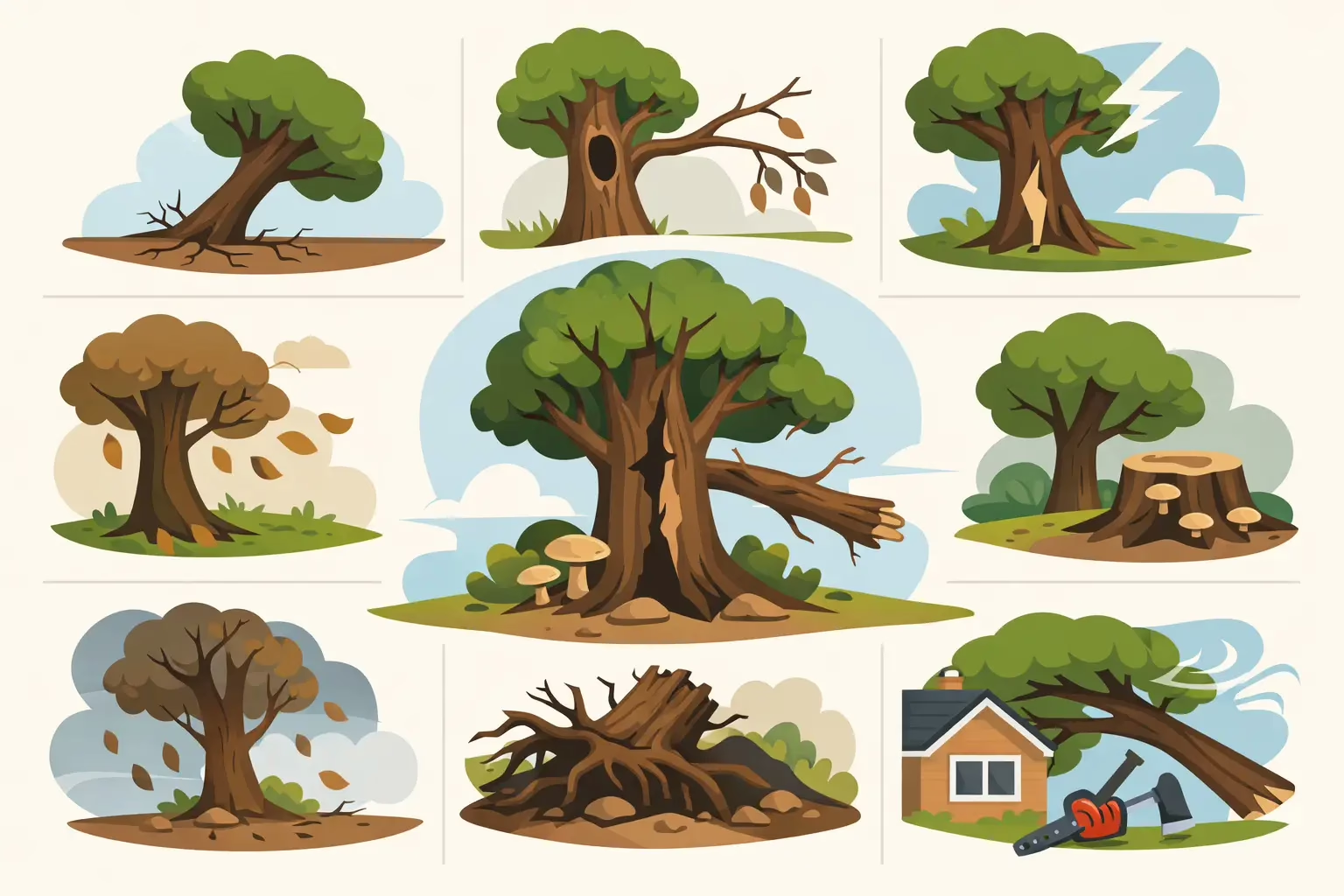
A tree can look fine from the street and still be one windstorm away from coming down. That is what makes tree hazards difficult for homeowners and property managers – the problem is not always obvious until a limb fails, the trunk splits, or the roots start lifting out of the ground.
If you are wondering whether a tree is still safe to keep, there are several warning signs you should not ignore. Some issues can be corrected with pruning, cabling, or other structural support. Others point to a tree that is no longer stable and should be removed before it damages a home, vehicle, fence, or neighboring property.
What signs a tree needs removal?
The most reliable answer comes from an on-site inspection, but a few red flags show up again and again. If you notice any of the issues below, it is time to have the tree evaluated by a qualified professional.
1. The trunk has major cracks, splits, or hollow areas
The trunk is the tree’s main support column. When it develops deep vertical cracks, obvious splits, or large hollow sections, the entire structure can become unpredictable. A tree does not need to be completely hollow to be dangerous. Even partial internal decay can weaken its ability to handle wind, rain, or the added weight of heavy limbs.
Not every crack means immediate removal. Some trees can be stabilized depending on the species, the size and location of the damage, and the overall health of the tree. But when the trunk damage is extensive, especially near the base, removal is often the safer choice.
2. Large dead branches are falling or hanging in the canopy
Deadwood in the canopy is one of the clearest visible hazards. If large limbs are brittle, leafless during the growing season, or already dropping without a storm, the tree may be in significant decline. This is especially serious when the branches extend over a driveway, sidewalk, roof, play area, or neighboring yard.
In some cases, dead branches can be removed and the rest of the tree can remain. But if a large percentage of the canopy is dead, that usually points to a deeper health or structural problem. At that stage, pruning may not be enough.
3. The tree is leaning more than it used to
A tree that has naturally grown at a slight angle for years is different from a tree that recently started to lean. A new lean, or one that seems to be getting worse, can signal root failure or soil movement. That can turn into an emergency quickly, particularly after heavy rain or wind.
Pay attention if the soil is cracking on one side of the tree, if roots are lifting, or if the trunk looks like it has shifted. A leaning tree near a structure or utility area should be inspected as soon as possible. The longer you wait, the fewer safe options may remain.
Structural and root problems that should not wait
Many homeowners focus on what they can see above ground, but some of the most serious signs a tree needs removal start lower down.
4. The roots are damaged, exposed, or lifting from the ground
Healthy roots anchor the tree and support water and nutrient uptake. When roots are cut during construction, damaged by trenching, compacted by vehicles, or beginning to lift out of the soil, stability becomes a major concern. You may also notice fungal growth near the root flare, soft ground around the base, or exposed roots that appear decayed.
Root problems are serious because they are hard to reverse. A tree can still have green leaves and yet be structurally unsound at the base. If the root system is compromised, the risk is less about appearance and more about sudden failure.
5. The tree has severe decay or fungal growth
Decay does not always stay confined to one section. Once wood-rotting organisms take hold, they can reduce the tree’s strength over time. Mushrooms or conks growing on the trunk, around the base, or from exposed roots are common warning signs. Soft, crumbly wood and areas where bark is missing can also point to internal deterioration.
There is some nuance here. Fungal growth on mulch near a tree is not the same as fruiting bodies attached directly to the trunk or root zone. That is why diagnosis matters. When decay is advanced or located in a critical structural area, removal is often the safest recommendation.
6. Storm damage has changed the tree’s structure
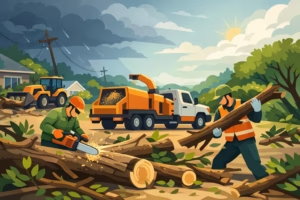
After a windstorm, ice event, or heavy snow, a tree may still be standing but no longer be sound. Split branch unions, torn limbs, twisted tops, and partially failed trunks can leave the tree unstable even if the damage does not look dramatic from the ground.
Storm-damaged trees often require quick decisions. Some can be restored with proper pruning or support systems. Others have lost too much structural integrity to remain safe. If the tree is near a house, power lines, access road, or neighboring property, do not wait for the next storm to test it.
Health decline that may point to removal
A struggling tree is not always a tree that needs to come down. Trees can decline from drought stress, pest pressure, or compacted soil and still recover with proper care. But when decline is widespread and combined with structural issues, removal becomes more likely.
7. Most of the canopy is dead or thinning badly
If a tree leafs out unevenly, has large bare sections during the growing season, or shows dieback across the upper canopy, something is wrong. Sparse foliage, unusually small leaves, and dead branch tips can all indicate severe stress or internal decline.
One bad season does not always mean the tree is finished. It depends on the species, recent weather conditions, and whether the problem is isolated or worsening year to year. But when 50 percent or more of the canopy is dead, recovery is often limited, and the cost of preserving the tree may not make sense compared to safe removal.
8. The tree is too close to structures and no longer manageable
Sometimes the issue is not decay alone. A tree may have outgrown its location and become a repeated hazard to the home, roofline, garage, fence, or neighboring property. If major limbs are rubbing the structure, roots are affecting hardscape, or the canopy keeps interfering with safe clearance, removal may be the most practical long-term solution.
This is one of those situations where trade-offs matter. Mature trees add shade, privacy, and curb appeal. But when the tree’s size and condition create ongoing risk or expensive maintenance, keeping it may no longer be the responsible choice.
When removal is more likely than pruning
Homeowners often ask whether a tree can just be trimmed instead. Sometimes it can. Pruning is a good option when the tree is healthy overall and the issue is limited to a few dead, overextended, or poorly placed limbs.
Removal is more likely when the trunk is compromised, the root system is failing, the lean is increasing, or the canopy decline is severe. The same is true when storm damage has altered the tree’s structure beyond safe recovery. In those cases, cutting back branches may reduce weight temporarily, but it does not fix the underlying hazard.
That is why a professional assessment matters. A qualified crew can determine whether the tree can be preserved, supported, or pruned safely, or whether removal is the better option for the property and the people around it.
Why fast action matters
Waiting can make tree problems more expensive and more dangerous. A damaged tree rarely improves on its own. It usually continues to weaken, especially through wind, rain, and seasonal stress. What starts as a visible crack or a few dead limbs can turn into a failed trunk, roof damage, blocked access, or an emergency call after hours.
For property owners in Vancouver, Washington and nearby areas, the safest next step is a professional inspection by a team that follows recognized safety standards. M & R Tree Services handles tree removal, storm damage response, pruning, and structural support with a focus on reliable service and ANSI and OSHA-aligned work practices.
If something about a tree does not look right, trust that instinct and have it checked before it becomes urgent. A timely decision can protect your home, your landscape, and your peace of mind.