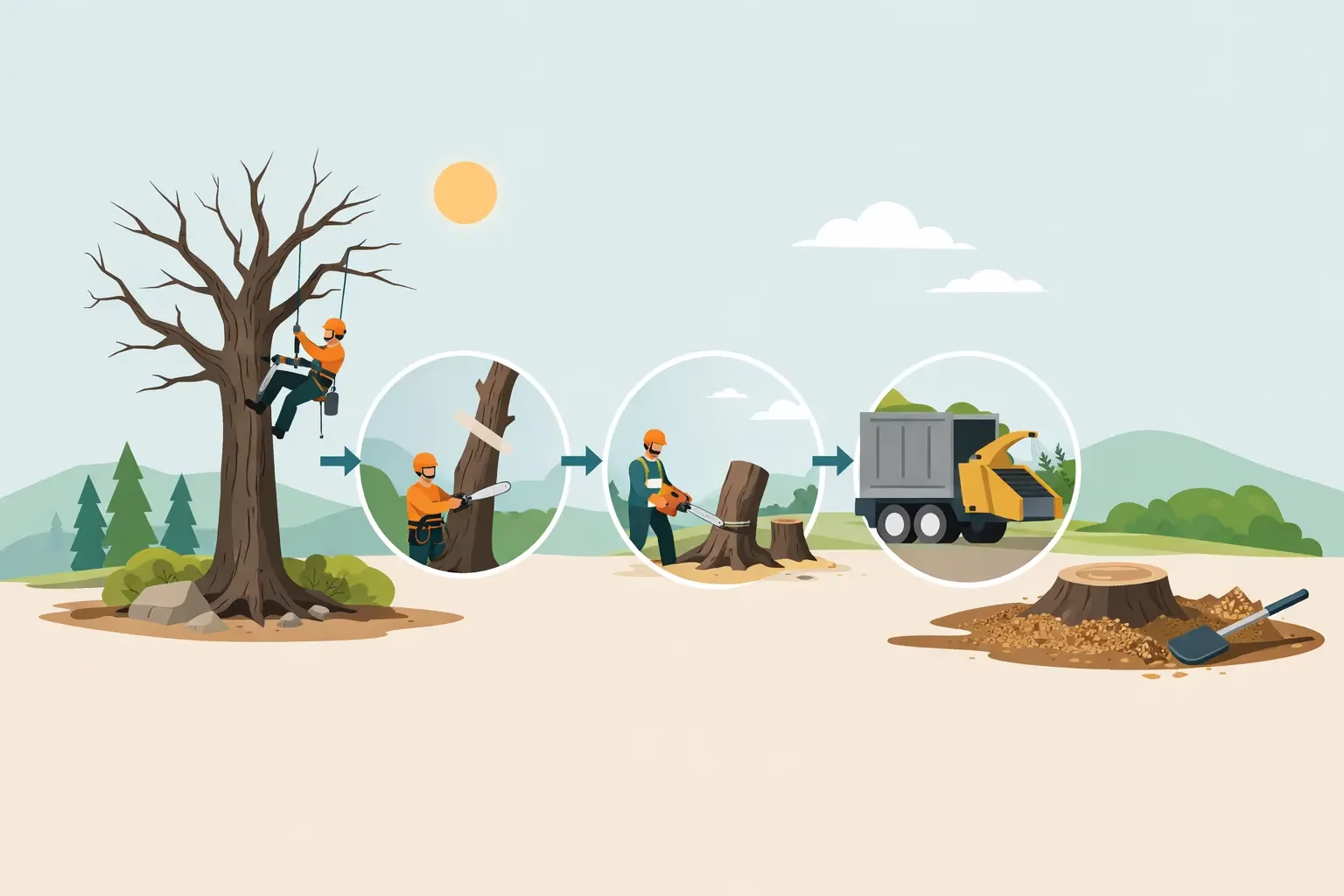
A dead tree can look unchanged for weeks, then fail without much warning. That is why the dead tree removal timeline matters for homeowners, landlords, and property managers. If a tree is already dead, the safest approach is usually to schedule an inspection quickly and move forward before weather, decay, or structural weakness turns a manageable job into an emergency.
For most properties, removal can happen within a few days to a couple of weeks after the first call, but the exact timing depends on the tree’s condition, size, location, site access, and whether there is immediate risk to people or structures. A dead tree leaning over a house, fence, driveway, or power-adjacent area will usually move up the schedule. A dead tree in an open part of the yard may allow a little more planning time, but it should still not be left standing longer than necessary.
What affects the dead tree removal timeline
The biggest factor is hazard level. If the trunk is splitting, large limbs are dropping, the root system is failing, or the tree is near a home, garage, sidewalk, or neighboring property, the job may need urgent attention. Dead wood becomes brittle over time, which can make both the risk and the removal process more serious.
Tree size also changes timing. A smaller dead ornamental tree in an open yard can often be removed faster than a tall fir or maple with wide crown spread and limited drop zone. Larger removals require more planning, more crew coordination, and often more specialized rigging to protect surrounding property.
Access matters just as much as tree size. If equipment can reach the work area easily, the job typically moves faster. If the tree sits behind a fence, near landscaping, over a roof, or in a tight backyard with limited entry, the crew may need to climb, rig sections carefully, and remove debris in smaller loads. That adds time, but it is the right trade-off when safety and property protection are the priority.
Weather can also affect the schedule. High winds, ice, heavy rain, or storm conditions may delay standard removals while emergency work takes priority. In the Pacific Northwest, that is a real factor. A dead tree that seems stable during dry weather can become dangerous fast when soil softens or wind pressure increases.
A typical timeline from first call to completed removal
In many cases, the process starts with a site visit and quote. A qualified tree service evaluates the tree’s condition, surrounding hazards, access, and the safest removal method. If the tree is clearly dead and hazardous, that recommendation is usually straightforward. If the tree is declining rather than fully dead, the company may explain whether removal is urgent or whether there is a short window to plan around scheduling.
After the assessment, timing depends on urgency and workload. Non-emergency dead tree removals are often scheduled within several business days to two weeks. Emergency situations may be handled the same day or as soon as conditions allow. If a storm has just passed, availability may tighten temporarily because crews are responding to fallen trees and immediate hazards first.
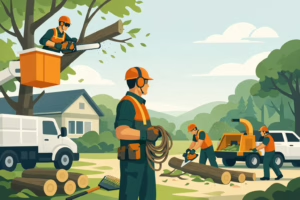
On the day of service, the actual removal may take a few hours or most of a day. A smaller tree with open access can be completed relatively quickly. A large dead tree over structures may require sectional dismantling, controlled lowering, and careful cleanup. If stump grinding is included, that may be completed the same day or scheduled separately depending on equipment, site conditions, and the scope of work.
Debris hauling is usually part of the final step. Some customers want all wood and brush removed, while others choose to keep cut firewood if it is usable. With dead trees, though, wood quality varies. Some dead wood is too decayed, insect-damaged, or unsafe to store near the home.
When dead tree removal should happen fast
Some timelines should be measured in hours, not weeks. If the tree is actively dropping large limbs, leaning more than before, cracking at the trunk, uprooting, or hanging over occupied areas, it needs immediate professional attention. The same is true if a storm has exposed root movement or broken major scaffold limbs.
There is also a less obvious urgency issue with dead trees that stand near play areas, driveways, walkways, and property lines. Even if the whole tree is still upright, dead limbs can fail unexpectedly. Waiting because the trunk is still standing can create a false sense of security.
For rental properties and small commercial sites, there is another reason not to delay. A dead tree can create a foreseeable hazard, and postponing action after the risk becomes obvious may expose the owner or manager to preventable damage and liability concerns. Prompt removal is not just a maintenance decision. It is often the responsible one.
Why waiting can make the job harder
Many property owners assume a dead tree can simply stay in place until it becomes convenient to remove. In practice, delay often increases both risk and complexity. As wood dries out and decays, branches become more unpredictable during cutting and rigging. Sections may shatter instead of holding together cleanly, which changes how a crew approaches the work.
The base of the tree can also deteriorate. If rot advances through the trunk or root flare, climbing options may be reduced and removal methods may need to change. In some cases, what could have been a standard scheduled removal becomes a more technical job because the tree is no longer stable enough for the original plan.
There is a cost angle too. While every property is different, waiting rarely improves the situation. If a dead tree falls and damages a fence, roof, vehicle, or neighboring structure, the total cost goes far beyond planned removal.
How professionals keep the timeline safe and efficient
A reliable tree company does more than fit you into the calendar. It evaluates risk, confirms the right equipment and crew for the job, and follows recognized safety practices during removal. That matters with dead trees because they can behave differently from live trees under load and during cutting.
Proper planning includes identifying drop zones, rigging points, nearby structures, and any obstacles that affect dismantling. It may also involve traffic control considerations, coordination around neighboring property, or extra care near utility-related hazards. The fastest removal is not always the best one if it cuts corners.
That is why homeowners should pay attention to professionalism, not just availability. Experience, licensing, insurance, and commitment to ANSI standards and OSHA regulations are all part of a safer process. For high-risk work, that level of care matters more than saving a day or two on the schedule.
Dead tree removal timeline in busy seasons
Spring and storm season can both affect scheduling. In spring, many property owners start outdoor projects and notice dead or declining trees after winter weather. After wind events, emergency calls naturally move to the front of the line. That does not mean your project will wait indefinitely, but it does mean the sooner you call, the better your options usually are.
If the tree is dead but not yet failing, proactive scheduling gives you more flexibility. You can choose a time that works for your property, discuss stump grinding if needed, and avoid competing with emergency demand. If the tree is already unstable, however, it should be treated as a priority regardless of season.
What to do if you think a tree is dead
If the tree has no leaf-out in season, bark is falling away, branches snap easily, fungi are present near the base, or the trunk sounds hollow, do not guess and do not wait for a bigger warning sign. Have it inspected by a qualified professional. A dead tree does not become safer with time.
For property owners in Vancouver and nearby communities, local conditions matter too. Wet soils, wind exposure, and tree species common to the area can all influence how quickly a dead tree becomes hazardous. A local crew with real field experience can usually tell you whether the situation calls for immediate removal or prompt scheduled service.
M & R Tree Services helps homeowners and property managers make that call with clear recommendations, safe work practices, and reliable scheduling. If you are looking at a dead tree and wondering whether you have time, the safest answer is simple: get it evaluated now, while the timeline is still yours to control.