
That old stump in the yard usually starts as a minor annoyance. Then the mower catches it, kids trip over it, or new shoots start popping up around it, and suddenly it becomes one more problem you want handled the right way.
If you are asking how much does stump grinding cost, the honest answer is that price depends on the stump itself, the location, and how much cleanup is involved. Most homeowners are not paying for a simple flat-rate task. They are paying for specialized equipment, safe operation, and a job that leaves the property cleaner, safer, and easier to maintain.
How much does stump grinding cost?
In many residential situations, stump grinding costs fall somewhere between $150 and $500 for a single stump. Smaller stumps on open, easy-to-access lots often come in at the lower end. Large hardwood stumps, stumps in tight spaces, or jobs that involve multiple stumps can push the total higher.
There is no true one-size-fits-all number because stump grinding is tied to labor, equipment wear, travel, and site conditions. A small stump near the curb is very different from a wide stump tucked behind a fence, near utilities, or surrounded by landscaping that needs to be protected.
For that reason, the most accurate price usually comes from an on-site estimate. A professional crew can look at stump diameter, root flare, access, and surface conditions and tell you what the work will actually involve.
What affects stump grinding cost the most?
The biggest factor is usually stump size. Many companies price by diameter, and that measurement may include the visible root flare at the base, not just the narrow center of the stump. A stump that looks modest at first glance can measure much wider once you account for the full base.
Tree species matters too. Dense hardwoods can be slower and harder on equipment than softer species. That does not always create a dramatic difference, but it can affect labor time and blade wear, especially on older, tougher stumps.
Access is another major pricing factor. If a grinder can roll straight to the stump through a wide gate on level ground, the job is usually faster and more straightforward. If the crew has to work through a narrow side yard, avoid irrigation lines, protect retaining walls, or navigate slopes, that extra care affects the quote.
Depth also changes the cost. Some homeowners only want the stump ground enough to remove the visible hazard and improve appearance. Others need it ground deeper so they can lay sod, replant, or prepare for a future patio, fence, or driveway project. The deeper the grind, the more time and machine work the job requires.
Cleanup and haul-away can also be part of the price. Stump grinding creates a pile of wood chips and debris. Some customers want those chips left on site for mulch, while others want the area fully cleaned and the material removed. Hauling debris away adds time, labor, and disposal costs.
Typical price ranges by stump size
For a small stump, homeowners often see pricing around $150 to $250 if the location is open and the job is simple. Medium stumps commonly land in the $250 to $400 range. Large stumps, especially wide ones with substantial root flare, may cost $400 to $800 or more depending on access and depth.
Those ranges are broad on purpose. A 12-inch stump in the front yard and a 12-inch stump behind a fence with limited equipment access are not the same job. The same goes for a large stump in bare soil compared with one surrounded by decorative stone, garden edging, or underground utility concerns.
If you have multiple stumps, the per-stump cost may go down once the crew and equipment are already on site. That is often the most cost-effective time to handle all remaining stumps instead of doing them one at a time over several seasons.
Stump grinding vs. full stump removal
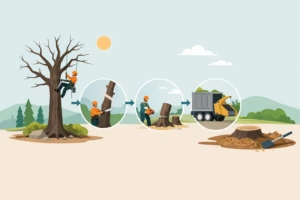
Some property owners use these terms interchangeably, but they are not the same service. Stump grinding removes the visible stump by grinding it below grade, typically leaving the larger root system underground. Full stump removal involves extracting the stump and root mass, which is more invasive and usually more expensive.
Grinding is often the better fit for residential properties because it is faster, less disruptive, and more affordable. It addresses the trip hazard, improves appearance, and makes the space easier to use. Full removal may be necessary if you are doing major construction, replacing hardscape, or need the entire root zone cleared for a specific project.
If your main goal is to restore the lawn and eliminate the visible stump, grinding is usually the practical solution. If your goal is complete excavation for new building or utility work, removal may be worth the added cost.
Why cheap stump grinding quotes are not always a bargain
A low number can look appealing, especially if the stump seems like a small job. But stump grinding is still heavy equipment work, and mistakes can damage lawns, irrigation systems, fences, walkways, and nearby structures. It also involves flying debris, rotating cutting teeth, and underground hazards that need to be identified before work begins.
A qualified company should be able to explain how they approach safety, site protection, and cleanup. For homeowners, that matters just as much as the final price. The cheapest quote is not a bargain if the work leaves a bigger repair bill behind.
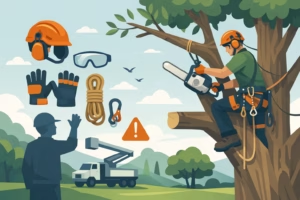
This is one reason professional standards and field experience matter. A crew that follows proper safety practices and works carefully around your property is providing more than stump grinding alone. They are reducing risk.
When stump grinding is worth the cost
In many yards, a leftover stump lowers both safety and usability. It creates a mowing obstacle, takes up valuable space, and can attract insects or decay over time. In some cases, it also keeps sending up sprouts, which means more ongoing maintenance.
Grinding is often worth it when you want a cleaner-looking yard, fewer hazards, and easier landscaping. It can also make a property more presentable if you are preparing to sell, rent, or improve curb appeal. For landlords and property managers, removing stumps can reduce maintenance issues and liability concerns.
There is also the practical side. The longer a stump sits, the more likely it becomes an accepted nuisance that keeps causing the same small problems year after year. Taking care of it once can save time and frustration later.
What to ask before approving the job
Before you schedule service, ask what is included in the quote. You should know how deep the stump will be ground, whether surface roots are included, what cleanup is provided, and whether the wood chips will be left or hauled away.
It is also smart to ask about access requirements. Gates, slopes, soft ground, and nearby structures can affect both pricing and scheduling. A good estimate should account for those conditions up front rather than surprising you later.
If you are planning to replant or build in the area, mention that before the work starts. The intended use of the space can affect how deep the grind needs to go and whether additional root work is recommended.
Getting an accurate stump grinding quote
Photos can help with a preliminary estimate, but an on-site visit is often the best way to price stump grinding correctly. A professional can verify measurements, inspect access, and spot issues that are easy to miss in pictures.
For homeowners in Vancouver, Washington and nearby communities, working with an experienced local tree service means you get a quote based on real site conditions, not guesswork. At M & R Tree Services, that means straightforward recommendations, reliable scheduling, and service backed by safe work practices and professional standards.
If you have been putting off that stump because you are unsure about the price, the best next step is simple: get a clear quote and compare it to the cost of leaving the problem in place.