A dead tree can look stable right up until the moment it fails. One windstorm, one heavy limb, or one hidden crack in the trunk can turn a neglected tree into a real hazard for your home, driveway, fence, or family. That is why removing dead tree safely is less about getting the job done quickly and more about making the right call before the tree makes it for you.
For homeowners and property managers, the challenge is not just spotting a dead tree. It is understanding how unpredictable dead wood becomes. Once a tree has died, its structure starts to change. Branches dry out, the trunk can hollow from the inside, and the root system may lose its grip in the soil. A tree that seemed manageable last season can become dangerous after a few weeks of rain or a strong stretch of wind.
Why removing dead tree safely is not a simple yard task
A lot of outdoor work feels approachable until the risk is high enough that experience matters more than effort. Dead tree removal falls squarely into that category. Unlike pruning a healthy ornamental tree or clearing brush, removing a dead tree often involves brittle wood, unstable weight distribution, and uncertain failure points.
That uncertainty is what makes dead trees so risky. Healthy trees have some flexibility. Dead trees do not. Limbs can snap without warning while being cut. Sections of trunk can split vertically. In some cases, the top can break free before the cut is complete. If the tree leans toward a house, garage, power line, or neighboring property, the margin for error gets very small very quickly.
This is also why reputable tree companies emphasize safety standards rather than shortcuts. Proper removal is about planning, equipment, site protection, and controlled execution. It is not just about whether a saw can cut through the wood.
Signs a dead tree needs urgent attention
Some dead trees stand for years with limited immediate risk. Others need prompt removal. The difference depends on size, location, condition, and what the tree could hit if it fails.
A tree deserves urgent attention when large limbs are already dropping, the trunk has visible cracks, or the base shows signs of decay or soil movement. A strong lean, fungal growth near the root flare, and bark falling away across most of the trunk can also point to significant decline. If the tree is close to a structure, sidewalk, play area, parked vehicles, or utility lines, the urgency increases even if the tree is still standing upright.
Storm damage changes the equation too. A dead tree that has been twisted, split, or partially uprooted after wind or ice should be treated as an active hazard. In those cases, waiting can make removal more dangerous, not less.
What homeowners should expect during a professional assessment
When a qualified tree service evaluates a dead tree, the goal is not only to confirm that it is dead. The bigger question is how the tree is likely to fail and what removal method will keep the property safest.
That assessment usually starts with the tree’s lean, height, canopy condition, and proximity to nearby targets. The crew will look at the trunk for cavities, seams, decay pockets, and structural weakness. They will also consider access – whether equipment can reach the tree, whether the work area allows for safe rigging, and whether traffic, fencing, landscaping, or neighboring properties limit removal options.
This is where experience matters. Two dead trees of similar size can require very different approaches. One may be removed in sections with controlled rigging. Another may need a crane or a more technical dismantling process because the wood is too compromised for conventional climbing. There is no one-size-fits-all method when safety is the priority.
The biggest risks in removing a dead tree
The public often thinks the main danger is the final fall. In reality, many of the most serious accidents happen before that stage.
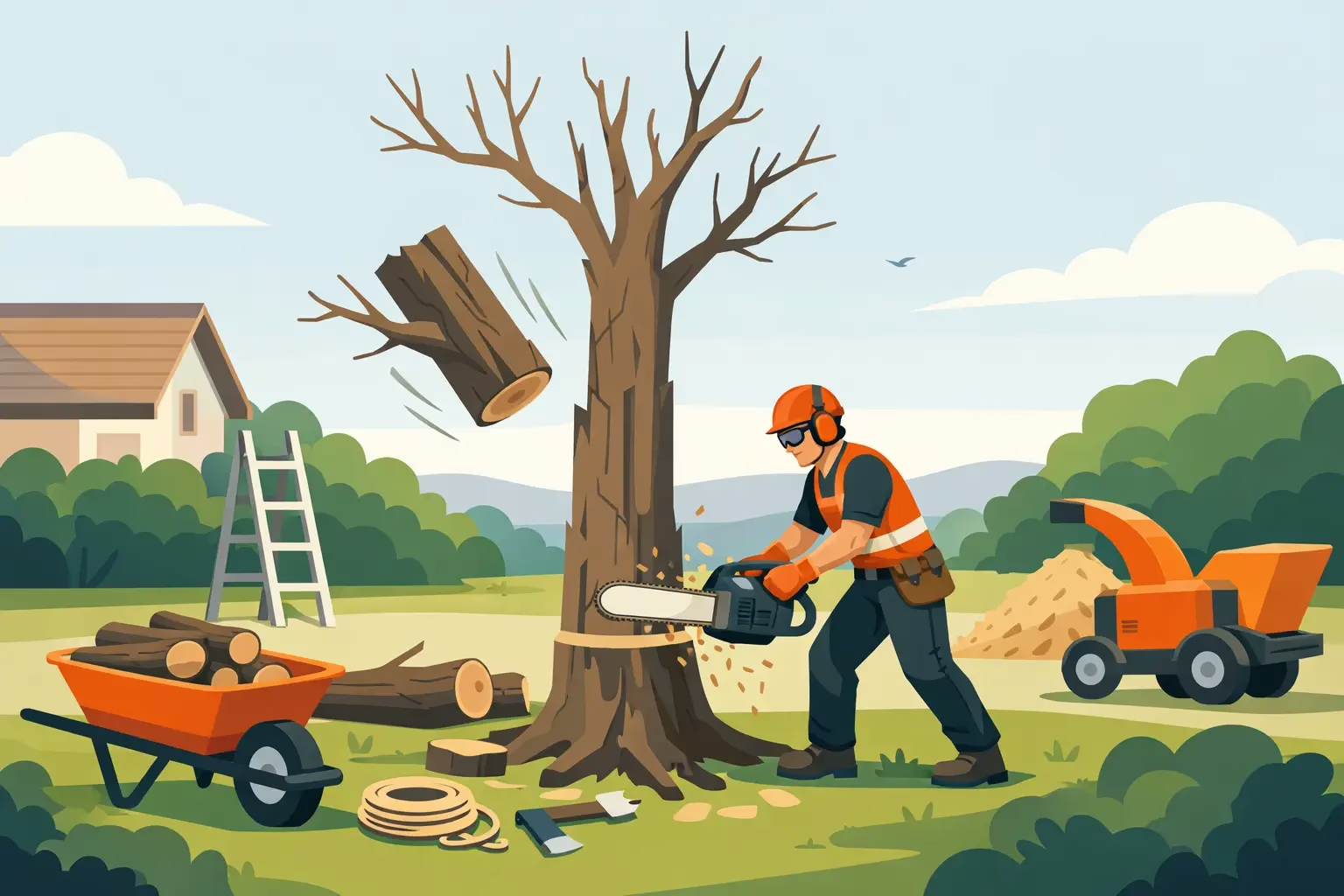
Dead limbs can break loose during setup. Climbing points may fail because the wood cannot support the arborist’s weight the way a live tree can. Ropes and rigging behave differently when anchor points are compromised. Even ground crews face risk from falling debris, kickback, shifting trunk sections, and changing wind conditions.
There is also the issue of hidden decay. A tree may look solid from the outside while being extensively hollow inside. Once cutting begins, the internal condition may reveal itself in ways that force the crew to adjust the plan immediately. That is another reason trained professionals follow strict procedures and work with the right protective equipment, communication, and site control.
Removing dead tree safely near homes, driveways, and power lines
Location changes everything. A dead tree in an open field is one thing. A dead tree hanging over a roof or standing near service lines is another.
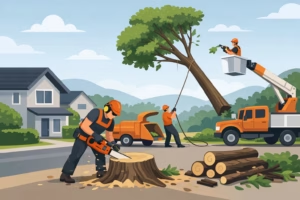
Near homes and garages, removal often has to be done in smaller pieces to avoid impact damage. That means carefully lowering branches and trunk sections rather than letting them fall freely. Near driveways, patios, and landscaping, the crew may need to protect surfaces and control debris placement. In tighter neighborhoods, neighboring fences, sheds, and parked cars also become part of the risk calculation.
Power lines raise the stakes even further. Homeowners should never attempt to deal with tree limbs touching or hanging near utility lines. That type of work requires specialized coordination and should be handled by properly qualified professionals. The safest move is to keep people away from the area and call for expert help.
Why dead tree removal is not a DIY job
Some property tasks reward a hands-on approach. Dead tree removal is usually not one of them. The problem is not just equipment. It is judgment.
A chainsaw alone does not make the work manageable, and rental equipment does not replace training. Knowing where to cut, how the tree will react, where the weight is shifting, and when conditions are too dangerous to proceed is what prevents property damage and injury. Those decisions come from field experience, not guesswork.
For homeowners, there is also liability to consider. If a removal attempt damages a structure, injures someone, or affects a neighboring property, the cost can rise fast. Hiring a professional team is often the more responsible decision, especially when the tree is mature, damaged, leaning, or near anything valuable.
What a safe removal process should include
A proper dead tree removal should begin with a site-specific plan. That includes identifying hazards, setting up drop zones, controlling access to the work area, and choosing the right removal technique for the tree’s condition.
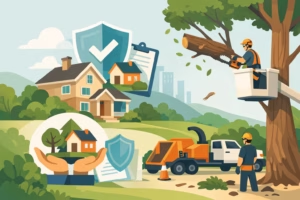
The crew should use professional-grade equipment and follow recognized safety practices. For a company like M & R Tree Services, that means work performed with attention to ANSI standards and OSHA regulations, not improvised methods. Homeowners may not see every technical step, but they should see a team that communicates clearly, protects the site, and works in a controlled, organized way.
Cleanup matters too. Once the tree is down, debris removal, wood handling, and stump options should be addressed clearly. Some customers want firewood cut lengths. Others want everything hauled away and the stump ground so the yard can be restored. A good service experience makes those next steps straightforward.
When to call for emergency dead tree service
Not every dead tree is an emergency, but some situations should move to the top of the list. If the tree has started to split, is partially fallen, is leaning more after a storm, or has dropped major limbs, it should be inspected as soon as possible. The same is true if the roots appear lifted or the trunk is threatening a home, driveway, or access point.
After severe weather, it helps to resist the urge to walk directly under damaged trees for a closer look. Keep a safe distance and arrange for a professional evaluation. Trees under tension can release suddenly, and what looks quiet can still be unstable.
Cost is always part of the conversation, and that is fair. But with dead trees, waiting to save money can sometimes lead to a far more expensive outcome if the tree fails unexpectedly. A prompt inspection gives you a clearer idea of the risk, the scope of work, and the best timing.
If you have a dead tree on your property, the smartest first step is not to test it yourself. It is to have it assessed by a qualified local tree service that understands safe removal, proper standards, and what it takes to protect your home and the people around it.