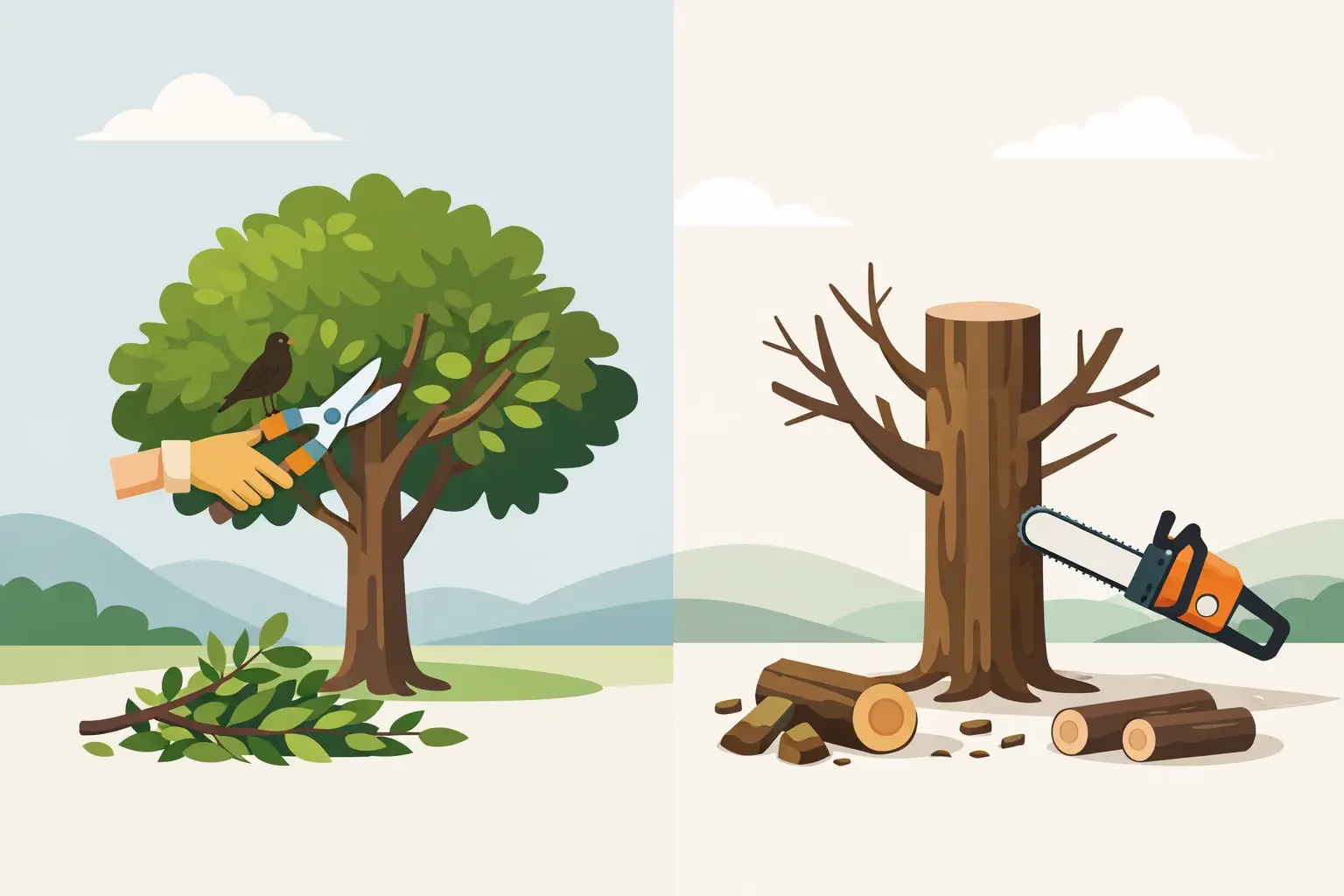
A tree can look “cleaned up” right after a heavy cut and still be headed for trouble. That is the real issue in pruning versus tree topping. To a homeowner, both can seem like ways to reduce height or control growth. In practice, they are very different services with very different outcomes for safety, appearance, and long-term tree health.
Proper tree care is not about taking off the most wood. It is about making the right cuts in the right places for a clear reason. When trees are pruned correctly, they can be safer, healthier, and better shaped for the space they are growing in. When trees are topped, the tree often responds with stress, weak regrowth, and a greater chance of future failure.
Pruning versus tree topping: what is the difference?
Pruning is the selective removal of specific branches to improve a tree’s structure, health, clearance, or appearance. A qualified crew looks at branch size, attachment points, species, growth pattern, defects, and surrounding targets such as homes, driveways, sidewalks, and utility lines. The goal is to help the tree while also reducing risk on the property.
Tree topping is the cutting back of large branches or the main stem to stubs or lateral branches that are too small to assume the terminal role. In plain terms, it means taking the top off or severely cutting back a tree without regard for proper branch structure. Topping is usually done to make a tree shorter fast, but quick results often create larger problems later.
This distinction matters because a tree does not respond to topping the way many people expect. It does not become permanently smaller and easier to manage. More often, it reacts by pushing out a flush of fast-growing shoots near the cut points. Those shoots are usually weakly attached and more likely to break as they grow.
Why topping creates more risk, not less
Many property owners ask about topping because they are worried about branches over a roof, a tree that feels too tall, or storm damage potential. Those are valid concerns. The problem is that topping is rarely the right fix.
When a large portion of the canopy is removed at once, the tree loses a major part of its food-producing leaf area. That stress can weaken the tree’s defense system and make it more vulnerable to decay, sunscald, pests, and disease. Large topping cuts also create wounds that the tree may struggle to close.
Then comes the regrowth. After topping, trees often produce upright water sprouts in clusters around the cut ends. These shoots can grow quickly, which sometimes gives the impression that the tree is recovering well. Structurally, though, they are commonly attached to the outer layers of wood rather than supported by strong natural branch unions. Over time, those shoots become heavy and can fail during wind, snow, or ice.
So while topping may reduce height for the moment, it can increase future maintenance needs and raise the likelihood of breakage. That is one reason professional arboricultural standards do not treat topping as a sound routine practice.
What proper pruning is designed to do
Good pruning starts with a purpose. Sometimes the goal is clearance over a home, driveway, fence, or walkway. Sometimes it is crown cleaning to remove dead, cracked, rubbing, or poorly attached limbs. In other cases, the focus is crown reduction or structural pruning to improve form and reduce end weight on selected branches.
The difference is precision. Instead of cutting a tree back arbitrarily, proper pruning works with the tree’s natural architecture. Cuts are made at appropriate locations, and the amount removed is controlled. That helps preserve the tree’s ability to recover while addressing the actual concern.
For mature trees near homes and high-use areas, this matters even more. A tree may need less sail in the canopy, better branch spacing, or removal of damaged limbs after a storm. It does not automatically need the top cut off. In many cases, selective pruning can reduce risk and improve appearance without creating the long-term structural problems topping is known for.
When homeowners confuse reduction with topping
There is one area where confusion is common: crown reduction. A proper crown reduction lowers the height or spread of a tree by cutting back to suitable lateral branches. It is a specialized pruning method used only when appropriate for the species, condition, and site.
That is not the same as topping. The cuts in a crown reduction are selected to preserve a more natural canopy and maintain better branch structure. It takes judgment and restraint. If the wrong branches are cut, or too much is removed, the result can drift into the same harmful territory as topping.
This is where experience matters. Not every tree is a good candidate for reduction, and not every overgrown tree should be retained. Sometimes the safest and most cost-effective option is pruning. Sometimes it is structural support like cabling or bracing. Sometimes, if the tree is severely compromised, removal may be the more responsible recommendation.
Signs a tree needs professional pruning
If you are trying to decide whether a tree needs attention, look at the risk factors rather than just the height. Dead limbs, cracked unions, branches rubbing together, low clearance over roofs or vehicles, storm-damaged sections, and limbs extending too far over occupied areas are all signs that a professional inspection is a smart next step.
Leaning, included bark, previous poor cuts, and dense overextended limbs can also point to structural concerns. A tree that was topped in the past may need corrective pruning, but expectations should stay realistic. Once a tree has been topped, it can take years of follow-up work to manage the regrowth, and some damage to structure and appearance may be permanent.
This is why routine maintenance is often the better investment. Pruning on a sensible schedule usually costs less over time than waiting until a tree is overgrown, storm-damaged, or poorly cut by an unqualified service.
Pruning versus tree topping and property value
Trees are part of the look and function of a property. Healthy, well-maintained trees can add shade, curb appeal, and character. Poorly topped trees tend to do the opposite. They often look unnatural, become uneven as they regrow, and can turn into recurring hazards that require repeated work.
For landlords and property managers, that can mean more complaints, more cleanup, and more exposure to liability if weak regrowth fails over walkways, parking areas, or neighboring property. For homeowners, it can mean paying twice – first for the topping, then again for corrective pruning, damage repair, or removal later.
A qualified tree care company should be able to explain not just what they plan to cut, but why. That includes discussing trade-offs. A large mature tree close to a structure may need selective reduction in specific areas. A fast-growing species with a history of poor previous cuts may need a different plan. Good advice is rarely one-size-fits-all.
Why standards and training matter
Tree work is high-risk work. The difference between proper pruning and harmful cutting is not cosmetic – it affects structural integrity, worker safety, and the safety of people and property below. That is why professional practices matter.
A company that follows ANSI standards and OSHA regulations is operating with recognized safety and work-quality benchmarks in mind. That is especially important when heavy limbs are being removed near homes, fences, power lines, or traffic areas. It also gives property owners confidence that the work is being approached as arboriculture, not just cutting for speed.
At M & R Tree Services, that commitment is part of how tree care gets done. Homeowners want clear answers, safe work practices, and recommendations they can trust. They do not need a quick shortcut that leaves them with a weaker tree six months from now.
The right question to ask before any major cut
If a contractor recommends taking the top off a tree, ask what problem that cut is solving and how the tree is expected to respond over time. A solid answer should address structure, species, recovery, and future risk. If the explanation is simply that topping makes the tree smaller, that is not enough.
The better approach is to ask what pruning option fits the tree, the site, and your goals. Sometimes the answer is selective pruning. Sometimes it is reduction in limited areas. Sometimes the safest decision is removal followed by replacement with a better-suited species.
The key is avoiding a cut that creates a bigger problem than the one you started with. If you are concerned about a tree on your property, get it evaluated before stress, decay, or storm weather makes the decision harder. A well-pruned tree can stay an asset for years. A topped tree often becomes a project you did not mean to inherit.