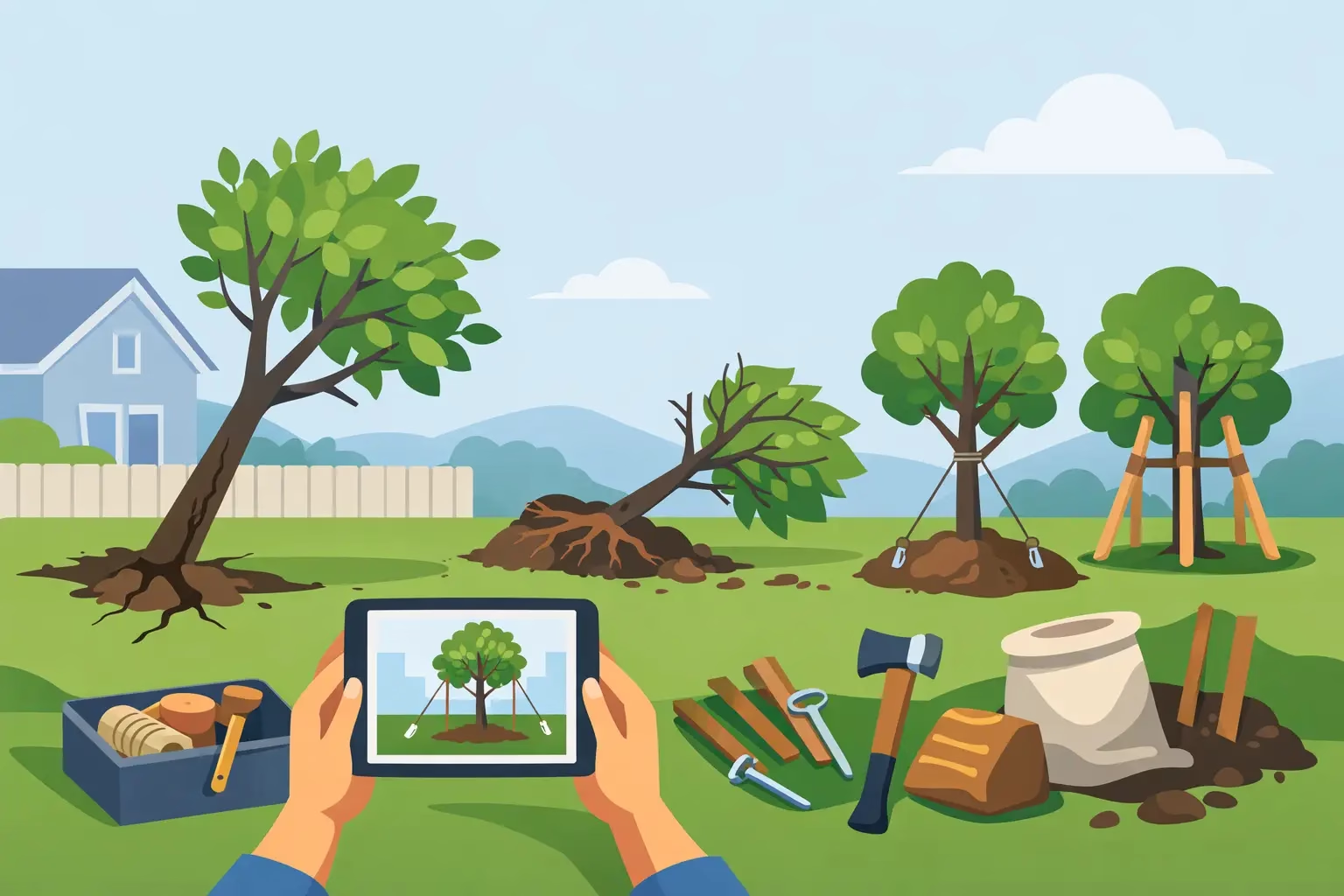
A tree that suddenly leans farther after rain, drops unusually large limbs, or shows a fresh crack near its base is not a weekend yard project. The best solutions for unstable trees depend on why the tree is failing, where it is located, and whether its structure can be made safer without creating a larger risk for your home, vehicles, neighbors, or utility lines.
In Vancouver and surrounding Southwest Washington communities, wet soil, windstorms, aging trees, root damage, and heavy branch growth can all contribute to instability. A professional assessment is the safest starting point. It identifies whether the tree can be retained with proper support and pruning or whether removal is the responsible choice.
What Makes a Tree Unstable?
An unstable tree does not always look obviously dangerous. Some trees lean naturally and have adapted over decades. Others develop a new lean because their root system is lifting, the soil is moving, or one side of the canopy has become too heavy. The difference matters.
Root problems are a leading concern. Exposed roots, soil heaving around the trunk, mushrooms near the base, or a newly visible gap between the trunk and soil can indicate that the root plate is failing. This is particularly serious after extended rainfall, flooding, or high winds, when saturated soil cannot hold roots as firmly.
Structural defects higher in the tree can also create risk. A trunk split, a deep vertical crack, a weak V-shaped union where major stems meet, or a large dead limb over a driveway may require prompt action. Decay can be hidden inside a trunk even when the outside appears healthy, so visual appearance alone should not determine whether a tree is safe.
When an Unstable Tree Needs Immediate Attention
A tree should be evaluated as soon as possible when it has changed position, developed a visible crack, or lost major branches. Emergency service may be necessary when the tree or a broken limb is near a home, roof, fence, road, parked vehicle, or power line.
Watch closely for these warning signs:
- A new or worsening lean, especially when soil or roots are lifting on one side
- Cracks, splits, cavities, or peeling bark on the trunk or at large branch unions
- Dead, hanging, or broken limbs over areas where people walk or park
- Sudden canopy loss after a storm, particularly if remaining branches are unevenly weighted
- Trees touching utility lines or branches that could fall into electrical equipment
Do not stand beneath a compromised tree, climb it, or try to pull it upright with ropes, vehicles, or straps. Those actions can cause a delayed failure or move the tree in an unpredictable direction. If electrical lines are involved, keep everyone clear and contact the utility provider as well as a qualified tree service.
Best Solutions for Unstable Trees: Support, Pruning, or Removal
The right solution is based on the tree’s species, health, age, location, root condition, and structural defects. A dependable tree care crew should explain the options clearly rather than treating every unstable tree as an automatic removal.
Cabling and Bracing for Structural Support
Cabling and bracing can help preserve certain mature trees with weak branch unions or multiple stems. A professionally installed cable system reduces movement between major limbs, lowering the chance that a heavy stem will split away during wind or snow. Bracing rods may also be used in specific cases to reinforce a cracked or weak union.
This solution works best when the tree has enough sound wood and root stability to remain a good candidate for retention. Cabling does not repair decay, reverse root failure, or make a severely compromised tree safe forever. It is a risk-reduction measure that should be inspected periodically and paired with proper pruning when appropriate.
For homeowners who value a large established shade tree, support systems can be a practical middle ground. The trade-off is ongoing monitoring. Trees continue to grow, weather changes, and hardware must be evaluated over time to ensure it remains effective.
Selective Pruning to Reduce Weight and Wind Load
Targeted pruning can improve stability by reducing excess weight on overextended limbs and balancing a lopsided canopy. It may also remove deadwood, damaged branches, and limbs with poor attachments before they fail.
Proper pruning is not the same as topping. Cutting large amounts of canopy from the top of a tree can stimulate weak regrowth, stress the tree, and make future failures more likely. A professional approach focuses on selective cuts that respect the tree’s natural structure and ANSI pruning standards.
Pruning is often useful for a tree that is basically sound but carrying too much weight on one side. It is not enough, however, when roots are failing, decay has hollowed out a major portion of the trunk, or a structural split is already progressing.
Tree Removal When the Risk Cannot Be Managed
Removal is sometimes the safest and most cost-effective solution. A tree with extensive decay, a failing root system, severe storm damage, or a dangerous location close to a structure may not be a reliable candidate for cabling or pruning.
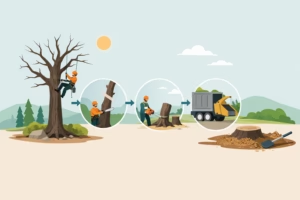
Professional removal is especially important when access is tight or the tree is near a house, fence, neighboring property, or utility corridor. The work may require controlled dismantling in sections, specialized rigging, and careful protection of the surrounding landscape. OSHA-compliant work practices and trained crews are critical because tree removal is high-risk work.
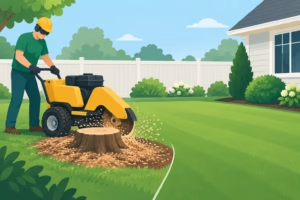
Removing a hazardous tree can feel disappointing, particularly when it has been part of a property for years. Yet a planned removal is far safer than waiting for a windstorm to make the decision. Stump grinding can also be considered afterward if you want to reclaim the area for landscaping, lawn use, or a future planting.
Why the Cause of Instability Matters
Two leaning trees can require completely different solutions. One may have grown at an angle toward sunlight but have a wide, stable root system and no defects. Another may have been upright for years and begun leaning after heavy rain because its roots are breaking loose. Treating both trees the same would be a mistake.
A qualified assessment considers the full picture: trunk condition, branch attachments, root flare, surrounding soil, nearby targets, past pruning, storm exposure, and signs of decay or disease. It also considers what will happen if the tree fails. A tree in an open part of a large yard carries a different level of urgency than one over a bedroom, driveway, or public sidewalk.
This is why homeowners should be cautious about advice based only on a photo. Images can show a crack or lean, but they often cannot reveal root movement, internal decay, or the direction a tree is likely to fail.
How to Protect Your Property While You Wait for Service
If you notice a potentially unstable tree, keep people, pets, and vehicles out of the fall zone. Move cars away from the area if it is safe to do so, and avoid using patios, play areas, or walkways below damaged limbs.
Do not prune, stake, or attach hardware to the tree yourself. A stake may help a newly planted small tree establish roots, but it is not a solution for a mature tree with structural or root problems. Likewise, cutting one visible limb without understanding the canopy balance can shift weight onto another weak section.
Take clear photos from a safe distance and note when you first saw the change. This information can help a tree professional understand whether the issue developed suddenly after a storm or has progressed over time.
Choose a Tree Service Prepared for High-Risk Work
Unstable tree work calls for more than a chainsaw. Look for a local company with experience handling hazardous removals, storm damage, structural support, and proper pruning. Ask whether the crew follows ANSI standards and OSHA safety requirements, carries appropriate insurance, and can explain why a recommended service is necessary.
M & R Tree Services provides professional tree removal, pruning, emergency response, storm cleanup, stump grinding, and cabling and bracing for homeowners and property managers in the Vancouver area. The goal is not to sell a one-size-fits-all service. It is to identify the safest practical path for your property and your tree.
If a tree has changed suddenly or you are unsure whether it can make it through the next storm, a timely professional evaluation can replace uncertainty with a clear, safe plan.