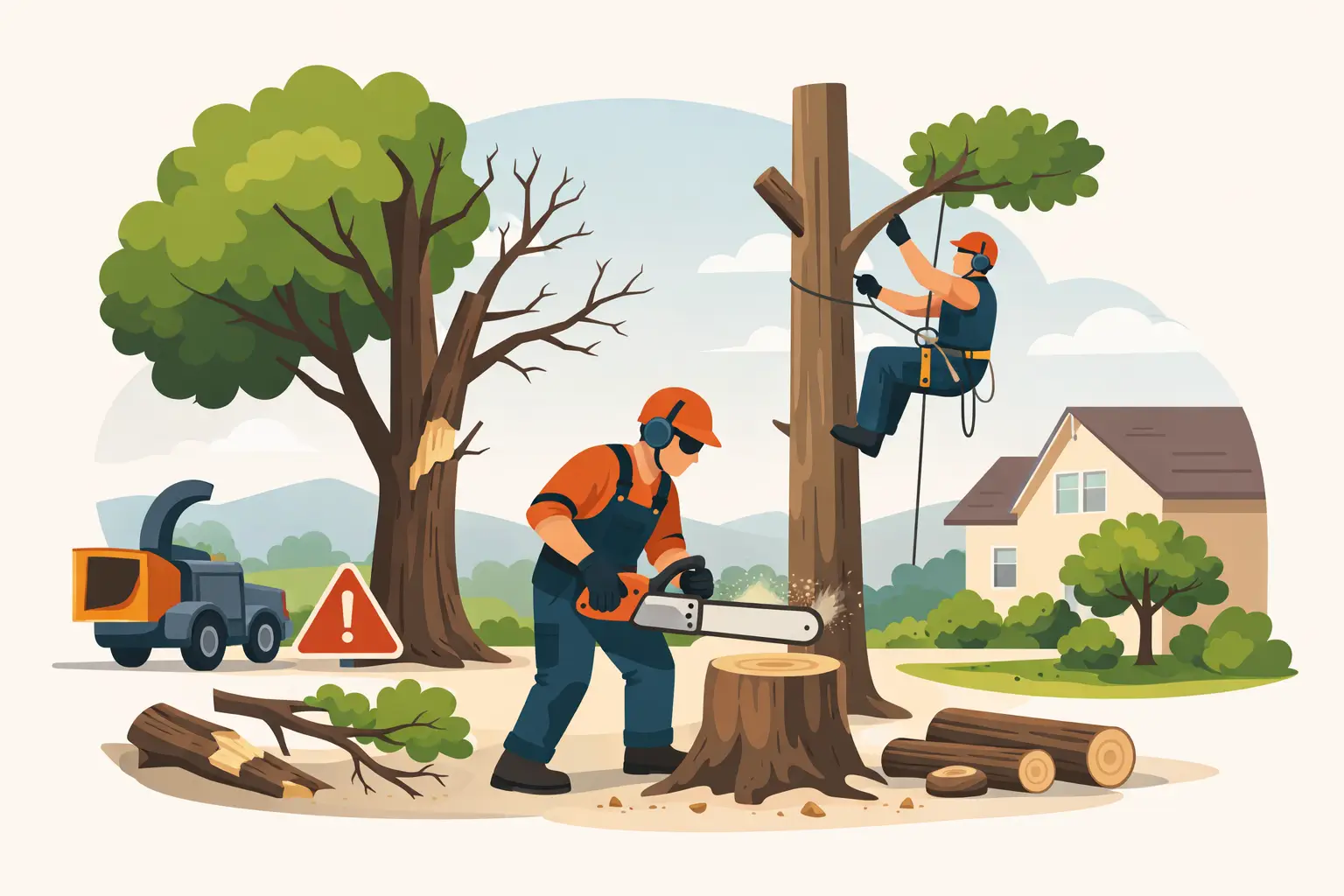
A tree can look healthy from the street and still pose a serious risk to your home, driveway, or nearby power lines. When homeowners search for the top reasons to remove trees, they are usually dealing with more than appearance – they are weighing safety, property protection, and the cost of waiting too long.
Tree removal is not always the first recommendation. In many cases, pruning, cabling, bracing, or general maintenance can improve a tree’s condition and extend its life. But there are situations where removal is the safer and more responsible choice, especially when a tree becomes unstable, diseased, storm-damaged, or simply planted in the wrong place.
Top Reasons to Remove Trees Before They Cause Damage
One of the most common reasons for tree removal is structural failure. A tree that is leaning more than it used to, splitting at the trunk, or showing large dead limbs may no longer be safe to keep. These issues can develop gradually or appear after a storm, and they often worsen faster than property owners expect.
Dead or dying trees are another major concern. Once a tree has lost significant canopy, bark, or internal strength, it may not have the ability to recover. At that point, it becomes a standing hazard. Even if it remains upright for a time, weakened wood can fall without much warning.
Location also matters. Some trees outgrow the space they were planted in and begin interfering with roofs, siding, fences, utility lines, or neighboring structures. Roots can lift sidewalks, damage driveways, and put pressure on underground plumbing. When the tree’s size and growth pattern are no longer compatible with the property, removal may be the most practical option.
Hazardous Trees and Safety Risks
Safety is usually the deciding factor. A tree does not have to be completely dead to be dangerous. Cavities in the trunk, fungal growth at the base, major cracks, and hollow sections can all point to internal decay. From the outside, a tree may still leaf out in season, but its structural integrity can be compromised.
This is especially important in residential neighborhoods where trees stand close to homes, garages, play areas, parked vehicles, and walkways. A failing tree can cause extensive property damage and create a real risk of injury. For landlords and property managers, it can also become a liability issue if a known hazard is left unaddressed.
Storm season adds another layer of urgency. Trees with weak unions, heavy end weight, or existing damage are much more likely to fail in high winds or saturated soil. In the Vancouver, Washington area, prolonged rain and storm activity can expose hidden weaknesses quickly.
When a Leaning Tree Is a Problem
Not every leaning tree needs to come down. Some trees naturally grow at an angle and remain stable for years. The concern starts when the lean is new, increasing, or paired with root plate lifting, cracked soil, or trunk damage. Those signs can indicate recent movement and possible failure.
A professional inspection helps separate a manageable condition from an active hazard. In some cases, support systems or pruning can reduce risk. In others, removal is the safer path.
Disease, Decay, and Pest Damage
Another of the top reasons to remove trees is advanced disease or insect damage. Trees can live with some disease pressure, but once decay affects the trunk, root flare, or major scaffold limbs, the tree may become unsafe even if it still appears partly alive.
Rot is particularly concerning because it weakens the wood from the inside out. By the time mushrooms, conks, or soft spots are visible, the internal damage can already be extensive. The same goes for insect infestations that attack critical tissue and reduce the tree’s ability to transport water and nutrients.
Not every diseased tree requires removal. That depends on the species, the severity of decline, the location of the damage, and how close the tree is to structures or high-traffic areas. But when decline is advanced and the tree is unlikely to recover, removal often prevents larger problems later.
Storm Damage and Emergency Conditions
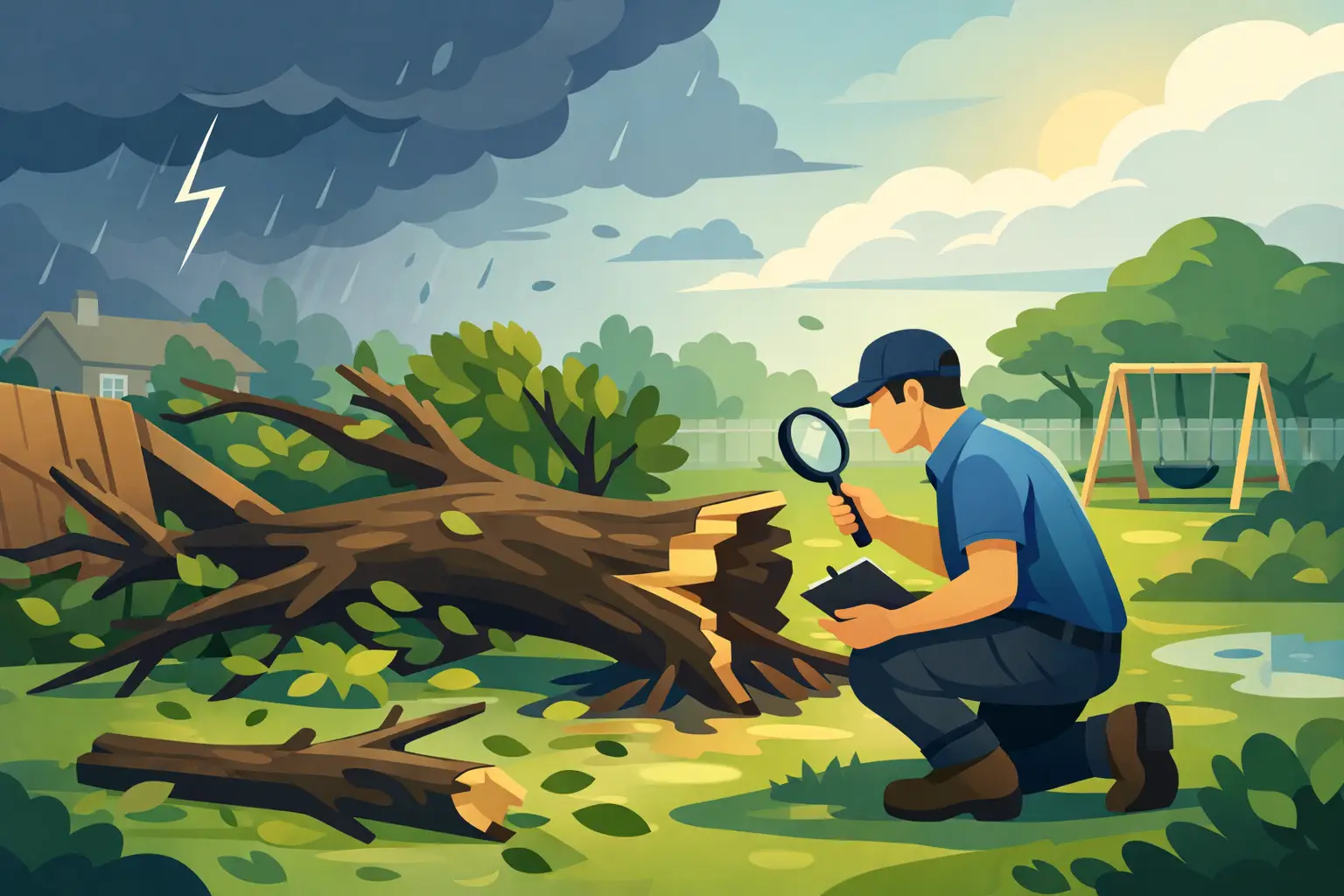
After a storm, homeowners often face difficult decisions quickly. A tree may have dropped a large limb, split down the center, or partially uprooted. In these cases, stability is the key question. Some storm-damaged trees can be saved, while others are no longer structurally sound.
If a tree has broken leaders, hanging limbs, exposed roots, or a cracked trunk, it should be evaluated as soon as possible. Waiting can be risky, especially if additional wind or rain is expected. Emergency tree service is often needed when debris is blocking access, threatening a roof, or tangled near utility lines.
Storm damage also reveals problems that were already present. A branch that failed may point to internal decay, poor branch attachment, or long-term stress. Removal is sometimes the most cost-effective choice when repairs would still leave a compromised tree behind.
Trees Too Close to Homes, Foundations, and Utilities
Some trees become a problem because of where they are growing. A healthy tree can still need removal if it is crowding the structure, scraping the roof, blocking safe clearance, or competing with nearby trees and landscape features.
Roots are a frequent source of concern. While not every root system damages foundations, roots can disrupt hardscapes, invade older sewer lines, and create uneven walking surfaces. Larger species planted too close to patios, retaining walls, or driveways often create recurring maintenance and repair costs.
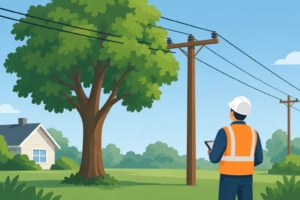
Overhead utility conflicts are another serious issue. Trees growing into service lines or near power infrastructure need specialized handling. This is not a situation for guesswork. Removal may be recommended when repeated trimming is no longer enough to maintain safe clearance.
Why Tree Size Changes the Risk
A small ornamental tree near a house may be manageable with periodic pruning. A large mature tree with heavy limbs over the roof is a different calculation. The bigger the canopy and trunk mass, the greater the potential consequences if something fails.
That does not mean large trees should always be removed. It means their condition, species, and proximity to targets need to be assessed carefully. A healthy mature tree can be a major asset, but a declining one near a home can become a major liability.
Property Improvements and Landscape Changes
Sometimes tree removal is tied to planned improvements. Homeowners may need space for an addition, a new driveway, fencing, solar access, drainage work, or a landscape redesign. In those cases, the tree may not be hazardous, but it may no longer fit the long-term use of the property.
This is where thoughtful planning matters. Removing a tree changes shade patterns, privacy, drainage, and overall curb appeal. It can improve usability in one area while increasing sun exposure or reducing screening in another. A good recommendation takes those trade-offs into account instead of treating every tree as an obstacle.
For rental properties and small commercial sites, visibility, access, and ongoing maintenance costs can also influence the decision. A tree that drops heavy debris, obstructs signage, or creates constant roof and gutter cleanup may be more trouble than value.
What the Top Reasons to Remove Trees Have in Common
Most removal decisions come down to one thing: risk that is no longer reasonable to manage through maintenance alone. If pruning can correct the issue, that is often worth considering. If cabling or bracing can preserve a valuable tree safely, that may be the right move too. But when a tree is dead, unstable, severely damaged, or growing where it can cause costly harm, removal is often the most responsible option.
The key is getting a qualified evaluation before the problem becomes urgent. Tree issues rarely improve on their own, and delays tend to limit your options. Professional crews follow established safety practices, use the right equipment, and assess the whole situation – tree condition, site access, nearby structures, and how to complete the work without creating new hazards.
At M & R Tree Services, that means approaching every job with the same priorities homeowners care about most: safety, reliability, and clear recommendations based on the actual condition of the tree. If you are unsure whether a tree should be removed or can be preserved, the best next step is a professional assessment. A timely decision now can protect your property and give you peace of mind before the next storm rolls through.