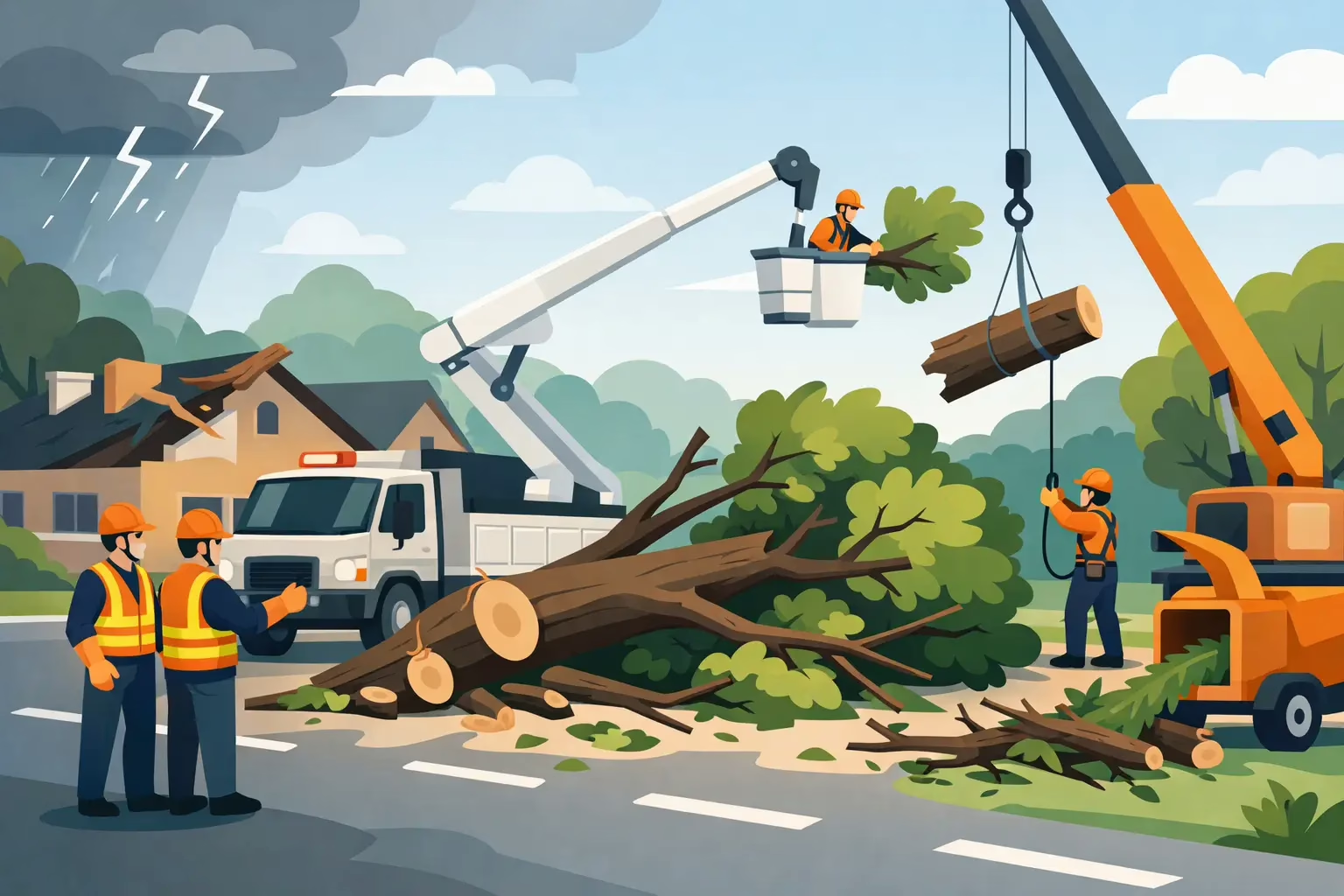
A large limb on a roof, a split trunk over a driveway, or a tree leaning after a storm can change from a nuisance to a safety risk in minutes. If you are wondering how emergency tree response works, the short answer is this: a qualified crew assesses the hazard, secures the area, removes immediate danger in the safest order possible, and then handles cleanup and next-step tree care.
What counts as a tree emergency
Not every tree problem is an emergency, but some situations should be handled right away. If a tree or limb has fallen on a house, garage, fence, vehicle, or power line, the risk is immediate. The same goes for a cracked trunk, a hanging limb, root failure, or a tree that has suddenly shifted and is leaning toward a structure or access point.
Storms are the most common cause, but emergencies also happen after saturated soil, hidden decay, vehicle impact, or high winds that expose an existing weakness. In many cases, the tree was already stressed and the weather simply pushed it past the breaking point.
There is also a difference between urgent and dangerous. A branch down in the back corner of a yard may be urgent because it blocks use of the property. A suspended limb over a front entry, on the other hand, is dangerous because it can fail without warning. A professional response starts by separating those two issues and dealing with life safety first.
How emergency tree response works in real time
When you call for emergency tree service, the first goal is to understand the immediate hazard. The crew needs to know what failed, what it struck, whether anyone is hurt, and whether utilities are involved. That information helps determine how quickly the site must be reached and what equipment will be needed.
Once on site, the team does not simply start cutting. A proper response begins with a hazard assessment. Arborists and trained crews look at tree stability, wood tension, overhead risks, ground conditions, nearby structures, and access limitations. A storm-damaged tree can store a surprising amount of force. One wrong cut can shift the load, send a trunk rolling, or cause a suspended limb to drop unexpectedly.
That is why emergency work often looks methodical rather than fast. The pace is intentional. Safety standards matter more than rushing through the job.
Step 1: Site safety and control
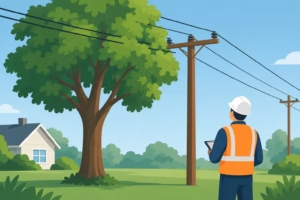
The work area is secured before active removal begins. That may include keeping residents away from the drop zone, identifying escape paths for the crew, and checking whether utility companies need to be involved first. If power lines are in contact with a tree, tree crews typically cannot proceed until the utility hazard is addressed.
This step can feel frustrating for property owners who want the debris gone immediately, but it is one of the most important parts of the job. Emergency response is about reducing risk, not adding to it.
Step 2: Stabilizing the situation
Sometimes the best first move is not full removal. If a partially failed tree is resting on a structure, the crew may need to relieve pressure in stages. If a split stem is still attached, it may be lowered section by section to prevent additional damage. In some cases, access routes have to be cleared first so equipment can safely reach the main hazard.
It depends on where the tree is, how it failed, and what it is touching. A fallen maple across a lawn is handled differently from a fir balanced on a roof ridge. The goal is always the same: remove immediate danger in the order that creates the least risk to people and property.
Step 3: Controlled removal
After the hazard is assessed and the plan is set, the crew begins controlled cutting and rigging. This may involve climbing, aerial equipment, ropes, rigging systems, chainsaws, and lowering devices. In tighter residential spaces, pieces often have to be removed in small sections rather than dropped whole.
This is where experience matters. Emergency trees are rarely clean, upright removals. They are twisted, cracked, loaded with tension, and often surrounded by homes, fences, vehicles, and landscaping. A professional crew follows established safety practices, including ANSI work standards and OSHA requirements, because storm-damaged trees do not leave room for guesswork.
Why emergency tree work is different from routine tree removal
Routine removals are planned. Emergency removals are reactive. That difference affects everything from equipment choice to timing and crew strategy.
In a standard removal, the tree is evaluated in advance, access is arranged, and the removal path is predictable. In an emergency, the tree may already be compromised, partly supported by a structure, or too unstable to climb safely in the usual way. Weather, darkness, and blocked access can also complicate the response.
That is why homeowners should not assume a storm-damaged tree can be handled like an ordinary yard project. The danger is often hidden. Wood fibers can be under compression, root plates can lift suddenly, and hanging limbs can break free with very little movement.
What you should do before the crew arrives
The safest thing you can do is keep people away from the damaged area. Do not walk under hanging limbs, touch a tree that is near electrical lines, or try to cut limbs off a roof yourself. Even smaller branches can shift unpredictably when part of the tree is still under load.
If the damage affects utilities, call the utility company or emergency services as needed before tree work begins. If it is safe to do so, take a few photos for insurance records. After that, the best step is to let trained professionals handle the scene.
For most property owners, emergency tree response is not about learning to manage the hazard personally. It is about recognizing when the risk is beyond normal property maintenance and getting the right team there quickly.
What happens after the immediate hazard is removed
Once the urgent danger is under control, the job may move into cleanup, debris removal, and follow-up recommendations. Sometimes that means complete removal of the remaining tree. Other times, the main failure is removed and the rest of the tree can be evaluated for preservation, pruning, cabling, or bracing.
This is another area where it depends. A healthy tree that lost one major limb may be worth saving. A tree with decay, structural weakness, or root failure often is not. The right answer comes from a site-specific assessment, not a one-size-fits-all rule.
Cleanup can include hauling limbs, cutting manageable sections, clearing driveways, and removing debris from structures and yards. If a stump or heavily damaged trunk remains, that may be scheduled as a separate step depending on urgency, access, and what the property needs next.
Insurance, documentation, and communication
Many homeowners also want to know how emergency tree response works when insurance is involved. While tree companies do not make coverage decisions, a professional crew can often help by documenting visible damage, explaining the work performed, and separating emergency stabilization from longer-term restoration work.
Clear communication matters here. You should understand what was done to make the site safe, what remains to be addressed, and whether any additional tree work is recommended nearby. Storms often expose more than one problem tree, especially on older properties.
A dependable local company will also be straightforward about timing, cost, and scope. Emergency service can be more complex than scheduled work, and conditions sometimes change once the crew is on site. Honest updates are part of good service.
Choosing the right emergency tree service
When the situation is urgent, it is easy to focus only on speed. Speed matters, but qualifications matter just as much. You want a company that is experienced with hazardous tree removals, properly insured, and committed to safe work practices. That includes compliance with recognized industry and jobsite safety standards.
For homeowners and property managers in Vancouver and nearby communities, that often means choosing a local team that understands the area’s tree species, weather patterns, and residential lot constraints. M & R Tree Services approaches emergency work with that local focus, along with the kind of professionalism high-risk tree situations require.
Emergency tree response is not only about removing what fell. It is about making careful decisions under pressure, protecting people first, and restoring order to a property that suddenly feels unsafe. If you ever face that kind of situation, the best next step is simple: keep your distance, make the call, and let a qualified crew take it from there.