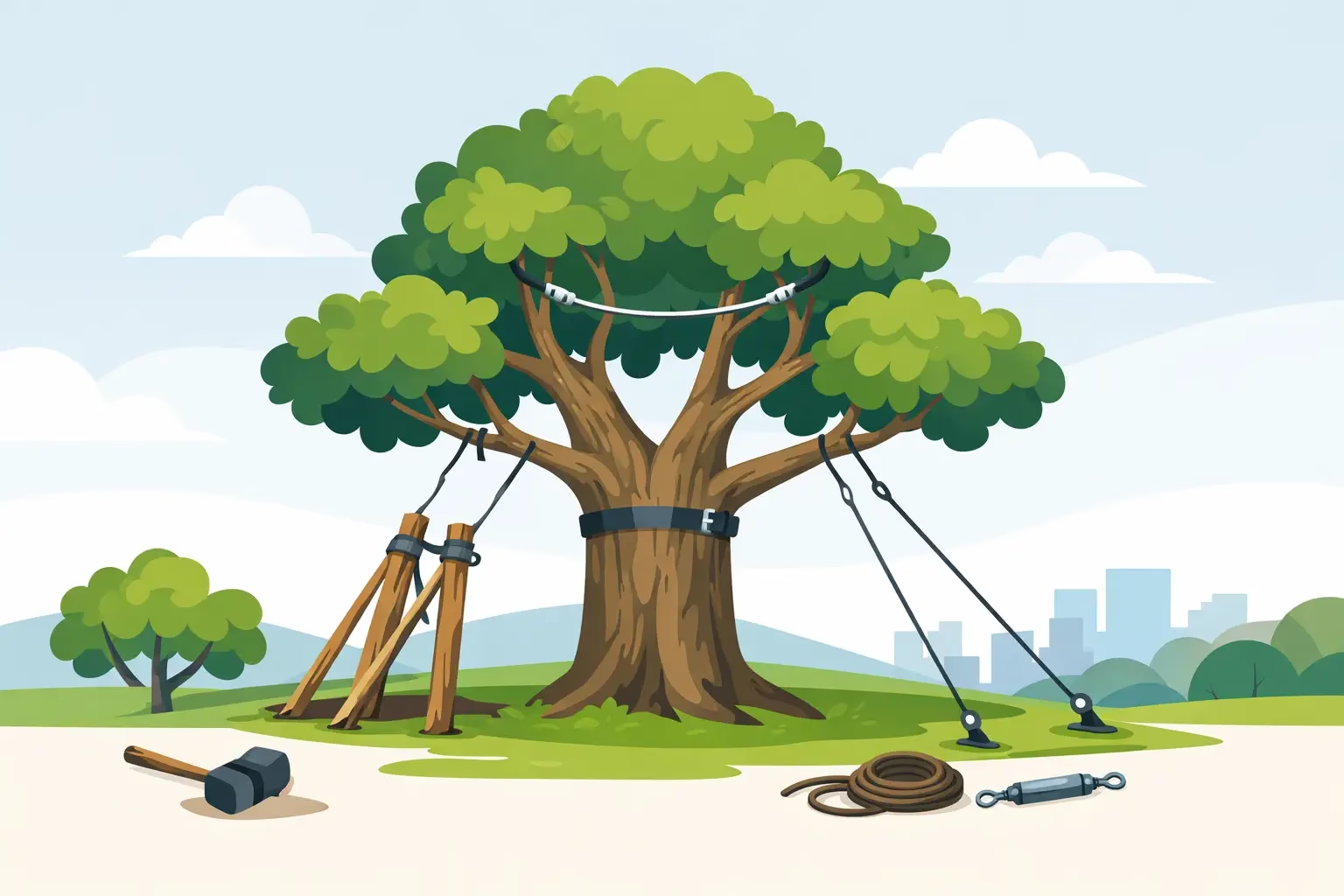
A large tree with a split trunk, a heavy limb stretching over the roof, or a deep crack at a major branch connection deserves more than a quick look from the ground. This tree support systems guide explains how professional cabling and bracing can reduce the risk of structural failure while helping preserve a healthy, valuable tree.
Tree support systems are not a substitute for removing a severely unsafe tree. They are a planned risk-management measure used when a qualified tree care professional determines that a tree can be retained with added structural support. For homeowners in Vancouver, Washington, where heavy rain, saturated soil, and seasonal wind can put added stress on mature trees, that distinction matters.
What Are Tree Support Systems?
Tree support systems are installed hardware designed to reduce movement and distribute stress between parts of a tree. The most common systems are cables and braces, although the right approach depends on the tree’s species, size, condition, branch structure, and location near people or property.
A properly selected system can help support co-dominant stems, reduce excessive movement in a long, heavy limb, or reinforce a weak union that may be vulnerable during wind or snow. The objective is not to make the tree rigid. Trees need to move naturally. The objective is to limit the kind of movement that could lead to a split, break, or sudden failure.
Professional assessment is essential because support hardware changes how forces move through the canopy and trunk. An improperly installed cable, poorly placed bolt, or system selected without considering decay can create a false sense of security and may cause additional damage over time.
When a Tree May Need Cabling or Bracing
Support systems are commonly considered for mature trees that have structural weaknesses but are otherwise healthy enough to keep. A large tree can provide shade, privacy, curb appeal, and long-term property value. When its condition allows, preserving it may be preferable to removal.
One common concern is a co-dominant stem. This occurs when two or more trunks grow from the same point and are similar in size. Some of these unions are strong, but others form with included bark – bark compressed between the stems instead of a solid wood connection. As the stems grow larger, the included bark can prevent a strong union from developing and increase the chance of splitting.
Other situations may include a long, overextended limb, a limb with a history of breakage, or a tree with uneven canopy weight after storm damage. Trees that lean toward a home, driveway, fence, play area, or neighboring property also deserve careful evaluation. A lean alone does not always mean a tree is failing. A recent lean, exposed roots, lifting soil, cracks, or changes after a storm require prompt professional attention.
Decay changes the decision considerably. If an inspection finds extensive internal decay, root failure, a major cavity, or a crack that cannot be safely managed, cabling and bracing may not be appropriate. In those cases, removal may be the safer recommendation.
Cabling vs. Bracing: What Is the Difference?
Cabling generally uses a high-strength cable installed between major limbs or stems. It is often placed high in the canopy to reduce the amount of independent movement between structural parts of the tree. Depending on the tree and its risk factors, a system may use static steel cable or a dynamic support system designed to allow more natural movement.
Static cabling provides firm support and is often used where a known structural defect needs reinforcement. Dynamic systems are more flexible and may be appropriate when the goal is to reduce shock loading without overly restricting natural sway. Neither option is automatically better. The condition of the tree and the support objective should guide the choice.
Bracing uses threaded rods installed through a weak union, crack, or split area to hold major stems together. It is generally used when the connection itself needs reinforcement. In some cases, bracing and cabling are used together: braces stabilize the weak union while a cable helps reduce the forces acting on it.
These systems involve working at height, making precise installation points, and understanding how a tree will continue to grow. This is not a homeowner project. A system that is too tight, too low, incorrectly anchored, or left uninspected can girdle wood, damage living tissue, or fail when it is needed most.
A Professional Tree Support Systems Guide Starts With Inspection
The hardware is only one part of the work. A professional inspection should come first.
A tree care team evaluates the overall condition of the tree, not just the visible crack or heavy limb. That includes the root zone, trunk flare, canopy density, past pruning cuts, deadwood, fungal growth, insect damage, and signs of decay. The team also considers targets below the tree, such as homes, patios, utility lines, vehicles, and pedestrian areas.
Species matters as well. Some trees are more prone to brittle wood, weak branch attachments, or decay at old wounds. Age, previous storm damage, topping, and aggressive pruning can also affect structural stability. A support system that makes sense for one mature tree may be ineffective or inappropriate for another tree a few feet away.
The inspection should lead to a clear recommendation. That may be cabling, bracing, selective pruning to reduce end weight, ongoing monitoring, removal, or a combination of services. A dependable company should explain the reason for the recommendation in practical terms, including what the system can and cannot do.
Pruning Often Works With Support Hardware
Tree support systems are frequently paired with careful structural pruning. When a long limb has too much weight at its end, selective reduction pruning can decrease leverage and help the support system perform as intended. Removing dead, damaged, or poorly attached limbs may also reduce the chance of future failure.
The key is restraint. Cutting back too much live canopy at once can stress a tree, encourage weak regrowth, and create new problems. Topping a tree is not structural pruning and should not be used as a quick solution for a weak tree. Professional pruning follows recognized arboricultural practices and focuses on sound cuts that respect the tree’s natural structure.
For a tree near a house, driveway, or outdoor living area, a combined plan may offer the best balance: reduce excessive weight, install support where needed, and schedule follow-up inspections. It depends on the tree’s health and the consequences if a limb or stem fails.
Support Systems Require Ongoing Maintenance
Installing a cable or brace is not a one-time promise that a tree will never fail. Trees grow, hardware ages, weather changes, and hidden decay can advance. Every support system should be inspected on a regular schedule and after significant storms.
During an inspection, a professional checks cable tension, connection points, hardware condition, branch growth around the system, and any new cracks or decay. Adjustments may be needed as the tree grows. In some cases, a system may need to be replaced, expanded, or removed if the tree’s condition changes.
Homeowners can help by watching for visible warning signs between inspections. Call for an assessment if you notice a new crack, separation at a trunk union, sagging cable, loose hardware, freshly broken limbs, mushrooms near the base, or soil lifting around roots. Keep people and vehicles away from the area if there is an immediate concern.
When Removal Is the Safer Choice
Preserving a tree is often worthwhile, but safety has to come first. A support system cannot restore sound wood where significant decay has already weakened a trunk or major limb. It cannot correct a failing root system, stop a rapidly progressing crack, or make a tree safe when its structure has reached the end of its serviceable life.
Removal may be recommended when the likelihood of failure is high and the potential impact is serious. This can be a difficult decision, especially with a long-standing shade tree, but a clear risk assessment helps property owners make an informed choice before an emergency occurs.
If a tree is already damaged after a storm, avoid climbing it, pulling on hanging limbs, or attempting to cut branches under tension. Emergency tree work can involve hidden pressure points, unstable wood, and energized utility hazards. Keep the area clear and contact an experienced tree service team.
Choose a Team That Treats Support Work Seriously
Cabling and bracing are technical tree care services, not cosmetic add-ons. The work should be completed by trained professionals using appropriate equipment, safe climbing practices, and methods aligned with ANSI standards and OSHA safety requirements. Ask what condition is being addressed, what type of system is recommended, how it will be inspected, and whether pruning or removal should also be considered.
M & R Tree Services helps property owners make practical, safety-focused decisions about structurally compromised trees in Vancouver and surrounding communities. Whether a mature tree needs monitoring, professional support, pruning, or removal, getting a clear assessment before the next major storm can protect both your property and the tree you hope to keep.