
A mature tree with a long split, a heavy overextended limb, or two co-dominant stems rubbing under wind pressure can make any property owner uneasy fast. If you are asking, is tree cabling worth it, the honest answer is that it often is – but only when the tree is a good candidate and the work is done correctly.
Tree cabling is not a cosmetic fix. It is a structural support system used to reduce movement in weak branches or stems so a tree is less likely to fail. For the right tree, cabling can extend its useful life, lower risk, and help you avoid premature removal. For the wrong tree, it can become an added expense that delays a problem instead of solving it.
What tree cabling actually does
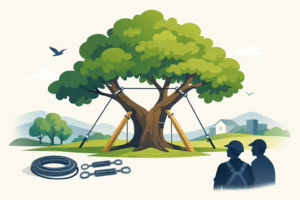
Cabling involves installing a high-strength support system in the upper canopy to limit stress on weak branch unions, split stems, or limbs with poor attachment. In some cases, cabling is paired with bracing, which uses threaded rods in the trunk or major stems to provide added structural support lower in the tree.
The goal is not to make a defective tree perfect. The goal is to reduce the chance of failure during wind, heavy rain, or normal seasonal loading. A properly designed support system can help preserve a tree that still has value, health, and a reasonable structure outside of one or two weak points.
That distinction matters. Cabling supports a tree that is worth preserving. It does not reverse decay, fix root failure, or make a severely compromised tree safe forever.
Is tree cabling worth it in real-life situations?
For many homeowners, the value comes down to one question: does cabling meaningfully reduce risk while preserving a tree you want to keep?
If you have a large established tree that provides shade, privacy, curb appeal, or sentimental value, cabling can be a smart investment. Removing and replacing a mature tree is expensive, and the loss is immediate. A well-placed cable system may buy years of safe service from a tree that still has strong overall health.
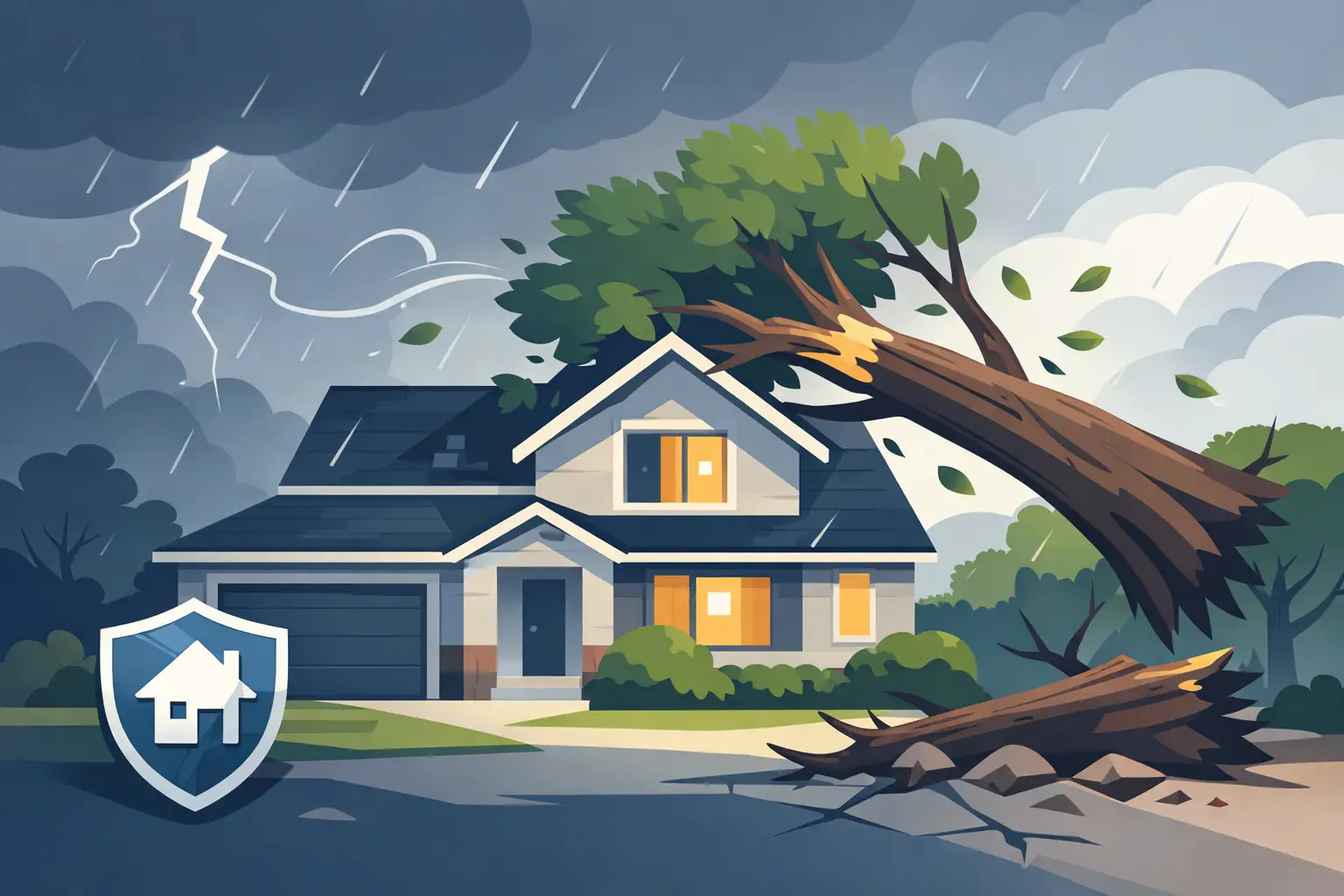
It can also be worth it when a failure would threaten something important, such as a home, driveway, play area, fence, or neighboring property. In that case, the cost of support may be small compared to the cost of storm damage or emergency removal later.
On the other hand, cabling may not be worth it if the tree has extensive decay, major root problems, advanced decline, or poor structure in multiple areas. When defects are widespread, support systems often become a temporary measure with limited return.
When cabling makes sense
The best candidates are usually trees with specific structural weaknesses, not trees that are broadly failing. A tree may be a good fit for cabling when it has co-dominant stems with included bark, a large horizontal limb over a target area, or a historic split that has stabilized but still needs load reduction.
Cabling also makes sense when the tree species is known to develop heavy limbs or weak attachments but the tree is otherwise healthy. In those cases, structural support combined with proper pruning can reduce end weight and improve stability.
Age by itself is not the deciding factor. Some older trees respond well to support because they still have strong vitality and only one or two vulnerable unions. Some younger trees are poor candidates because they already show significant defects or bad growth patterns that are not worth preserving long term.
A qualified arborist should look at the whole picture – species, canopy weight, attachment angles, signs of decay, root condition, target areas below, and how the tree is likely to perform over time.
When cabling is probably not worth it
There are times when removal is the more responsible choice.
If a tree has substantial internal decay, major trunk cavities, root plate instability, or multiple large defects, cabling may give a false sense of security. The same is true if the tree is already in serious decline. Support systems are not meant to hold together a tree that is structurally unsound from the base up.
It may also not be worth it if the tree has low landscape value and sits in a location where replacement is practical. Spending money to preserve a weak tree with limited benefit does not always make sense, especially when that investment could go toward a healthier long-term planting.
This is where professional judgment matters. A dependable tree company should be willing to tell you when cabling is not the right answer.
Cost versus value
Homeowners often compare cabling costs to pruning or removal, but the better comparison is value over time.
Cabling usually costs less than removing a large tree, grinding the stump, and starting over with a new planting. If the supported tree adds shade to your home, improves privacy, or anchors the look of the property, preserving it can be the better financial choice.
That said, cabling is not a one-time decision you forget about. Systems need periodic inspection, and the tree may also need follow-up pruning as it grows. So the value is strongest when you are preserving a tree that matters and when the structure is good enough to justify ongoing care.
If the tree is marginal and likely to require repeated work without much added lifespan, the math changes.
Safety depends on proper installation
This is where many property owners make the wrong assumption. Cabling is only worth it if it is designed and installed to professional standards.
Improper placement, wrong hardware, poor load assessment, or skipping inspection can leave you with a support system that does little or creates new problems. Tree support work should be based on accepted arboricultural practices, with attention to species characteristics, tree health, and the loads involved.
Because this is high-stakes work above homes, vehicles, and people, shortcuts are not acceptable. A company that follows ANSI standards and OSHA regulations is showing you it takes both the tree and the worksite seriously.
Is tree cabling worth it compared to pruning alone?
Sometimes pruning is enough. Reducing end weight on a long limb or thinning a dense canopy can lower stress and improve balance without adding hardware.
But pruning has limits. If a tree has a weak union or a cracked stem, removing weight may help without fully addressing the risk. In those cases, cabling and pruning often work best together. The pruning reduces force, and the cable limits movement.
A good evaluation should not jump straight to hardware. It should consider whether pruning alone, cabling with pruning, or removal gives the best outcome for safety and value.
What to expect after cabling
A supported tree still needs attention. Trees grow, weather changes, and hardware ages. That means periodic inspections matter, especially after major storms or visible canopy changes.
You should also expect honest limitations. Cabling reduces risk. It does not eliminate it. No support system can guarantee a tree will never fail.
What it can do is improve the odds for a tree that deserves preservation. For many property owners, that is the difference between losing a valuable tree now and managing it responsibly for years.
The right question is not just cost
When people ask, is tree cabling worth it, they are usually trying to decide whether the tree is worth saving. That is the real issue.
If the tree is healthy enough, valuable enough, and structurally suitable for support, cabling can be a very practical investment. If the tree is severely compromised or the defects go beyond what a support system can reasonably address, removal may be the safer and more cost-effective choice.
The best next step is a professional assessment from a qualified local tree service that understands structural support, pruning, and risk reduction. At M & R Tree Services, that means looking at the whole tree, the surrounding property, and the safest long-term option – not just selling a service.
If you are looking at a heavy limb, a split stem, or a tree that worries you every time the wind picks up, trust that concern. A timely inspection can tell you whether cabling is a smart investment or whether another solution will better protect your property and the people around it.