
A branch over the driveway may look like a small maintenance issue until it cracks in a windstorm or drops without warning. That is why a guide to safe tree pruning matters for more than appearance. Done correctly, pruning can improve tree structure, reduce risk, and support long-term health. Done poorly, it can weaken the tree, create hazards, and lead to expensive cleanup later.
For homeowners and property managers, the main question is not just whether a tree needs pruning. It is whether the work can be done safely and whether the cuts will actually help the tree. Some pruning is routine. Some is high-risk work that should be handled by trained professionals using proper equipment and safety procedures.
Why safe tree pruning matters
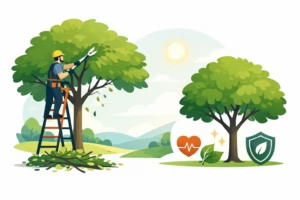
Tree pruning is not just trimming a few limbs to make a yard look cleaner. Every cut changes how a tree grows, how it carries weight, and how it responds to stress. Removing deadwood can reduce the chance of failure. Thinning crowded branches can improve air movement and light penetration. Proper structural pruning can also help younger trees develop stronger form over time.
The trade-off is that every cut is also a wound. If too much canopy is removed, the tree can become stressed and more vulnerable to decay, pests, or weak regrowth. Topping, flush cuts, and random limb removal are common mistakes that often create bigger problems than the original issue. Safe pruning means protecting people, property, and the tree itself.
A homeowner’s guide to safe tree pruning decisions
The first step is identifying the goal. If the objective is clearance from a roof, driveway, walkway, or structure, pruning may be straightforward or it may require technical rigging and controlled removal. If the goal is tree health, the approach depends on species, age, condition, and season. If the issue is a cracked limb, storm damage, or branches near utility lines, the work moves quickly from routine maintenance to hazard management.
This is where many property owners run into trouble. A tree can look manageable from the ground but still involve hidden weight, internal decay, unstable branch unions, or difficult angles. Large limbs under tension can fail unexpectedly. Climbing without proper training or using a ladder with a chainsaw creates obvious risk, but even smaller jobs can go wrong fast when footing, drop zones, and branch movement are not accounted for.
Signs a tree should be pruned
A tree may need pruning when dead, broken, or hanging limbs are present, when branches are rubbing against each other, or when growth is crowding a roofline or access area. Low limbs over sidewalks and driveways often need clearance, especially on properties with regular vehicle or foot traffic. Trees with dense canopies may also benefit from selective pruning to reduce end weight and improve structure.
That said, not every overgrown tree should be cut back aggressively. Mature trees often respond poorly to excessive pruning, and some species are more sensitive than others. If more than light corrective work seems necessary, a professional assessment is the safer path.
When pruning becomes unsafe
A good guide to safe tree pruning has to be clear about one point: many pruning jobs should not be treated as do-it-yourself work. If branches are large, high off the ground, storm-damaged, split, or hanging over a house, fence, garage, or parked vehicles, the risk rises immediately. The same applies when a tree is leaning, shows signs of decay, or has multiple stems with weak attachments.
Power lines are another hard stop. Any branch growing into or near energized lines requires utility-safe handling and specialized procedures. Homeowners should never attempt that work. The danger is severe, and mistakes can affect not just the person doing the cutting but anyone nearby.
Unsafe pruning also includes situations where the right equipment is not available. Pole saws, hand pruners, and small pruning saws have their place for reachable branches. They do not replace climbing systems, rigging, lowering devices, personal protective equipment, or the training needed to use them correctly.
The right way to prune a tree
Proper pruning starts with selecting the right branch and making the right cut in the right place. In most cases, cuts should be made just outside the branch collar, which is the slightly swollen area where the branch joins the trunk or parent limb. Cutting too close can damage the tree’s natural defense system. Leaving a long stub can delay closure and invite decay.
Pruning should also be selective. The goal is not to strip out large portions of the canopy. It is to remove what is dead, defective, poorly attached, or interfering with healthy structure and clearance needs. On younger trees, this may mean early structural pruning to encourage one strong leader and well-spaced scaffold branches. On mature trees, it often means targeted reduction and deadwood removal rather than heavy thinning.
Timing matters too. Many trees can be pruned during dormancy, while others are better handled after flowering or during specific windows to reduce disease pressure. Storm-damaged branches may need immediate attention regardless of season. The right timing depends on species and condition, which is another reason professional evaluation can save a tree from unnecessary stress.
What professional tree pruning includes
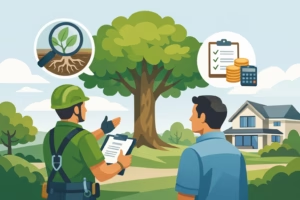
Professional pruning is not only about cutting branches. It includes inspecting the tree, identifying defects, evaluating risk, planning the drop zone, and using methods that protect nearby structures and landscaping. On larger trees, it may also involve controlled lowering, cabling considerations, or recommendations for future monitoring.
For homeowners, one of the biggest benefits is knowing the work is being done to recognized safety and quality standards. Companies that follow ANSI practices and OSHA safety requirements are working from established industry expectations, not guesswork. That matters when crews are climbing, rigging, operating saws, and working around homes, fences, vehicles, and neighboring properties.
It also matters after storms. A broken limb caught in the canopy can stay suspended under pressure and release violently when cut the wrong way. Emergency pruning and storm cleanup call for experience, planning, and equipment that most property owners simply do not have on hand.
How to choose a tree pruning company
If you are hiring out the work, ask practical questions. Are they licensed and insured for tree work in your area? Do they have experience with pruning rather than only removals? Do they explain what will be cut and why? Can they identify whether the tree has structural concerns beyond routine trimming?
It is also reasonable to ask about safety practices and standards. A professional company should be comfortable discussing training, protective equipment, and how they handle high-risk pruning situations. Low bids can be tempting, but tree work is one area where shortcuts often show up later as property damage, poor cuts, or preventable injuries.
For homeowners in Vancouver, Washington and surrounding communities, working with an experienced local team such as M & R Tree Services can make that decision easier. Local experience matters because storm patterns, tree species, and site conditions all affect how pruning should be approached.
Safe pruning is part of bigger tree care
Pruning works best when it is part of an ongoing tree care plan. Trees that are inspected regularly are less likely to surprise you with sudden failures, hidden deadwood, or limbs pressing against structures. A tree that needs only light corrective pruning today may need cabling, bracing, or removal later if defects worsen.
That is why it helps to think beyond the immediate branch that caught your attention. The real question is whether the tree is healthy, stable, and appropriate for the space it occupies. Pruning can solve many problems, but it cannot fix severe decay, root failure, or major structural weakness.
If you are looking at a tree and wondering whether to prune now, wait, or call for help, trust the level of risk involved. Small reachable limbs are one thing. Large branches, damaged trees, and work near homes or power lines are another. Safe tree pruning starts with good judgment, and sometimes the smartest cut is the one you do not attempt yourself.