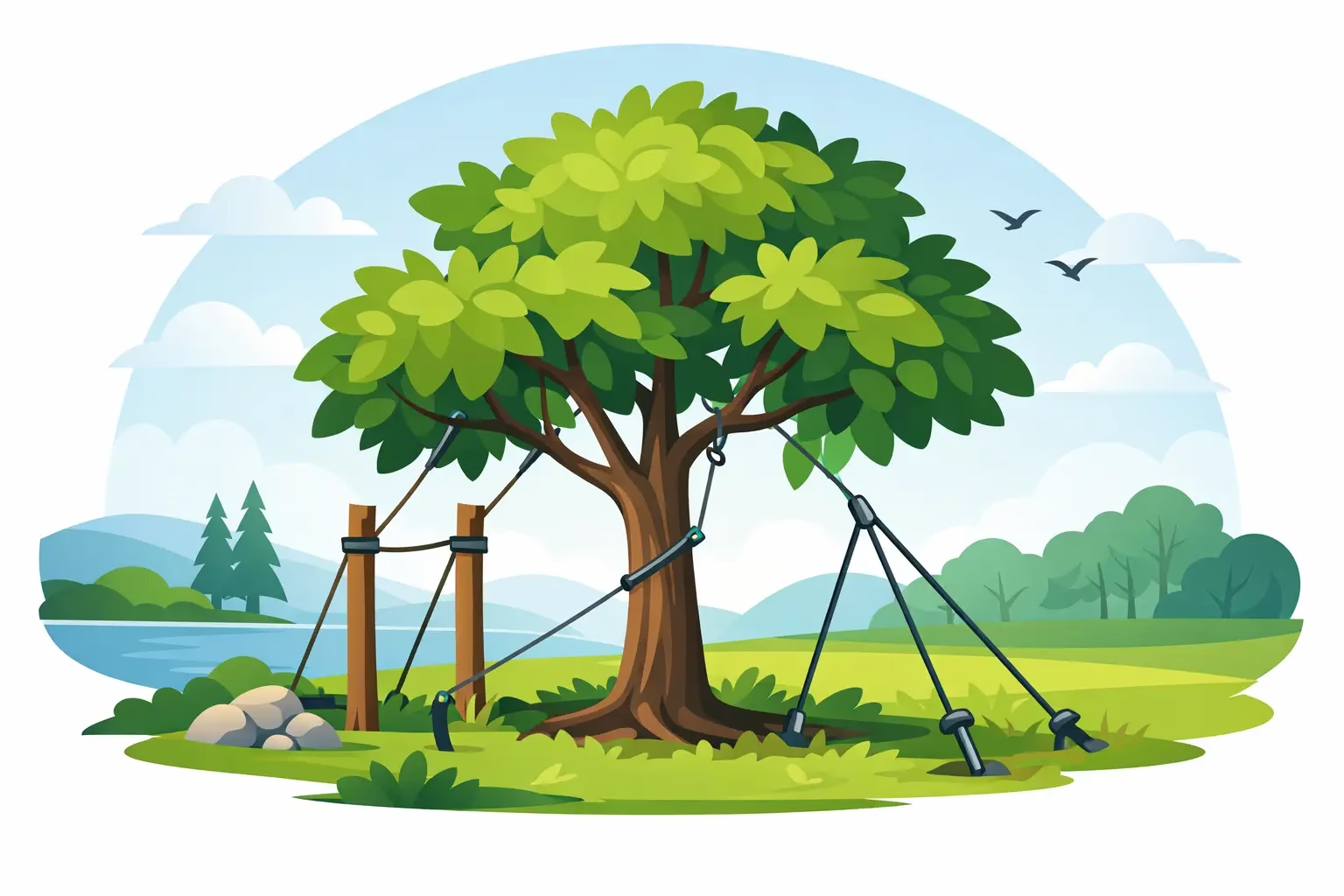
A mature tree can be one of the most valuable features on a property, but a weak branch union or split trunk can turn into a serious concern after heavy rain, wind, or snow. The right tree support options can help reduce that risk while preserving a tree that is otherwise healthy and worth keeping. The key is choosing support based on the tree’s structure, condition, location, and long-term prospects.
A cable or brace is not a shortcut for proper tree care, and it is not the right answer for every damaged tree. A qualified tree professional should inspect the tree from the ground up, identify the source of the weakness, and recommend a solution that puts people, homes, vehicles, and the tree itself first.
When a Tree May Need Structural Support
Structural support is commonly considered when a tree has two or more main stems growing from the same area, especially if the connection has a narrow, V-shaped union. These unions can trap bark between the stems rather than forming strong, connected wood. As the stems grow larger and heavier, the likelihood of splitting can increase.
Other warning signs include visible cracks, a limb that extends far beyond the rest of the canopy, a heavy lean, previous storm damage, or a large branch growing over a roof, driveway, play area, or neighboring property. Some defects are obvious, but others are hidden high in the canopy or inside a union. That is why an on-site assessment matters before any support system is installed.
Support systems are generally intended to reduce movement and redistribute load. They cannot make a severely decayed, dying, or structurally unsound tree safe. If the trunk is extensively compromised or the tree presents an immediate failure risk, removal may be the safer recommendation.
Tree Support Options for Common Structural Problems
The best system depends on the type of defect and the tree’s condition. In many cases, support is paired with selective pruning to reduce the force acting on vulnerable limbs or stems.
Cabling for High Canopy Support
Cabling uses specialized hardware and high-strength cable installed between major limbs or co-dominant stems. A properly designed cable system limits excessive movement during wind events without rigidly locking the tree in place. It is often used high in the canopy when a tree has a weak union but still has enough health and structure to retain.
Cables can be a practical choice for mature ornamental and shade trees that provide meaningful value to a residential property. However, installation height, attachment points, branch diameter, and future growth all affect whether a cable is appropriate. A system that is poorly placed or installed without a full evaluation can create new stress points instead of solving the original problem.
Bracing for Splits and Weak Trunk Unions
Bracing rods are installed through a split or weak union to provide more direct structural reinforcement. Unlike a cable, which works by limiting movement, bracing is intended to help stabilize a specific area of concern. It may be recommended when a trunk or co-dominant stem has a crack, included bark, or a history of separation.
Bracing requires careful planning because drilling into a tree is a permanent intervention. The goal is to select the right hardware, location, and installation method for the tree’s structure. In the right situation, bracing can extend the usable life of a tree. In the wrong situation, it may only delay a failure that cannot be responsibly managed.
Supplemental Pruning to Reduce Load
Selective pruning is often part of a complete support plan. Reducing the length or weight of an overextended limb can lessen bending force and wind resistance. Proper pruning also removes dead, broken, or poorly attached branches that could fail independently of the main structural issue.
This is not the same as aggressive topping or removing large portions of the canopy at once. Excessive cuts can stress the tree, encourage weak regrowth, and create future hazards. A professional pruning plan focuses on targeted reduction cuts that respect the tree’s natural form and health.
Monitoring and Maintenance
A support system should not be installed and forgotten. Trees continue to grow, weather conditions change, and hardware can need adjustment or replacement over time. Regular inspections help confirm that cables, braces, attachment points, and the surrounding wood remain in good condition.
For trees near homes or high-use areas, periodic monitoring is especially valuable after major storms. New cracks, changes in lean, fresh bark damage, or increased movement in a supported limb should be evaluated promptly.
What Determines the Right Support System?
A responsible recommendation starts with the full picture. The species matters because some trees naturally develop stronger unions or tolerate pruning better than others. Age, overall vigor, canopy size, root condition, decay, prior wounds, and the tree’s location all influence the decision.
The potential target below the tree also matters. A weak limb over an open portion of a large yard does not carry the same level of risk as one over a bedroom, service line, fence, or parked vehicle. A tree professional weighs both the likelihood of failure and the consequences if it occurs.
Cost should be considered alongside expected benefit. For a healthy, established tree with a manageable defect, support and pruning may be a worthwhile investment. For a declining tree with extensive decay or multiple structural issues, putting money into cabling may not provide enough safety or long-term value. Honest tree care means explaining both possibilities clearly.
When Tree Support Is Not the Best Answer
Some trees are beyond what cabling or bracing can safely address. Significant internal decay, a large cavity at the base, root damage, severe lean, or active separation can indicate that removal is the more dependable option. A support system cannot restore wood that has already lost its strength.
Emergency conditions also call for a faster response. If a cracked limb is hanging over a structure, a trunk has begun to split, or a storm has left branches tangled in utility lines, keep people away from the area and contact a qualified emergency tree service. Do not attempt to pull down, cut, or climb a damaged tree yourself.
Professional Installation Protects the Tree and Your Property
Tree support work takes place high off the ground and often near homes, fences, roofs, and utility corridors. Proper installation requires trained crews, appropriate equipment, and a clear understanding of how trees respond to loads and pruning cuts. It also requires a plan for protecting the property below the work area.
At M & R Tree Services, structural support recommendations are approached with safety, tree health, and practical property protection in mind. Our team follows professional work practices and prioritizes ANSI standards and OSHA safety requirements while evaluating cabling, bracing, pruning, or removal options.
Schedule an Assessment Before the Next Storm
If you have noticed a split, weak fork, leaning limb, or a heavy branch over a structure, it is better to assess it before severe weather exposes the problem. Early evaluation can provide more options and may help preserve a tree that still has years of value ahead.
A qualified inspection gives you a clear answer about whether support is appropriate, what maintenance it will require, and when removal is the safer path. Call today to request a professional tree assessment and make an informed decision for your property.