
A tree can look healthy from the street and still pose a serious concern over a driveway, roof, sidewalk, or neighboring property. A professional tree risk assessment review gives property owners a clear look at the conditions that may affect a tree’s stability, the likelihood of failure, and the right next step for protecting people and property.
For homeowners and property managers in Vancouver, Washington, tree risk is rarely just about appearance. Heavy rain, high winds, saturated soil, aging trees, hidden decay, and crowded growing conditions can all change how a tree performs during a storm. The goal is not to remove every mature tree with a defect. It is to identify realistic hazards and make informed, safety-focused decisions.
What Is a Tree Risk Assessment Review?
A tree risk assessment review is a professional evaluation of a tree’s condition, structure, location, and potential targets. A target may include a house, parked vehicle, power line, fence, play area, public walkway, or any place where people are regularly present.
The assessment considers two related questions: How likely is part or all of the tree to fail, and what could happen if it does? A small dead limb over an unused corner of a yard does not carry the same urgency as a large cracked limb over a child’s bedroom or a busy driveway.
This approach helps avoid two common mistakes. The first is ignoring a hazardous tree because it still has green leaves. The second is removing a tree that may be managed safely through pruning, cabling, bracing, or routine monitoring. Every property and tree is different, so the appropriate recommendation depends on the actual conditions present.
Conditions a Professional Looks For
A careful assessment begins at the ground and works upward. Some concerns are visible right away, while others require a trained eye and a closer inspection of the trunk, root zone, branch unions, and canopy.
Structural defects and weak branch attachments
Co-dominant stems, included bark, long overextended limbs, and poorly attached branches can increase the chance of failure. Included bark occurs when two stems grow tightly together and bark becomes trapped between them instead of forming a strong connection. This is common in multi-stem trees and may become more concerning as the stems grow larger.
A tree can also become unbalanced after years of uneven growth, previous storm damage, or improper pruning. Selective pruning may reduce weight and wind resistance in certain cases. Where valuable trees have a correctable structural concern, professionally installed cabling or bracing may be considered. These systems are not a cure for every defect, but they can be part of a thoughtful management plan.
Decay, cavities, and trunk damage
Decay is one of the most misunderstood tree issues. A cavity or fungal growth does not automatically mean a tree must be removed, but it does warrant professional attention. Decay can reduce the amount of sound wood supporting the trunk or a major limb, even when the outside of the tree appears intact.
Inspectors also look for cracks, open wounds, seams, previous impact damage, and areas where bark is missing or separating. The location of the defect matters. Decay near the base of a tree may have different implications than a small pocket of decay on a secondary branch.
Root and soil concerns
Roots are largely out of sight, which makes them easy to overlook. Construction damage, trenching, compacted soil, grade changes, poor drainage, and root disease can weaken a tree’s anchoring system. In the Pacific Northwest, prolonged rain can saturate soil and raise concerns around trees with compromised roots or a recent lean.
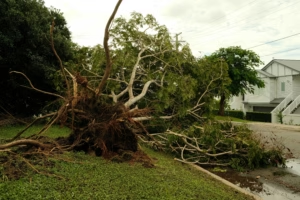
A new lean is more concerning than a lean that has existed for many years. Cracked or raised soil near the base, exposed roots, and sudden changes in the tree’s position should be evaluated promptly, especially when the tree is within striking distance of a structure or area people use.
Deadwood and canopy health
Dead or hanging branches are among the most visible hazards, particularly after windstorms. Larger dead limbs may fall without warning, and smaller deadwood can become a problem when it is over a deck, path, or parking area.
Canopy thinning, leaf discoloration, early leaf drop, and dieback can point to stress, disease, pest activity, root damage, or site problems. These signs do not always indicate immediate failure, but they provide useful context during a tree risk assessment review.
Why Location Changes the Recommendation
Tree risk is not determined by tree condition alone. A mature tree with a defect in a wooded portion of a large property may present a manageable concern. The same defect over a home, driveway, or neighbor’s fence may require faster action.
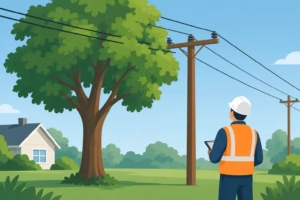
This is why qualified tree care professionals consider occupancy and use patterns. Is the area below the tree used daily? Does the tree overhang a roof? Are there utility lines nearby? Could a fallen limb block access for vehicles or emergency services? Answering these questions helps prioritize work based on the actual exposure, not fear or guesswork.
For small commercial properties and rental homes, this review can also support responsible maintenance planning. Addressing known concerns before the next severe weather event is often safer and more predictable than reacting after damage has occurred.
What Happens After the Assessment
A good assessment should leave you with practical options, not vague warnings. Depending on the tree and its location, recommendations may include targeted pruning, deadwood removal, crown reduction, cabling or bracing, monitoring, or removal.
Pruning can be an effective way to address specific limb hazards and improve canopy balance. However, excessive cutting or topping can create new problems, including weak regrowth, decay, and added stress. Professional pruning should follow accepted arboricultural practices and be performed with the tree’s health and structure in mind.
Removal may be recommended when the likelihood of failure is unacceptable, the potential consequences are severe, or the tree cannot be reasonably mitigated. This is especially true for trees with major trunk defects, extensive root failure, significant storm damage, or a hazardous lean toward a home or occupied area.
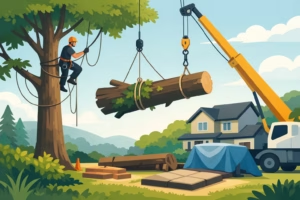
When removal is the safest option, the work should be planned carefully. Access, drop zones, nearby structures, utility clearance, and cleanup all matter. A qualified crew uses the right equipment and follows established safety procedures, including ANSI standards and OSHA regulations, to complete high-risk work responsibly.
When to Schedule a Review
Do not wait for a branch to fall before requesting an evaluation. A review is especially worthwhile after a windstorm, when you notice a new crack or lean, after nearby construction, or when large branches begin overhanging a structure.
It is also wise to schedule an assessment before purchasing a property with mature trees, starting a remodeling project, or planning major landscaping changes near established root systems. Early evaluation gives you time to consider options and budget for necessary work rather than making a rushed decision during an emergency.
If a tree has already failed, is resting on a structure, has downed limbs near power lines, or appears likely to fall, keep people away from the area and contact an emergency tree service. Do not attempt to cut, pull, climb, or stabilize a damaged tree yourself.
Choosing a Tree Care Company You Can Trust
Tree risk work requires more than a chainsaw and a truck. Look for a company with proven experience, appropriate licensing and insurance, clear communication, and a commitment to professional safety standards. Ask how the crew will protect your home, landscape, and access areas during the work.
M & R Tree Services provides dependable tree care for Vancouver-area property owners who need clear recommendations and safe, professional service. Whether the right answer is pruning, structural support, removal, or continued observation, the focus should remain on protecting your property without performing unnecessary work.
A mature tree is a valuable part of a property, but peace of mind matters too. When you see a change in a tree’s structure, health, or position, a timely professional review can turn uncertainty into a clear plan for safer tree care.