A mature tree can add shade, privacy, and value to a property. It can also become a serious hazard when branches grow into overhead wires or roots spread near underground services. This guide to protecting utility lines explains what homeowners and property managers should watch for, when to call the utility provider, and why qualified tree care is the safest choice for work near power lines.
Why Trees and Utility Lines Need Careful Planning
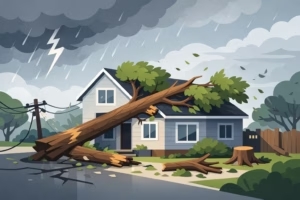
Utility lines are easy to overlook until a branch falls during a storm, a service line is pulled loose, or a planned tree removal gets too close to energized equipment. The risks go beyond a temporary outage. Contact with electrical lines can cause severe injury, fire, property damage, and danger for neighbors or emergency crews.
In Vancouver, Washington, wind, heavy rain, and saturated soil can expose weaknesses in trees that may not have been obvious during dry weather. A leaning tree, split trunk, dead limb, or root-damaged tree may shift suddenly. If utility lines are nearby, the job requires more than a chainsaw and a ladder. It requires planning, proper equipment, and a clear understanding of safety boundaries.
Overhead power lines are the most visible concern, but they are not the only ones. Underground electric, gas, water, sewer, cable, and communication lines can also be damaged by stump grinding, digging, fence installation, drainage work, or tree planting. Every property is different, so the right approach depends on the tree’s condition, the line type, and the work being performed.
Know Which Utility Lines Are on Your Property
Before pruning, removing a tree, grinding a stump, or excavating around roots, identify both overhead and underground utilities. Service lines running from the street to a home can be harder to spot than main lines along the road. They may cross a backyard, run through a side yard, or disappear into landscaping.
For underground lines, contact 811 before any digging project. Utility locations should be marked before excavation begins. Markings identify approximate locations, not a guarantee that it is safe to dig blindly, so care is still needed around the marked area. Private lines, such as some irrigation, landscape lighting, propane, or private electrical connections, may not be included in a standard utility locate.
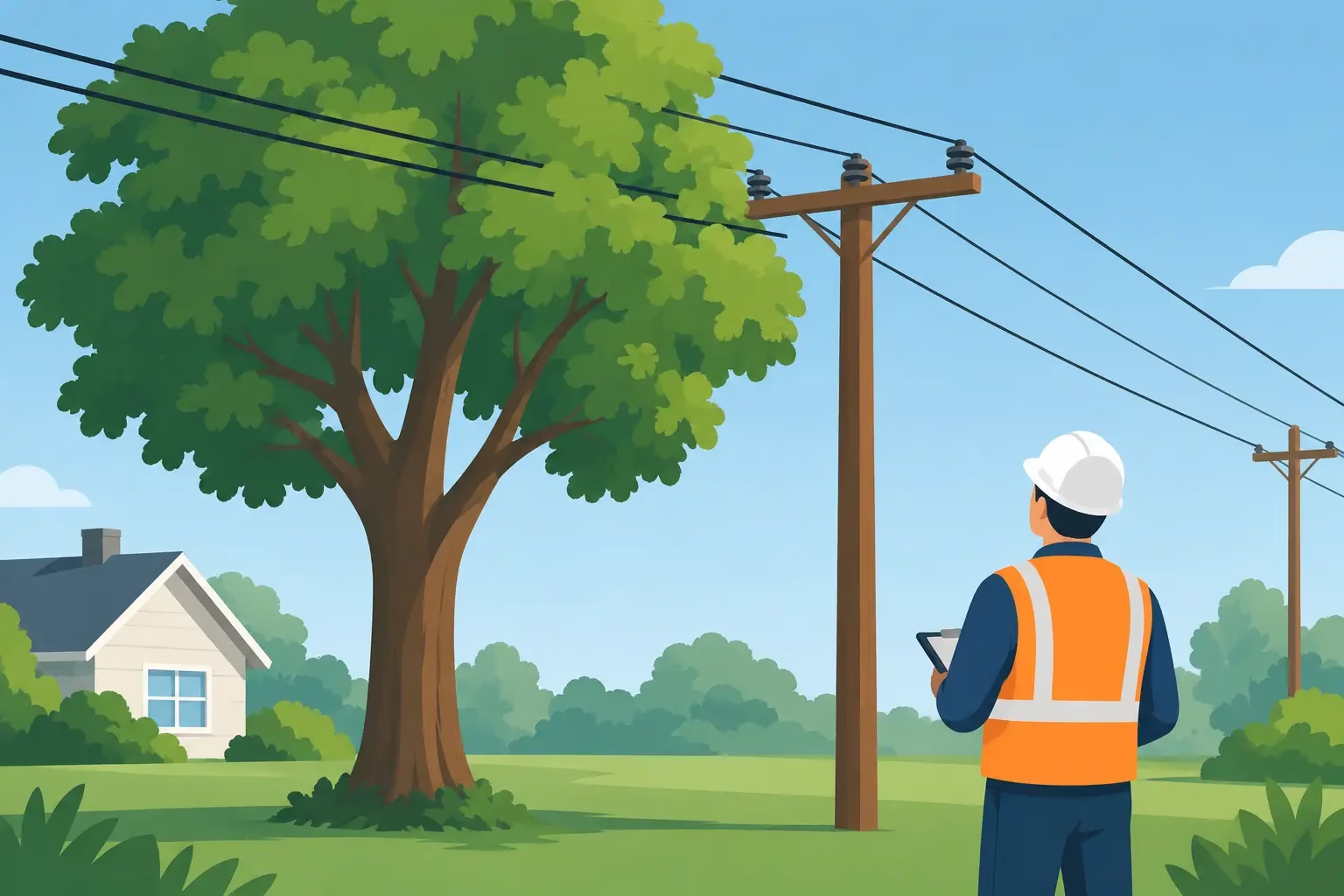
For overhead lines, look up before work starts. Watch for lines crossing the canopy, passing over a roof, or connecting directly to the home. A branch does not have to touch a line to create danger. Wind can move limbs unexpectedly, and electricity can arc under certain conditions. Assume every overhead wire is energized unless the utility confirms otherwise.
Guide to Protecting Utility Lines During Tree Work
The most reliable way to protect utility lines is to address tree growth before it becomes an emergency. Proper pruning can reduce weight on overextended limbs, remove deadwood, and guide growth away from structures and utility corridors. However, the pruning method matters. Topping or cutting back large sections of a tree without proper technique can trigger weak regrowth, decay, and future failures.
When limbs are near energized electrical conductors, homeowners should not attempt to prune them. Do not climb the tree, use a pole saw, raise a ladder near the line, or pull a branch away with a rope. A branch can shift, a tool can extend farther than expected, and a person on the ground can still be injured if a line is contacted.
The utility provider is generally responsible for maintaining safe clearance around its primary distribution lines. If branches are growing directly into those lines, report the issue to the utility. A qualified tree service can assess the rest of the tree and coordinate the work needed after the electrical hazard has been addressed.
For trees close to a home’s service drop, the line that connects utility power to the building, specialized planning is essential. The utility may need to disconnect or protect the service before removal or major pruning can proceed. This can add time to the project, but it is a necessary trade-off for protecting people, property, and the electrical system.
Watch for Warning Signs Before a Storm Does the Damage
Many utility-line emergencies can be prevented by acting when a tree first shows signs of decline or structural stress. A proactive inspection is especially worthwhile before the fall and winter storm season.
Call for a professional assessment when you notice:
- Dead, hanging, cracked, or broken branches near any overhead line
- A tree leaning farther than it did previously, particularly after heavy rain or wind
- Splits in major branch unions, a hollow trunk, or peeling bark around a weak area
- Roots lifting soil, heaving pavement, or showing decay near the base of the tree
- Limbs rubbing against a roof, service line, or communication cable
- A tree that has shifted after construction, trenching, drainage changes, or nearby excavation
Not every tree near a utility line must be removed. In some cases, selective pruning, cabling and bracing, or ongoing monitoring can reduce risk while preserving a valuable tree. In other cases, removal is the responsible choice because the tree’s structure, species, location, or decline makes long-term safety unrealistic.
What to Do if a Tree Hits a Power Line
If a tree, branch, or fallen limb contacts an electrical line, stay away. Keep family members, pets, and neighbors clear of the area. Do not touch the tree, the wire, a fence, a vehicle, or standing water nearby. Even if the power appears to be out, the line may still be energized.
Call the utility provider immediately to report the emergency. If there is fire, sparking, a downed line, or an immediate threat to people or property, call 911. Do not try to clear debris until the utility confirms the area is safe.
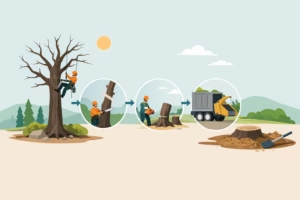
After electrical hazards have been controlled, emergency tree work may be needed to remove unstable limbs, clear access, or prevent additional damage. Storm cleanup often involves hidden tension in broken branches, compromised trunks, and unstable root systems. Professional crews use controlled cutting methods, proper rigging, and jobsite safety practices to manage these risks.
Protect Underground Lines During Stump and Root Work
Tree removal does not end when the trunk is on the ground. Stump grinding, root removal, and replacement planting can all affect underground utilities. A stump may look isolated while roots spread toward a service line, driveway, irrigation system, or buried drainage connection.
A professional assessment helps determine whether stump grinding is appropriate and how deep the work can safely go. In some locations, complete root removal is not practical or necessary. Grinding the stump below grade and managing surface roots may be the safer option, particularly where underground infrastructure is present.
If you are planting a replacement tree, choose a species and planting location with mature size in mind. A small nursery tree may seem safely distant from a utility line, but its canopy and roots can create problems years later. Planning for the tree’s full growth is one of the most effective forms of utility protection.
Choose a Tree Service That Treats Safety as the Standard
Tree work near utility lines should never be treated as a routine yard project. Ask whether the company has experience with hazardous removals, follows ANSI tree care standards, and maintains OSHA-focused safety practices. The crew should evaluate access, line locations, tree condition, nearby structures, drop zones, and weather before cutting begins.
At M & R Tree Services, safety planning is part of every professional tree care recommendation. With more than 14 years of experience serving Vancouver and surrounding communities, our team helps property owners make informed decisions about pruning, removal, storm damage, stump grinding, and structural support.
If a tree is growing too close to a utility line or has become unstable after a storm, do not wait for the next strong wind to make the decision for you. A timely inspection can protect your property, help prevent outages, and give you a clear path forward.