When a tree comes down across a driveway at 2 a.m. or a cracked limb starts hanging over your roof after a windstorm, the question is not whether you should wait until morning. The question is whether the tree is stable enough to leave alone for even a few more hours. In Vancouver, Washington, where heavy rain, saturated soil, and strong seasonal winds can turn a healthy-looking tree into a real hazard, emergency response matters.
Emergency tree removal in Vancouver WA is not the same as routine tree work. It calls for fast judgment, the right equipment, and a crew that knows how to work safely around homes, power lines, fences, vehicles, and unstable wood under tension. For homeowners and property managers, that usually means one thing – call a qualified tree service as soon as you know the situation is unsafe.
When emergency tree removal in Vancouver WA is the right call
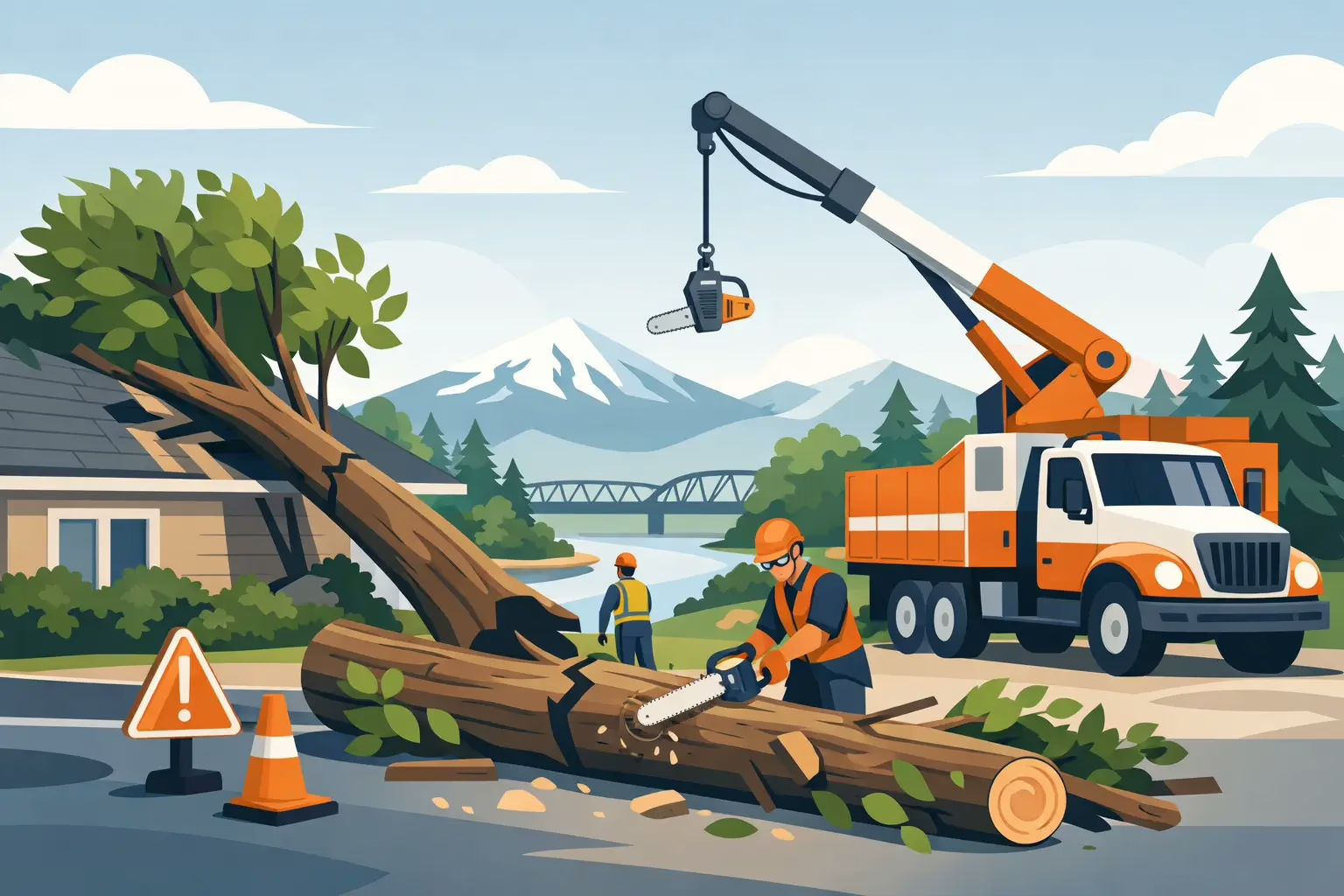
Not every fallen branch is an emergency, but some situations should never be handled as a normal scheduling request. If a tree has fallen onto a structure, split at the trunk, uprooted and started leaning, or dropped large limbs over an occupied area, the risk is immediate. The same goes for storm-damaged trees that are still standing but visibly compromised.
A common mistake is assuming a tree is “probably fine” because it has not fully fallen yet. In reality, partially failed trees can be more dangerous than trees already on the ground. Limbs can shift without warning. Trunks can twist as internal fibers give way. Root systems can continue lifting out of wet soil, especially after a long stretch of rain.
If the tree is touching or near utility lines, treat that as a utility emergency first. Keep your distance, keep others away, and contact the power company before any removal work begins. No reputable tree crew should rush into a live electrical hazard.
What usually causes tree emergencies here
In this area, weather is a major factor, but it is rarely the whole story. Storms expose problems that may have been building for years. A tree with internal decay, poor branch structure, root damage, or previous topping is much more likely to fail under pressure.
Heavy wind is an obvious trigger, especially when broad canopies catch gusts unevenly. Saturated ground is another big issue in Vancouver. When soil stays wet, root anchoring weakens, and even large trees can begin to lift or lean. Snow and ice are less common than rain and wind, but when they do hit, the added weight can snap limbs and split trunks.
Sometimes the emergency starts with a tree that looked healthy from the street. Decay often hides inside the trunk, at the base, or where major limbs join. That is one reason emergency tree work should be handled by experienced professionals who can assess what failed, what is still under load, and what nearby sections may move next.
What to do before the crew arrives
Your first job is safety, not cleanup. Stay away from the tree, keep children and pets inside, and do not walk under hanging limbs to get a closer look. If a tree has hit your house, avoid the impacted area until you know it is structurally safe. If power lines are involved, stay well back and report the hazard immediately.
If you can do so safely, take a few photos from a distance for insurance purposes. Then focus on access. Make sure gates can be opened, vehicles can be moved if they are not trapped, and the crew has a clear path to evaluate the site. Do not start cutting branches with a homeowner chainsaw, especially if the tree is leaning, twisted, or resting against a structure. Wood under tension can release violently.
What professional emergency service should look like
Speed matters, but control matters more. A proper emergency response starts with a site assessment. The crew should identify the main hazards, determine whether the tree can be removed in sections, and plan how to protect nearby property during the process. That may involve climbing, rigging, roping, controlled cutting, or bringing in specialized equipment depending on the size and position of the tree.
The right company will also pay attention to work standards, not just the clock. Emergency conditions are exactly when shortcuts cause injuries and property damage. Safe tree work should be performed with strong attention to ANSI practices and OSHA requirements, because high-risk removals leave no room for guesswork.
There is also a difference between clearing access and completing full restoration. In some emergencies, the first priority is removing the part of the tree that is actively dangerous – off the roof, off the driveway, away from the entrance, or away from the fence line. Secondary cleanup, stump grinding, and non-urgent pruning may happen after the immediate threat is under control. That is not poor service. It is the right order of operations.
The cost question homeowners always ask
Emergency tree removal usually costs more than standard scheduled work, and that is for good reason. After-hours dispatch, storm conditions, complex rigging, difficult access, and elevated risk all affect pricing. A small tree lying in an open yard is one thing. A large split tree hanging over a garage is another.
The most reliable way to keep cost reasonable is to get the right crew on site early. Waiting can make the job harder. A partially fallen tree may shift, break further, or cause additional damage if weather changes overnight. What starts as one controlled removal can become a bigger cleanup with more repair costs attached.
At the same time, homeowners should expect transparency. A dependable local company will explain what needs immediate attention, what can wait, and how the scope of work affects the estimate. Fair pricing does not mean cutting corners. It means clear communication and work done correctly the first time.
Why local experience matters in Vancouver
Tree emergencies are rarely textbook situations. Neighborhood lot sizes, overhead utility layouts, older trees, shared fence lines, and wet Pacific Northwest conditions all change the approach. A company that regularly handles emergency tree removal in Vancouver WA understands these local factors and can make practical decisions faster.
That matters for homeowners who need more than a chainsaw and a promise. They need a team that shows up ready to protect the property, communicate clearly, and handle the job with professionalism. Experience also helps when the emergency is not obvious. A tree may still be standing, but if the root plate is lifting, the trunk is cracking, or the canopy has shifted after a storm, quick evaluation can prevent a much bigger loss.
Not every emergency ends with full removal
Removal is sometimes the only safe option, especially when a tree has failed structurally or is too damaged to recover. But there are cases where selective limb removal, cabling, bracing, or hazard reduction can stabilize the situation. It depends on the species, the condition of the trunk and roots, the extent of damage, and the target area below.
That is another reason professional assessment matters. Property owners do not need someone to upsell them on unnecessary work. They need an honest recommendation based on the actual risk. In some cases, preserving part of the tree is possible. In others, full removal is the only responsible call.
Choosing a company when time is tight
During a tree emergency, most people are not comparing five long proposals. They are looking for a company that answers the phone, explains the process, and inspires confidence right away. That confidence should come from more than availability. It should come from experience, safe work practices, proper licensing, and a clear commitment to protecting the customer and the property.
M & R Tree Services serves Vancouver and surrounding communities with professional tree care, including emergency response outside standard business hours. For homeowners, landlords, and small property managers, that kind of availability can make all the difference when a damaged tree cannot wait.
If you are facing storm damage, a split trunk, or a dangerous lean, the safest move is usually the simplest one – stop trying to manage the risk alone and get qualified help on site as soon as possible. A fast, careful response can protect your home, reduce further damage, and give you one less thing to worry about when the weather has already done enough.