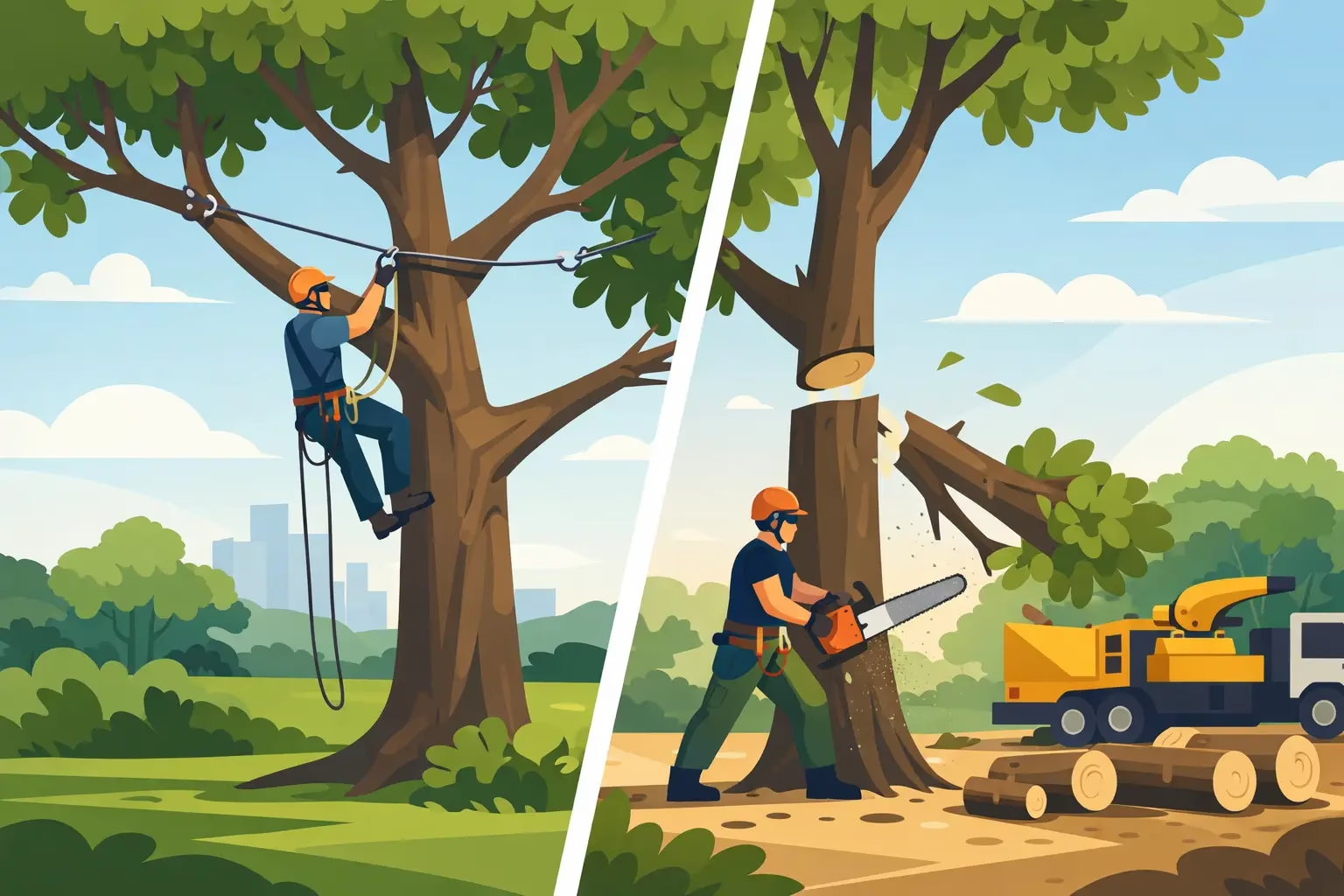
A large limb over a driveway gets everyone’s attention fast. When a tree starts showing signs of structural weakness, the question usually comes down to cabling versus tree removal. For homeowners and property managers, the right answer is not about saving a tree at any cost or removing it too quickly. It is about safety, condition, location, and whether the tree can be managed to an acceptable level of risk.
Cabling versus tree removal starts with risk
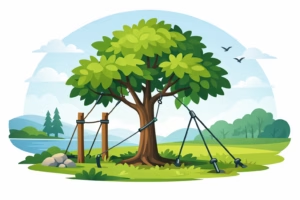
Cabling and bracing are structural support systems used to help reduce movement in weak branches or stems. In the right situation, they can help preserve a valuable tree and lower the chance of failure. Tree removal, on the other hand, is the better option when the tree has declined too far, presents a serious hazard, or cannot be made reasonably safe through pruning and support.
The key point is that cabling does not make a dangerous tree harmless. It is one tool within a larger tree care plan. A cable can help support a weak union or reduce stress on a heavy limb, but it does not reverse decay, fix root failure, or restore a tree that is already in advanced decline.
That is why a professional inspection matters. A proper recommendation should look at the tree’s structure, health, defects, target area, and likely failure points. It should also consider whether the tree sits near a home, garage, fence, sidewalk, street, or neighboring property where a failure could cause damage or injury.
When cabling makes sense
Cabling is often recommended for trees that still have good overall health but show a structural weakness that can be managed. This usually applies to mature trees with significant landscape value, shade value, or sentimental value. If the tree is otherwise strong and stable, support may extend its useful life and reduce stress on a vulnerable section.
A common example is a tree with codominant stems. That means two main stems are growing from the same point, often with a weak attachment between them. Another example is a long, heavy branch extending over a roof or driveway. In these cases, a cable may limit excessive movement during wind or storms, while selective pruning reduces end weight.
Cabling may also be appropriate when a tree has a minor crack, a split that has been addressed early, or a branch structure that would benefit from supplemental support. The goal is not cosmetic. It is practical risk reduction.
For support systems to be worthwhile, the tree must have enough health and structural integrity to justify the work. If the trunk is solid, the root system appears stable, and the defects are limited and manageable, cabling can be a responsible alternative to removal.
When tree removal is the safer choice
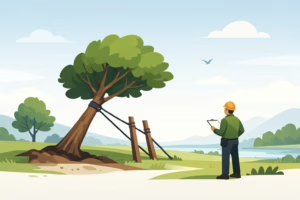
Some trees are beyond support. If the trunk has extensive decay, the roots are compromised, the tree is severely leaning due to failure, or major structural cracks are active, removal is often the safer and more cost-effective decision.
Dead trees are another clear example. A cable cannot restore strength to dead wood. Likewise, a tree with widespread disease or advanced internal decay may appear stable from the outside while having very little sound wood left. In those cases, support hardware does not solve the underlying problem.
Location matters just as much as condition. A tree with moderate defects in an open field is a different situation from the same tree hanging over a bedroom, parking area, or busy sidewalk. As the consequences of failure increase, the threshold for removal becomes lower.
There are also cases where the tree species, growth pattern, and previous damage make long-term retention unrealistic. If repeated failures have already occurred, or if a tree would require ongoing intervention with limited benefit, removal may be the more responsible option.
Cabling versus tree removal is not just about cost
Property owners sometimes assume cabling is always the cheaper route. In the short term, it can be. But the better question is value over time.
A support system is not a one-time decision that can be forgotten. Cabled trees should be inspected on a scheduled basis. Hardware, attachment points, growth, storm impact, and the tree’s overall condition need periodic review. Pruning may also be part of the ongoing care plan. That means cabling can be cost-effective when it preserves a strong, valuable tree, but it is not always the lowest long-term expense.
Removal usually has a higher upfront cost, especially for large trees in tight residential spaces. But once the tree is removed, the immediate structural hazard is gone. For some owners, that certainty matters more than preserving the tree. For others, keeping a mature tree is worth the continued maintenance.
A good recommendation should explain both the near-term and long-term costs, along with the level of risk each option leaves in place.
What a professional assessment should include
Choosing between support and removal should never be based on guesswork. A qualified arboricultural assessment looks beyond the obvious branch that worries you. It should evaluate the tree as a whole.
That includes species characteristics, age, canopy balance, trunk condition, limb attachments, visible decay, previous storm damage, and signs of root problems. Soil conditions and drainage can matter too. A tree struggling from root loss or poor site conditions may not be a good candidate for preservation, even if the canopy still looks green.
The target area is also part of the decision. A weak limb over a back corner of the yard carries a different level of urgency than one over a front entrance. Professional tree care should weigh both the likelihood of failure and the consequences if failure occurs.
At M & R Tree Services, that kind of decision should always be approached with safety first, clear communication, and work practices aligned with ANSI standards and OSHA regulations. When a recommendation affects your home, vehicles, tenants, or neighboring property, you want more than a quick opinion.
Why pruning often changes the answer
Cabling and removal are not always the only two choices. In many situations, strategic pruning is part of the solution. Reducing end weight on an overextended limb can lower stress significantly. Removing dead, cracked, or poorly attached branches may improve the tree’s safety profile enough that full removal is unnecessary.
In other cases, pruning reveals that the problem is more serious than it first appeared. Once damaged limbs are removed, hidden decay or a deeper structural defect may become more obvious. That can shift the recommendation toward removal.
This is one reason it helps to work with a team that handles both preservation work and removals. When the company evaluating the tree is equipped for either path, the recommendation can stay focused on what best serves the property and the people around it.
Storm damage changes the equation fast
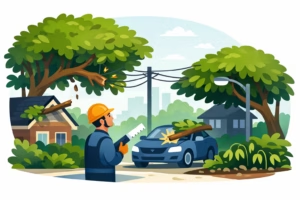
After wind, ice, or heavy rain, a tree that seemed manageable can become urgent. Cracked limbs, partially failed tops, split stems, and root plate movement all raise the stakes. In these cases, cabling may still be considered if the tree remains structurally viable, but emergency conditions often make removal the safer call.
Storm-damaged trees are especially risky because some failures are not complete yet. A limb may still be hanging in place while the wood fibers holding it have already failed. A stem may look upright while the root system has begun to lift. These are not wait-and-see situations.
Quick response matters, but so does careful judgment. The right team should stabilize the hazard, assess the remaining structure, and recommend the option that restores safety with the least unnecessary loss.
The best choice depends on what the tree can realistically do next
Some trees are worth supporting because they still have years of safe, useful life ahead with proper care. Others have reached the point where removal is the responsible decision, even if no one likes losing a mature tree. Cabling versus tree removal is really a question of whether the tree can continue to stand in that location without creating an unacceptable risk.
If you are seeing a split trunk, a heavy overextended limb, recent storm damage, or a tree leaning toward a structure, it is smart to have it evaluated sooner rather than later. The earlier a structural issue is identified, the more options you usually have. And when removal is necessary, getting ahead of failure is almost always safer and less costly than dealing with damage after the fact.
The best next step is simple: get a professional assessment, ask direct questions, and choose the option that protects your property while making sense for the tree’s actual condition.