That old stump usually becomes a problem before it becomes a priority. It catches mower blades, invites pests, creates a tripping hazard, and keeps a yard from feeling finished. This homeowner stump grinding guide is here to help you understand what the service involves, what affects the cost, and when it makes sense to bring in a trained crew instead of trying to handle it yourself.
For most property owners, stump grinding is less about appearance alone and more about safety, usability, and protecting the value of the landscape around it. The right approach depends on the stump’s size, species, location, and how close it sits to utilities, fences, patios, or nearby trees. That is why professional evaluation matters.
What stump grinding actually does
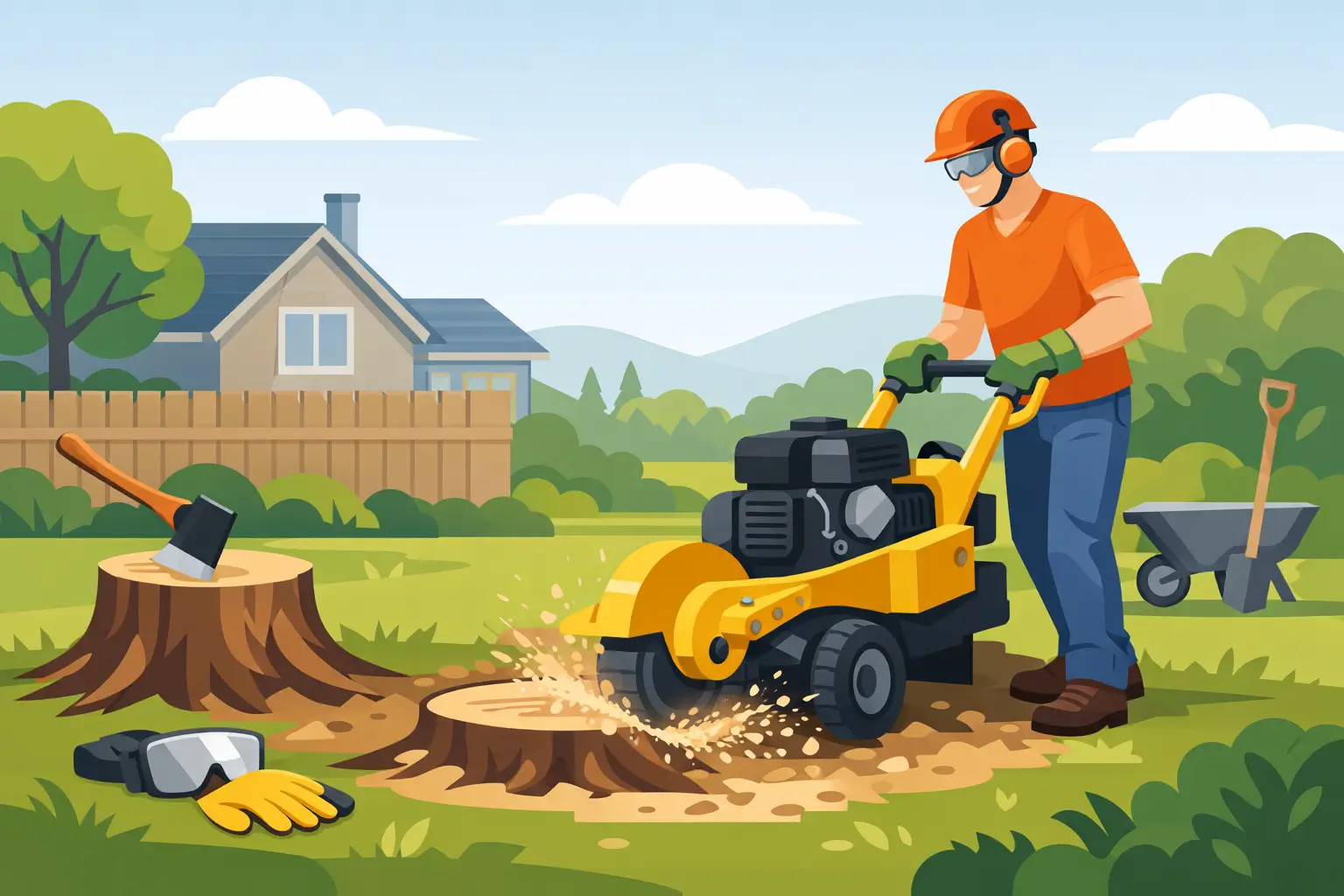
Stump grinding removes the visible stump by using specialized equipment to grind the wood down below grade. In most residential jobs, the stump is reduced into wood chips and the remaining area can then be backfilled or prepared for grass, mulch, or another landscape improvement.
It is different from full stump removal. Full removal pulls out the stump and root ball, which is a much more invasive process. That can leave a larger hole, disturb more of the yard, and require heavier equipment. Grinding is often the more practical option for homeowners who want to clear the area without tearing up the entire landscape.
That said, grinding does not mean every root disappears. Surface roots may remain in place and gradually break down over time. In many cases, that is perfectly acceptable. If you are planning to pour concrete, install a foundation element, or replant in the exact same spot, the scope may need to be different.
A homeowner stump grinding guide to deciding what you need
Not every stump needs the same level of service. A small stump in an open lawn is a straightforward project. A large hardwood stump wedged between a fence, utility box, and retaining wall is not. The job changes based on access, equipment clearance, and the depth required.
Homeowners usually start with one simple question: should I leave the stump, grind it, or remove it completely? If the stump is in a low-traffic area and causes no problems, waiting may be reasonable for a short time. But stumps rarely improve with age. They can sprout new growth, attract insects, and slowly become more of an obstacle.
Grinding is usually the best fit when you want to eliminate the hazard, improve the look of the yard, and reclaim usable space. Full removal tends to make more sense when construction or major hardscape work is planned in that exact area.
What affects stump grinding cost
Price depends on more than stump diameter, although size is a major factor. Larger stumps take more time, place more demand on the machine, and often require extra cleanup. Species matters too. Some hardwoods are denser and slower to grind than softer wood varieties.
Location is another big factor. If equipment can roll directly to the stump through a standard gate and across stable ground, the work is simpler. If the stump sits on a slope, behind tight fencing, near delicate landscaping, or in muddy conditions, labor and setup become more involved.
Depth also matters. Some homeowners only need the stump ground below mowing level. Others want it deeper for regrading, planting, or other improvements. The deeper the grind, the more material has to be processed.
Cleanup choices can affect the quote as well. Some property owners want the chips left on site for mulch. Others want haul-away service and a cleaner finish. Neither is wrong. It depends on your plans for the area.
Why DIY stump grinding is usually not worth the risk
A lot of homeowners look at a stump and assume it is a manageable weekend rental. On paper, that sounds efficient. In practice, stump grinders are powerful machines that can cause serious injury or property damage when used without training.
The risk is not only the cutting wheel. There is also the issue of hidden utilities, buried lines, flying debris, unstable footing, underground root spread, and machine control in tight residential spaces. Even a relatively small stump can become complicated when the roots have grown around irrigation, edging, or nearby structures.
There is also the quality issue. Incomplete grinding often leaves a lumpy area that still interferes with mowing or future landscaping. Homeowners sometimes end up paying for the rental, spending the day on the job, and then calling a professional anyway to finish it correctly.
For work that involves specialized equipment, safety standards, and judgment around underground and site conditions, hiring an experienced crew is usually the more reliable and more cost-effective path.
What to expect from a professional stump grinding service
A professional visit should start with a site review. That means looking at the stump size, species, access route, surrounding obstacles, and the condition of the ground. A good contractor will also talk through your goal for the area afterward, because the desired end result affects how deep the grinding should go.
Before the work starts, the area should be checked for visible hazards and clearance concerns. If utilities are a concern, that needs to be addressed before grinding begins. This is one reason homeowners should avoid guessing. What is underground is not always obvious from the surface.
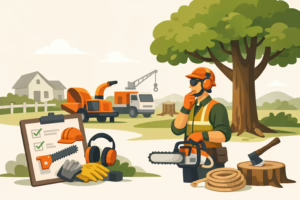
During the job, the crew uses equipment sized for the site and manages debris carefully. Safety barriers or controlled work zones may be used to protect nearby people, vehicles, windows, and landscape features. Professional companies should follow recognized safety practices and operate with the kind of care that protects both the property and everyone on site.
After grinding, you will typically be left with wood chips and a depression where the stump used to be. Depending on the service selected, the area may be backfilled, leveled, or prepared for the next step in your landscape plan.
Common questions in any homeowner stump grinding guide
One of the most common questions is whether the tree can grow back. It depends on the species. Some trees are more aggressive about sprouting from remaining roots than others. Grinding greatly reduces that issue, but it does not guarantee identical results in every species and site condition.
Another common concern is pests. Old stumps can attract insects as they decay, especially if they remain damp. Grinding helps remove the decaying wood mass that often creates that appeal. It is not a substitute for broader pest control if a property already has an infestation, but it can remove one contributing factor.
Homeowners also ask whether the area can be replanted right away. Sometimes yes, sometimes no. If you want to plant grass, that is usually straightforward after proper backfill and grading. If you want to plant a new tree in the exact same spot, that can be less ideal because of remaining roots and wood debris below grade. A nearby planting location is often the better choice.
When timing matters most
There is no single perfect season for stump grinding, but there are times when delaying the work creates more problems. If the stump sits in a walkway, near a driveway, or in a part of the yard used by children or guests, removing the hazard sooner is usually the smart move.
It also makes sense to handle stump grinding soon after tree removal when possible. The site is already active, the project is fresh, and the yard can be restored in one coordinated effort. Waiting months or years often means living with a nuisance that only becomes more inconvenient.
After storms, timing can be even more important. Damaged trees and freshly cut stumps may leave unstable conditions, blocked access, or urgent cleanup needs. In those situations, working with a responsive local company matters.
Choosing the right stump grinding company
Not every tree service approaches stump grinding with the same level of professionalism. Homeowners should look for a company that is licensed as required, insured, experienced with residential properties, and committed to safe operating practices. Clear communication matters too. You should know what is included, how the area will be protected, and what the site will look like when the work is done.
Local experience is valuable because yard conditions, common tree species, and property layouts vary by region. In the Vancouver, Washington area, many residential lots have tight access points, established landscaping, and weather-related cleanup needs that call for practical judgment, not guesswork. That is where a company like M & R Tree Services brings real value through experience, reliability, and a safety-first approach.
A good stump grinding job should leave you with more than a missing stump. It should leave you with a safer, cleaner, more usable property and confidence that the work was handled correctly. If a stump has been sitting in your way, the best next step is usually simple: have it evaluated and get the job done before it becomes a bigger problem than it already is.
A finished yard feels different when the hazards are gone and the space works the way it should.