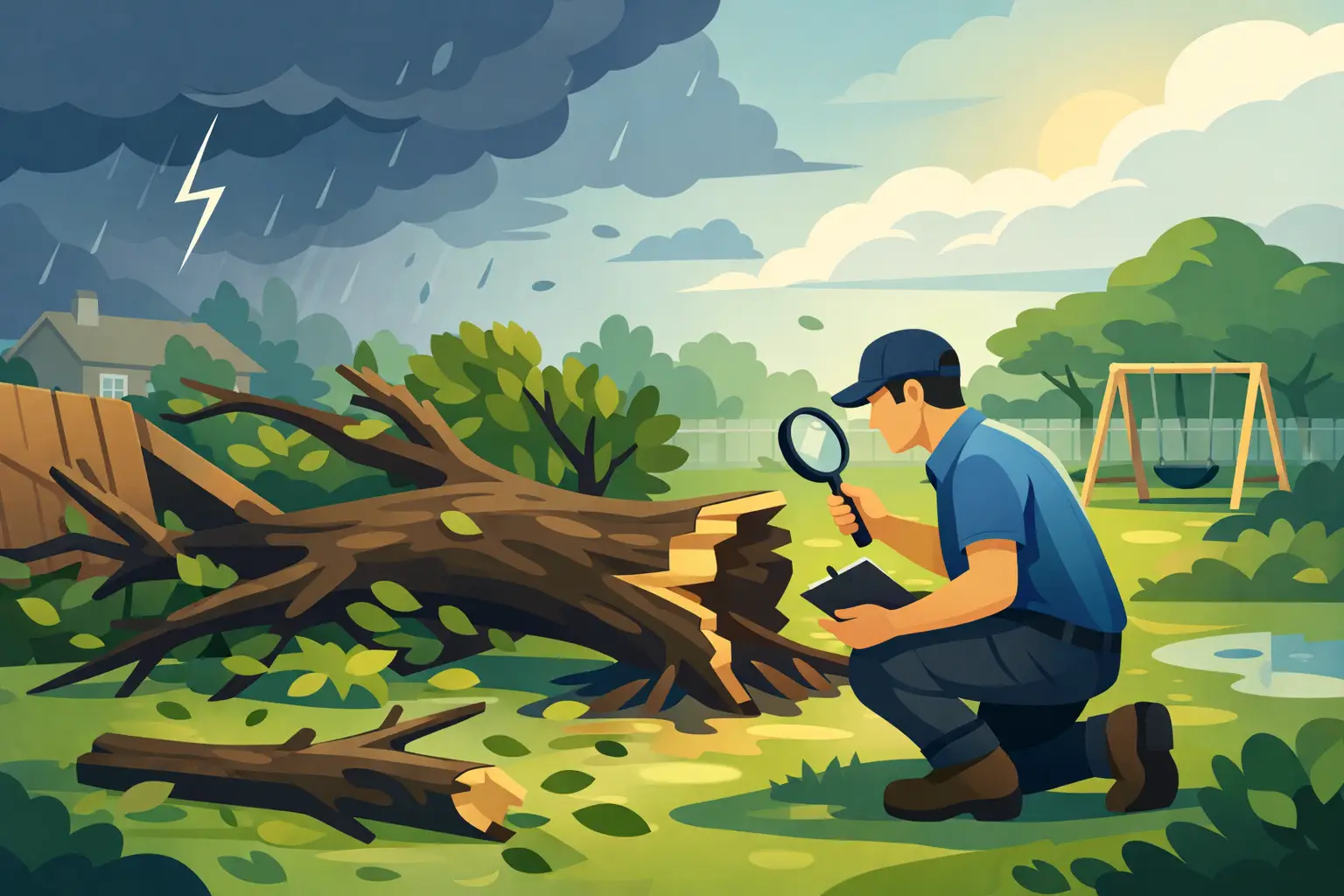
The morning after a windstorm, a tree can look mostly fine from the driveway and still be unsafe. A post storm tree inspection is how property owners catch the damage that is easy to miss at first glance – split limbs, cracked unions, root movement, and trunk stress that can turn into a failure later.
For homeowners and property managers in Vancouver, Washington and nearby areas, that matters for more than curb appeal. A compromised tree can threaten roofs, vehicles, fences, power lines, and anyone walking beneath it. Storm damage is not always dramatic. Sometimes the highest-risk tree is the one that only lost a few branches but took structural damage in the process.
Why a post storm tree inspection matters
Storms put trees under sudden stress. Wind twists the canopy, saturated soil weakens root support, and heavy rain can expose problems that were already developing. A tree may survive the storm itself and still fail days or weeks later.
That delayed risk is one of the biggest reasons inspection should happen soon after severe weather. Hanging limbs can drop without warning. Small trunk cracks can spread. Leaning can worsen as wet soil shifts. If the tree is close to a home, driveway, sidewalk, or neighboring property, waiting too long can make a manageable issue much more dangerous and more expensive to correct.
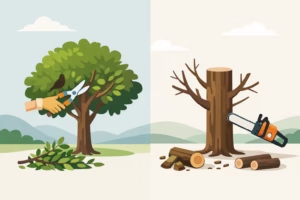
A timely inspection also helps sort out what needs immediate action and what can be monitored. Not every damaged tree needs removal. In some cases, selective pruning, cabling, bracing, or cleanup is enough. In others, removal is the safest choice. The right answer depends on the species, size, location, extent of damage, and how the tree was structured before the storm.
What professionals look for during post storm tree inspection
A proper inspection goes beyond checking for obvious broken branches. The goal is to evaluate structural stability, overall health, and the likelihood of failure.
Canopy and branch damage
The canopy often shows the first visible signs of storm stress. Broken limbs, torn bark, and branches hanging in the crown are clear hazards. But arborists also look for overextended limbs, fresh splits at branch unions, and weight imbalance caused by partial canopy loss.
This matters because uneven loading can make the remaining structure unstable. A tree that lost one large limb may now be more likely to fail on the opposite side, especially in the next wind event.
Trunk cracks and weak attachments
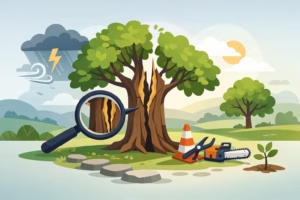
The trunk tells an important part of the story. Vertical cracks, seam openings, bark separation, and twisted stems can signal severe stress. Multi-stem trees are especially worth watching after storms because weak unions can start separating under wind load.
Some cracks are immediately serious. Others may be manageable depending on depth, location, and whether the tree has enough sound wood left to support itself. This is where experience matters. Surface damage and structural failure are not always the same thing.
Root zone movement
One of the most concerning signs after a storm is root plate movement. You may notice raised soil, fresh cracking in the ground, or a tree that suddenly leans more than it used to. These signs can indicate root failure below grade, even if the canopy still looks green.
Trees growing in saturated soil are especially vulnerable. A tree does not need to fall completely to be dangerous. Once roots begin to give way, the tree may have lost much of its stability.
Hidden defects made worse by weather
Storms often expose pre-existing decay, cavities, dead wood, or poor past pruning cuts. These issues may have been tolerated under normal conditions, but severe weather changes the equation. A tree with internal decay can remain standing for years, then fail when wind or soil conditions push it past its limit.
That is why storm inspection is not just about what the weather caused. It is also about what the weather revealed.
Signs you should call right away
Some post-storm tree conditions should never wait. If a tree or large limb is touching a structure, blocking access, hanging over an entry point, or interfering with utility lines, immediate professional attention is the safest move.
The same goes for fresh leaning, exposed roots, split trunks, or branches suspended high in the canopy. These hazards are unpredictable. They can shift during cleanup, in a light breeze, or with no warning at all.
Property owners should also avoid going under damaged limbs to get a better look. What appears stuck may actually be one movement away from falling. If the tree is near power lines, stay clear and treat the area as dangerous until the proper utility and tree service response is in place.
What not to do after storm damage
A lot of secondary damage happens during cleanup. It is understandable to want the yard back in order quickly, but storm-damaged trees can behave differently than healthy ones.
Do not climb a tree that has lost limbs or taken structural stress. Do not cut on a branch under tension unless you fully understand how it will react. Storm-damaged wood can spring, roll, or split suddenly. Do not use a ladder near unstable trees, and do not assume a partially fallen tree is settled.
It is also a mistake to remove too much too fast. Over-pruning after a storm can create long-term decline, especially if the tree was already stressed. Corrective pruning should be based on sound structure and industry standards, not just on making damage look tidier.
Repair or removal? It depends on the tree and the risk
One of the most common questions after a storm is whether a tree can be saved. The answer depends on several factors.
A younger tree with limited branch loss and a stable trunk may recover well with proper pruning. A mature shade tree with major scaffold failure, trunk splitting, or root damage may be beyond safe retention. Species matters too. Some trees compartmentalize damage better than others and are more likely to recover from limb loss.
Location matters just as much as condition. A damaged tree in an open back corner of a property may be a candidate for monitoring or support work. The same tree over a home, driveway, or tenant walkway may pose too much liability to keep.
That is why inspection should be tied to practical risk, not just the appearance of the tree. Safe tree decisions are rarely one-size-fits-all.
Why standards and training matter
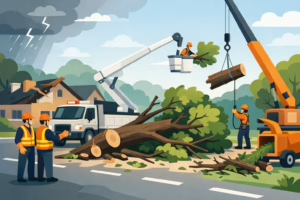
Storm response is high-risk work. It calls for more than a chainsaw and a quick visual check. Proper tree assessment and hazard mitigation should follow recognized safety and work standards, especially when climbing, rigging, or working near structures is involved.
Professional crews that operate with ANSI-aligned practices and OSHA-focused safety procedures bring a level of control that matters in emergency conditions. That helps protect your property, but it also protects everyone on site.
For local property owners, choosing a company with real experience in storm damage cleanup and tree risk evaluation can make the process faster and more straightforward. M & R Tree Services handles emergency tree work with that same focus on safe, reliable service.
After the immediate cleanup, what comes next?
Once urgent hazards are addressed, it is worth taking a broader look at the rest of the property. Storms often reveal trees that were overdue for pruning, thinning, structural support, or removal. Taking care of those issues before the next severe weather event can reduce future damage.
This is also a good time to think about long-term tree health. Compacted soil, poor branch structure, deadwood, and crowded canopies all increase storm vulnerability. Preventive care is usually more affordable than emergency work, and it gives property owners more options.
A good inspection does not end with cleanup. It should leave you with a clear sense of what was damaged, what was corrected, and what should be watched going forward.
When to schedule a post storm tree inspection
If the storm involved strong wind, saturated ground, ice, or falling limbs, inspection should happen as soon as conditions are safe. That is especially true for trees near homes, garages, parking areas, sidewalks, fences, and neighboring property lines.
Even if nothing obvious came down, it is smart to have questionable trees looked at after a major weather event. Hidden damage does not announce itself. It tends to show up later, when people assume the danger has already passed.
A careful post-storm response is not about overreacting. It is about protecting the people and property that matter most. If a tree looks different, sounds different in the wind, or simply gives you reason to second-guess it, trust that instinct and have it evaluated before the next storm tests it again.