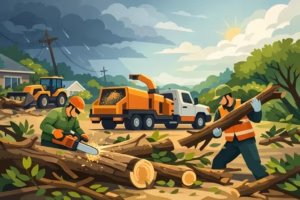
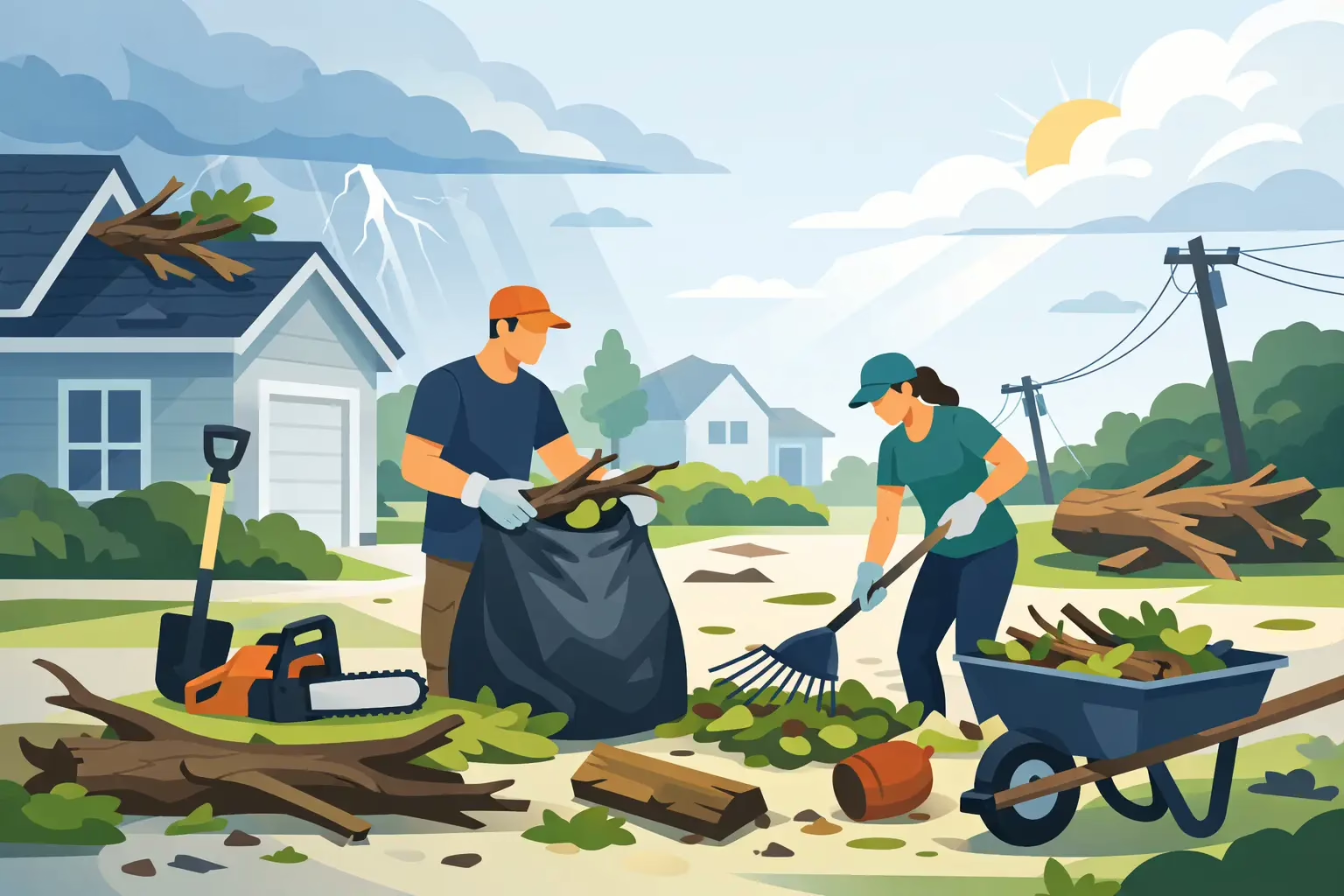
The morning after a windstorm usually starts the same way – branches across the yard, leaves packed into gutters, and one question that matters more than anything else: is it safe to start cleaning up? That is where a storm debris cleanup guide should begin. Not with rakes and tarps, but with hazard awareness. After a storm, what looks manageable from the driveway can include hanging limbs, split trunks, unstable trees, and downed lines that turn routine yard work into a serious safety issue.
For homeowners and property managers, the goal is not just to make the property look normal again. The real priority is protecting people, structures, vehicles, and the remaining trees that may still be under stress. Some debris can be handled quickly. Some should be left alone until a trained crew arrives. Knowing the difference can save time, money, and prevent injuries.
Storm debris cleanup guide: start with safety
Before anyone touches a branch, take a slow walk around the property from a safe distance. Look up first. Broken limbs caught in the canopy are one of the biggest post-storm hazards because they can fall without warning. A tree may still be standing and still be dangerous. Cracks in the trunk, lifted roots, leaning trees, and limbs resting on a roof or fence all signal that the damage may be structural, not cosmetic.
If you see a downed power line, treat the area as off-limits. Do not move limbs touching the line, and do not assume a line is dead because it is quiet or not sparking. Utility-related hazards need to be addressed by the proper provider before cleanup begins.
Wet ground also changes the risk level. Saturated soil can make a partially uprooted tree shift unexpectedly. Slopes, soft lawns, and muddy side yards are especially unpredictable after heavy rain and wind. If debris is tangled in a compromised tree, this is not the time for ladders, chainsaws, or guesswork.
What homeowners can usually handle
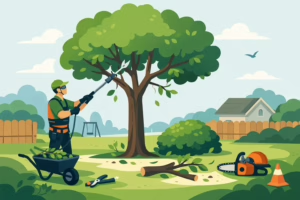
Not every storm cleanup job requires heavy equipment or emergency tree work. Light debris scattered across lawns, driveways, patios, and planting beds is often safe to remove if it is clearly detached and not under tension. Small twigs, leaves, bark, pine needles, and branches that are fully on the ground and away from structures are typically straightforward.
Even then, caution matters. Gloves, boots with good traction, and eye protection should be the minimum. Lift carefully, especially with waterlogged limbs that weigh more than they appear to. If a branch is pinned under fencing, twisted in shrubbery, or partially attached to a tree, it stops being simple cleanup and starts becoming a hazard assessment.
Gutter clearing is another area where people underestimate the risk. A few leaves in the gutter may not seem urgent, but climbing onto a ladder while the ground is wet and debris is still shifting nearby is often where minor storm damage turns into a personal injury. If tree damage is overhead, waiting for a professional evaluation is the safer call.
What should be left to professionals
A practical storm debris cleanup guide needs to be clear about this: any debris involving height, weight, pressure, or damaged trees should be handled by trained crews. That includes large limbs, split leaders, hanging branches, uprooted trees, debris on roofs, and any tree that has shifted toward a home, garage, play area, or access road.
Storm-damaged trees do not behave like healthy trees during normal pruning or removal. Internal cracks may not be visible from the ground. Branches can be bent under tension and release suddenly when cut. A trunk may appear stable until weight is removed from the crown. This is why professional storm cleanup is not simply yard work with bigger tools. It requires experience, controlled cutting methods, and a safety-first process.
For homeowners in Vancouver, Washington and nearby communities, this is also where local knowledge matters. Regional storms can bring a mix of wind, rain, and saturated soils that affect evergreens, ornamental trees, and mature shade trees differently. An experienced crew can identify which trees are immediate hazards, which can be saved with corrective pruning or support, and which need full removal.
The first priorities after a storm
If your property has multiple problem areas, start by thinking in order of risk rather than appearance. A branch in the flower bed can wait. A cracked limb over the driveway cannot. Focus first on anything affecting access, safety, and further property damage.
Access points matter because blocked driveways, walkways, and entry doors create problems if emergency access is needed later. Roof areas matter because debris can trap moisture, damage shingles, or worsen leaks. Fences matter less unless they are holding up a limb or keeping debris from sliding into a neighboring property. This is one of those situations where the right order saves money. Cleaning the easy parts first can get in the way of the more important work.
Photos are worth taking before cleanup begins, especially if there is visible structural damage to trees, fences, roofing, sheds, or vehicles. Clear documentation can help with insurance conversations and gives a tree service team a better understanding of what changed during the storm.
How professional crews approach storm cleanup
When a qualified crew arrives, the process usually starts with a site assessment, not immediate cutting. That assessment looks at tree stability, overhead hazards, access limitations, utility concerns, and the safest way to remove debris without creating new damage. In many cases, the fastest-looking method is not the safest one.
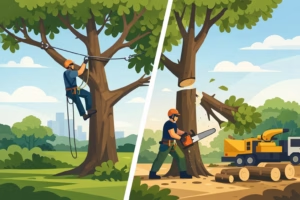
A professional team may remove weight from the canopy in stages, secure unstable sections, and isolate the work zone before larger debris is moved. If a tree can be preserved, cleanup may include selective pruning to ANSI standards, along with recommendations for future monitoring. If the structure is compromised beyond recovery, removal may be the safer long-term option.
This is where professionalism shows up in ways homeowners may not immediately see. Proper rigging, controlled lowering, work-zone management, and OSHA-aware safety practices reduce the chance of secondary damage to roofs, siding, hardscapes, and surrounding trees. That is especially important on tighter residential lots where one bad cut can affect more than one property.
When cleanup turns into tree care
Storm debris is often the visible problem, but not always the only problem. A tree that lost a major limb may still be standing and still need corrective work. Torn branch unions, exposed wood, canopy imbalance, and root disturbance can all shorten a tree’s life or make it more likely to fail in the next storm.
That is why cleanup and tree care often go together. Pruning away broken or weakly attached limbs helps reduce future risk. Cabling or bracing may be appropriate for certain structurally valuable trees, though it depends on species, condition, and the type of defect. Some trees recover well with proper care. Others become long-term liabilities if damage is ignored because the yard looks clean again.
A reliable tree service should be honest about that distinction. Not every damaged tree needs removal, and not every damaged tree should be saved. The right recommendation depends on the degree of damage, target areas below, and the tree’s overall health before the storm.
Choosing help when the job is urgent
Storm work often comes with time pressure, which makes it even more important to choose carefully. Homeowners should look for a company that is licensed, insured, experienced in storm response, and serious about safety standards. Emergency availability matters, but so does judgment. Fast service is valuable only when the work is done correctly.
It also helps to work with a team that understands the difference between cleanup and hazard mitigation. Removing brush from the lawn is one thing. Managing suspended limbs over a roofline or dismantling a damaged tree near a home is specialized work. M & R Tree Services focuses on that higher-risk side of storm damage cleanup, with the kind of approach homeowners want when safety and property protection are on the line.
Pricing can vary depending on access, equipment needs, tree size, and how unstable the debris is. The lowest quote is not always the best value if it skips the safety planning needed to protect the property. In storm cleanup, cheap mistakes tend to be expensive later.
A smarter way to prepare for the next storm
The best storm debris cleanup guide also looks ahead. If a recent storm exposed weak limbs, overextended branches, deadwood, or structural defects, proactive tree care can reduce the amount of debris and damage next time. Routine pruning, removal of hazardous trees, and structural support for select trees all help lower storm risk.
No property can be made storm-proof. But it can be made more resilient with experienced tree care and timely attention to warning signs. If your yard took a hit, the safest next step is not always to clear it yourself. Sometimes the smartest move is to pause, assess the risks, and bring in a team equipped to do the work safely and right the first time.