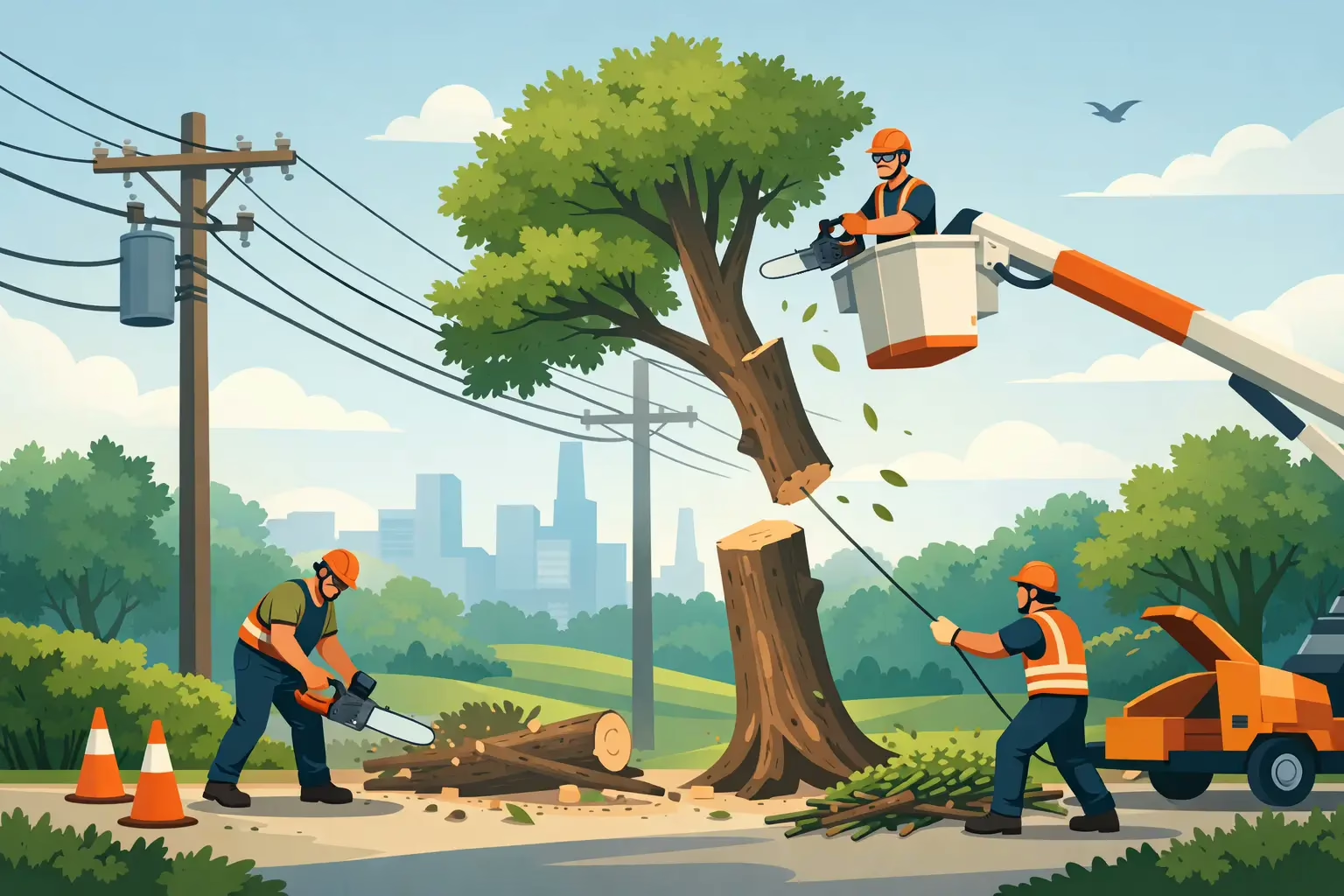
If you need to remove tree close to power lines, the real question is not where to start – it is who should handle it safely. A tree that leans toward overhead service drops, utility lines, or roadside distribution lines can turn from a maintenance issue into a serious hazard fast. One bad cut, one hidden limb shift, or one windy afternoon can put people, property, and electrical service at risk.
This is one of those jobs where experience matters more than speed. Homeowners often notice the problem when branches begin touching lines, a storm cracks a lead limb, or the canopy starts growing into the utility corridor. In some cases, the tree itself is healthy but poorly placed. In others, decay, root damage, or storm stress makes it unstable. Either way, tree work around energized lines is not routine trimming.
When a tree near power lines becomes an urgent problem
Not every nearby tree needs immediate removal, but some situations should move to the top of your list. If a tree is already resting on a line, sparking, smoking, or causing lights to flicker, treat it as an emergency. Stay back, keep others away, and contact the utility provider right away.
There are also less dramatic warning signs that still call for prompt action. Dead upper limbs, visible cracking at the main stem, a sudden lean, exposed roots, or storm-damaged scaffolding branches can all mean the tree is less stable than it looks. Even if the line is not currently affected, failure can happen without much warning.
A common mistake is assuming a tree is safe because it has stood near power lines for years. Growth changes the risk. Wind exposure changes the risk. Internal decay changes the risk. What looked manageable last season may now require removal instead of pruning.
Why you should not try to remove tree close to power lines yourself
Tree removal is already technical work. Add energized conductors, limited drop zones, climbing hazards, and nearby homes or fences, and the margin for error gets very small. This is why qualified tree crews follow strict safety procedures and why line-clearance work may involve coordination with the utility.
The danger is not limited to direct contact. Electricity can arc under certain conditions. A wet branch, a conductive tool, or a swinging limb can create a life-threatening situation even when someone believes they are staying clear. Ladders, pole saws, ropes, and metal equipment all add risk if used in the wrong place.
There is also the issue of tree behavior during removal. Limbs under tension can spring unexpectedly. A compromised trunk can split. A piece that appears small enough to control may rotate into a line as it falls. Safe removal near utilities often depends on advanced rigging, careful sectional dismantling, and a crew that knows how to work within tight clearances.
Who is responsible for the tree and the lines
This is where many property owners get understandably confused. In general, a homeowner is responsible for trees on their property, but the utility company is responsible for maintaining safe clearance around certain power infrastructure. That does not mean the utility will remove every private tree near a line, and it does not mean a property owner should authorize work without understanding the setup.
It depends on the line type and location. A main utility distribution line along the street is different from the service line that runs from the pole to your home. The utility may handle some hazards directly, especially if the tree is threatening public power delivery. In other cases, the property owner needs a professional tree service to perform the work, sometimes after utility coordination or temporary line protection.
That is why the first step is assessment, not guessing. An experienced tree company can identify the likely risk level, explain what part of the work may require utility involvement, and help you avoid delays or unsafe decisions.
What professional removal near power lines usually involves
The safest approach starts with a site visit. The crew evaluates species, tree condition, line proximity, canopy spread, access, drop zone limitations, and nearby targets such as roofs, sheds, vehicles, and neighboring fences. They are not just deciding whether the tree can come down. They are deciding how to bring it down in controlled sections without creating a second problem.
In some cases, selective pruning can reduce immediate risk and buy time. In others, removal is the right call because the tree is structurally unsound, too close for long-term clearance, or likely to keep interfering with the lines. The right answer depends on the tree, the line, and the amount of workable space.
When removal is needed, crews may use climbing systems, rigging, cranes, or aerial equipment depending on access and utility clearance. Sections are lowered in a controlled manner rather than dropped freely. The goal is simple – protect people, protect structures, and avoid any contact with electrical lines.
A professional company should also be clear about safety standards and job planning. This is not just about having chainsaws and a truck. It is about working under established procedures, using the right protective equipment, and understanding where the job crosses into utility-related hazards. That level of professionalism matters most when the work is high risk.
Remove tree close to power lines or prune it?
Removal is not always the first recommendation. If the tree is healthy, well-structured, and only has limited branch interference, pruning may be enough. Good pruning can restore clearance, reduce end weight on overextended limbs, and improve long-term structure.
But pruning has limits. If the tree has outgrown the site, repeated trimming may become a short-term fix that needs constant follow-up. If the trunk is too close to the line corridor, the canopy will keep returning to the same conflict zone. If disease, decay, or storm damage is already present, removal may be the safer and more cost-effective option over time.
This is where an honest assessment matters. A dependable tree service should tell you when pruning is appropriate and when removal is the better investment. The goal should be safe, sustainable results, not unnecessary work.
What to look for in a tree service for this kind of job
When power lines are involved, credentials and process matter. Look for a company with real experience in hazardous removals, a strong safety culture, and a clear understanding of ANSI standards and OSHA regulations. Ask how they handle jobs involving utility proximity and whether they coordinate with the power company when needed.
You should also expect clear communication. A professional crew should explain the scope of work, site access needs, cleanup expectations, and whether stump grinding is included or separate. If a company is vague about safety steps or downplays the risk, that is a sign to keep looking.
For property owners in Vancouver, Washington and nearby communities, working with a local company matters too. Local crews understand common tree species, storm patterns, neighborhood lot constraints, and how to respond quickly when weather turns a tree issue into an emergency. M & R Tree Services focuses on safe, reliable tree care with the kind of practical planning these jobs require.
Cost depends on more than tree size
People often expect a quick price based on height alone, but removing a tree near power lines is priced on complexity as much as scale. Access, crane need, traffic control, rigging difficulty, utility coordination, tree condition, and cleanup volume all affect the final cost.
A smaller tree in a tight backyard under lines may take more precision than a taller tree in an open area. A storm-damaged tree can also cost more to remove than a stable one because the wood is unpredictable. That is why an on-site estimate is the only reliable way to understand the real scope.
The cheapest quote is not always the safest or most complete one. If a price seems unusually low, ask what is included, how the work will be performed, and whether full debris removal and site cleanup are part of the job.
What to do right now if you are concerned
If branches are close to electrical lines, do not touch the tree, do not use a ladder, and do not attempt to cut anything yourself. Keep children and pets away from the area. If there is active line contact, visible sparking, or a downed wire, call the utility company or emergency services immediately.
If the issue is serious but not yet an emergency, schedule a professional assessment as soon as possible. Early action often gives you more options. Waiting until the next windstorm usually does the opposite.
A tree near power lines can stay manageable for a while, then become urgent all at once. Getting the right team involved early is the safest way to protect your home, your service, and the people around it.