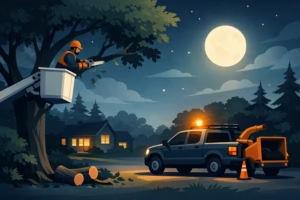
A large limb hanging over a roof cannot simply be cut and allowed to fall. The same is true for branches above a fence, driveway, utility line, garden, or neighboring property. Tree rigging methods give professional crews control over where wood travels after a cut, helping prevent unnecessary damage while keeping workers and bystanders out of harm’s way.
For homeowners and property managers, rigging is one of the clearest signs that a tree job requires trained professionals. It involves more than tying on a rope. A qualified crew must assess the tree’s condition, the weight and shape of each section, available landing zones, nearby structures, weather, and the condition of the equipment before work begins.
Why Rigging Matters During Tree Removal
When a tree has room to fall safely into an open area, removal may be relatively straightforward. Most residential properties in Vancouver and surrounding communities do not offer that kind of space. Trees often grow beside homes, garages, decks, sidewalks, fences, and power infrastructure. Even a small branch can cause costly damage when it drops from height.
Rigging allows a crew to lower pieces in planned sections instead of letting gravity determine the outcome. A climber or aerial lift operator makes a controlled cut while ground staff manage rope systems and guide the material to a designated drop zone. This process can make removal slower than open-area felling, but the extra time is often necessary to protect the property.
The right approach also reduces sudden shock loads on the tree and equipment. A poorly managed load can swing into a structure, overload an anchor point, damage healthy parts of the tree, or put crew members at risk. Professional planning is what turns a difficult removal into organized, controlled work.
Common Tree Rigging Methods Used by Professionals
The best method depends on the tree and the site. There is no single rope setup that works safely for every branch or removal. Experienced arboricultural crews choose a technique based on the specific load, access, target area, and condition of the tree.
Controlled Lowering
Controlled lowering is commonly used when branches or trunk sections must come down near homes and landscaping. A rope is attached to the piece being removed, then routed through a friction device or lowering device at the base of the tree. Once the cut is complete, the ground crew lets the section descend gradually and guides it into a clear area.
This method is useful for large limbs extending over roofs, patios, sheds, and fences. It provides steady control, but it also requires accurate weight estimates and good communication. If a limb is heavier than expected or the rope angle is poor, the load can place too much force on the system.
Negative Rigging
Negative rigging is used when a climber removes trunk sections from above the rigging point. The cut section initially drops a short distance before the rope catches and lowers it. This method is often necessary during the removal of tall trees that cannot be felled from the ground.
Because the forces created during the catch can be significant, negative rigging demands sound equipment, a strong anchor point, and a crew that understands load dynamics. It is not a shortcut. In fact, it may require smaller pieces and more time to keep forces within safe limits, especially when a tree has decay, cracks, or other structural concerns.
Speedline Rigging
A speedline uses a tensioned rope between two points to move cut branches away from a restricted area. After a branch is attached to the line, it travels along the rope toward a safer landing zone. This can be particularly helpful in tight backyards where dropping brush directly below the tree would damage gardens, block access, or create extra handling.
Speedlines can improve efficiency, but they require careful setup. The landing area must be clear, the line must be properly tensioned, and the crew must account for the branch’s size and potential swing. A speedline is valuable when it solves a site-access problem, not simply because it is faster.
Mechanical Advantage Systems
Some tree sections are too awkward or too heavy to move safely with simple hand pulling. Mechanical advantage systems use pulleys and specialized rope configurations to increase pulling power and give the crew greater control. These setups may help reposition a limb, lift a section clear of an obstacle, or guide material around a structure.
The trade-off is complexity. More equipment and more moving parts require a crew that can inspect, build, and monitor the system correctly. A professional team should never force a load when the tree’s condition or the rigging setup calls for a different plan.
Crane-Assisted Removal
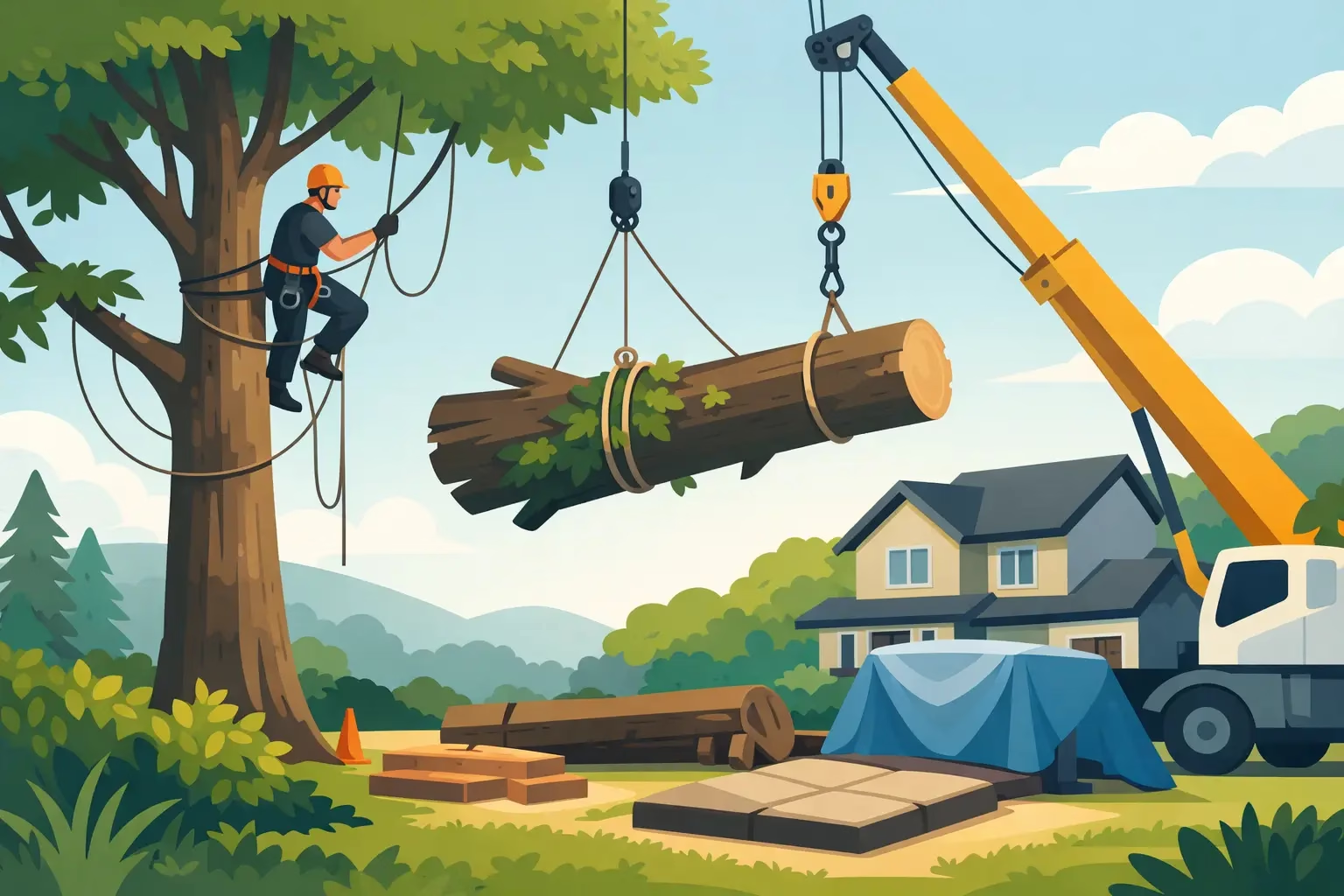
In some situations, a crane is the safest option. Crane-assisted removal may be considered for large hazardous trees near buildings, trees with limited safe climbing access, or removals where sections cannot be lowered without creating unacceptable risk. The crane can lift cut sections vertically away from the property and place them in a designated processing area.
A crane does not eliminate the need for planning. The crew still needs to evaluate ground conditions, access, overhead hazards, lift weights, and communication procedures. It can be an excellent solution, but it is not necessary for every large tree. The safest and most cost-effective method depends on the site.
What Determines the Right Rigging Plan?
Before a crew selects among tree rigging methods, they should start with the tree itself. A healthy, sound tree may provide reliable anchor points. A tree with internal decay, visible cracking, deadwood, root damage, or storm-related failure may not. In those cases, the team may need to use smaller sections, change the anchor location, use an aerial lift, or consider crane support.
The crew also evaluates the targets below and around the tree. A branch over a lawn can often be managed differently than a branch over a glass roof or a narrow driveway. Utility lines create another level of concern. Homeowners should never assume that a tree service can work close to energized lines without specialized qualifications and coordination. Electrical hazards require strict procedures and, in many cases, utility involvement.
Weather matters as well. High winds, rain, icy surfaces, or unstable ground can change a plan or stop work entirely. That can feel frustrating when a removal is urgent, but postponing non-emergency work is sometimes the responsible choice. Safety standards are not useful if they are ignored when conditions become difficult.
What Safe Rigging Looks Like on Your Property
From the customer perspective, a well-run rigging job should look deliberate rather than rushed. The crew establishes a work zone, keeps people and pets away from the drop area, communicates clearly, and stages equipment where it will not block unnecessary access. Every cut should have a purpose and a planned path for the material.
Equipment inspection is also part of safe work. Ropes, carabiners, pulleys, friction devices, slings, and lowering equipment must be appropriate for the expected loads and checked for wear or damage. Professional tree care companies follow applicable ANSI safety practices and OSHA requirements, because a rope system is only as dependable as its weakest component.
You may also notice that crews sometimes remove a tree in many small pieces rather than a few large ones. That is often the safer choice. Smaller sections are easier to control, create less force on rigging equipment, and reduce the chance of damage if conditions shift unexpectedly.
When to Call a Professional Tree Service
Call for an assessment when a limb is hanging over your home, a tree has split after a storm, dead branches are above a high-use area, or a tree must be removed in a tight space. These are not situations for improvised ropes, ladders, or a crew without proper training and equipment.
At M & R Tree Services, our team evaluates the tree, the surrounding property, and the safest path for removal before work starts. With more than 14 years of industry experience, we provide dependable tree removal, emergency storm cleanup, pruning, and structural support with safety and property protection at the center of the job.
If a tree is creating a risk around your home or commercial property, a professional evaluation can replace uncertainty with a clear plan. The right rigging method is the one that brings the tree down carefully while protecting the people, structures, and outdoor spaces that matter to you.