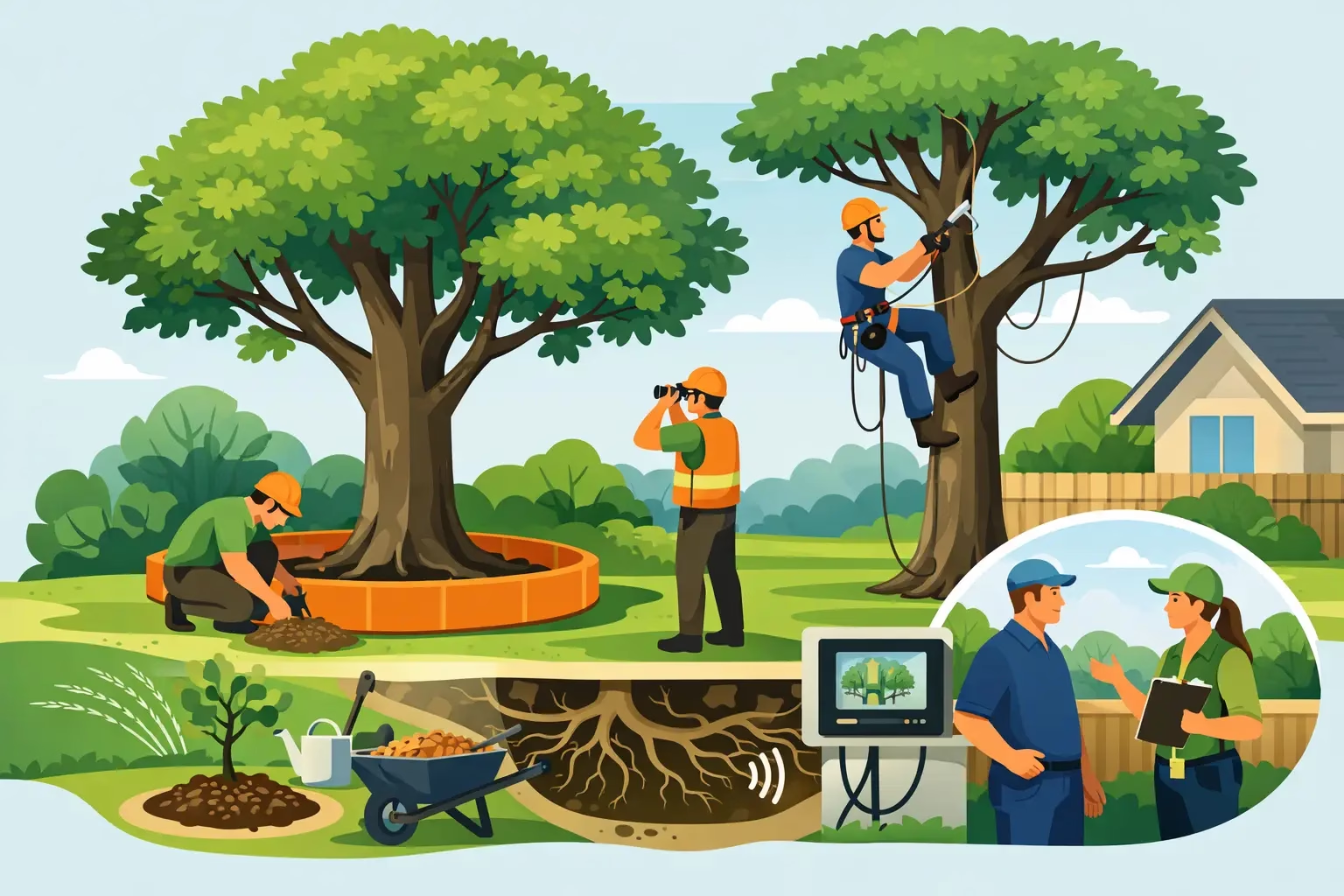
A mature tree can be one of the most valuable features on a property, but age, storm exposure, soil changes, and structural defects can change the risk picture. Mature tree preservation options give homeowners a way to protect a tree’s health and retain its benefits without ignoring concerns about limbs, trunks, roots, or nearby structures.
For homeowners in Vancouver, Washington, a large established tree may provide shade, privacy, curb appeal, and a sense of place that cannot be replaced quickly. Preservation is often possible, but it needs to be based on the tree’s actual condition, location, species, and history. The right approach protects the tree where practical while putting people, homes, driveways, and utility areas first.
Start With a Professional Tree Assessment
Preservation decisions should not begin with a guess from the ground. A professional assessment looks at the full tree, including the canopy, trunk, root flare, branch attachments, soil conditions, and surrounding targets. A crack, cavity, leaning trunk, dead limbs, or mushrooms near the base may or may not mean removal is necessary. Each sign needs to be evaluated in context.
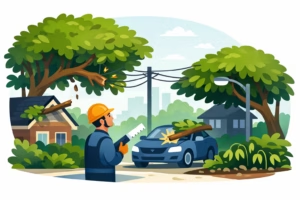
A qualified tree care team can identify whether a concern is cosmetic, manageable through maintenance, or a serious structural hazard. They also consider what sits beneath and around the tree. A limb over an open lawn presents a different level of risk than the same limb over a bedroom, parked vehicles, fence, or power line.
For a mature tree, preservation is rarely one single service. It is usually a plan that may include selective pruning, structural support, root-zone protection, monitoring, or targeted removal of hazardous sections. The goal is not to make a tree look perfect. It is to make informed decisions that support its remaining useful life.
Mature Tree Preservation Options That Often Work
Structural pruning and canopy reduction
Careful pruning is one of the most effective ways to reduce risk while preserving a mature tree. Removing dead, broken, rubbing, diseased, or poorly attached branches can reduce the chance of failure during wind, snow, or heavy rain. Selective thinning may also improve airflow and reduce excessive end weight on long limbs.
When a tree has grown too close to a roof, service line, driveway, or neighboring property, canopy reduction can shorten selected branches back to appropriate lateral growth. This is different from topping. Topping leaves large wounds and weak regrowth that can create greater hazards later. Professional pruning follows recognized ANSI standards and focuses on proper cuts that respect the tree’s natural structure.
Pruning has limits. Removing too much live canopy at once can stress a mature tree, reduce food production, and expose interior limbs to sun damage. The amount of pruning depends on the species, health, season, and specific structural issue.
Cabling and bracing for weak unions
Some mature trees have multiple trunks or large limbs joined at a weak attachment point. This is especially common where trunks form a narrow V-shaped union with included bark. A properly designed cabling and bracing system may reduce movement and help lower the chance of one section splitting away during severe weather.
Cables are generally installed high in the canopy to distribute load between major stems. Bracing rods may be used when there is a split or serious weakness at a union. These systems do not repair decay or guarantee that a tree cannot fail. They are a risk-reduction measure that requires correct installation and periodic inspection.
Cabling and bracing can be a practical preservation option for a valuable tree with an otherwise manageable structural defect. It is not appropriate for every tree. If decay is extensive, the trunk is failing, or the tree is likely to strike a high-value target, removal may still be the safer recommendation.
Root-zone protection and soil care
A mature tree’s roots extend far beyond the trunk, often into areas homeowners consider lawn, driveway edge, or construction space. Root damage is one of the most common reasons established trees decline after landscaping, utility work, grading, or home improvements.
Protecting the root zone means keeping heavy equipment, stored materials, trenching, and repeated vehicle traffic away from the area beneath and beyond the canopy whenever possible. Soil compaction limits oxygen and water movement, making it harder for roots to function. Grade changes can also bury the root flare or remove critical surface roots.
When construction or landscape changes are planned near a mature tree, getting guidance before work begins can preserve options that may disappear once roots are cut or soil is compacted. In some cases, protective fencing, adjusted work zones, mulch, and careful irrigation can reduce stress. In other cases, the planned project and the tree’s root system may be incompatible. Knowing that early helps avoid costly surprises.
Mulching and water management
Organic mulch can help stabilize soil moisture, moderate temperature, and reduce competition from turf around a tree’s base. Applied correctly, mulch should be spread in a broad, shallow layer and kept away from the trunk. Mulch piled directly against bark can trap moisture, encourage pests, and contribute to decay.
Water needs also change as trees age and weather patterns shift. Extended dry periods can weaken a mature tree and make it more susceptible to pests or branch dieback. Deep, occasional watering may be useful where soil conditions and local watering restrictions allow. Overwatering can be just as damaging, particularly in compacted or poorly drained soil.
These measures support tree health, but they cannot reverse major internal decay, severe root loss, or significant structural failure. A good preservation plan separates manageable stress from problems that have moved beyond routine care.
When Preservation May Not Be the Safest Choice
Tree preservation is worthwhile when the tree has a reasonable chance of remaining stable and healthy with appropriate care. However, a mature tree may require removal when it has advanced decay, a major trunk crack, severe root damage, substantial lean changes, repeated large limb failures, or a high likelihood of striking a home or occupied area.
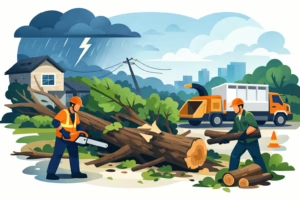
Dead trees are especially unpredictable. Their wood loses strength over time, and climbing, pruning, or dismantling them requires experienced crews, proper equipment, and a clear work plan. Storm-damaged trees can also contain hidden tension in limbs and trunks, making emergency cleanup dangerous for property owners.
Removing a tree does not mean preservation efforts failed. Sometimes it is the responsible choice after a condition assessment, especially when a tree cannot be made reasonably safe. A professional team can explain why removal is recommended, what parts of the tree present the concern, and whether stump grinding or replacement planning should follow.
Protect Trees Before Work Begins
The best preservation results often come from acting before a limb breaks or a project starts. Schedule an evaluation if you notice dead branches, peeling bark, cracks, soil heaving near the base, new leaning, mushrooms on the trunk, or limbs extending over structures. These signs do not always require immediate removal, but they deserve attention.
For ongoing maintenance, inspection timing depends on the tree and property. Large trees near a home, driveway, play area, or high-use landscape should be checked regularly and after major storms. Mature trees with cables, prior damage, or known defects need continued monitoring because conditions can change.
M & R Tree Services provides professional tree trimming, structural support, storm damage cleanup, and removal services with a safety-focused approach. Work should be planned and completed according to ANSI practices and OSHA safety requirements, especially when large trees, elevated work, or nearby structures are involved.
A mature tree is worth protecting when its condition and location allow for responsible care. If you are unsure whether a tree can be preserved, an on-site evaluation can replace uncertainty with a practical plan that protects both your property and the landscape you value.