
A trunk that suddenly opens along a seam, or a heavy limb that tears away from the tree, can turn a familiar part of your yard into an immediate property concern. So, why do trees split? Usually, the failure is not caused by one event alone. Weather, tree structure, decay, excess weight, and years of unnoticed stress often work together until the wood can no longer hold.
For homeowners and property managers in Vancouver, Washington, a split tree deserves prompt attention. The risk can range from minor bark separation to a major structural failure over a roof, driveway, fence, sidewalk, or neighboring property. Knowing what caused the split helps determine whether the tree can be supported or pruned, or whether removal is the safest option.
Why Do Trees Split in the First Place?
Trees are living structures, not fixed posts. They bend in the wind, add new layers of wood each year, respond to injuries, and carry increasing weight as branches grow. A healthy, well-structured tree can tolerate a great deal of movement. A tree with weak branch attachments, hidden decay, or an unbalanced canopy has much less margin for stress.
Some splits happen suddenly during a storm. Others develop slowly, beginning as a narrow crack in a branch union or trunk that becomes more visible over time. In either case, the visible split may only tell part of the story. A professional assessment looks at the tree’s overall structure, its condition, its targets below, and the likelihood of further failure.
Common Causes of Split Trunks and Limbs
Heavy Wind, Snow, and Ice Loads
Strong winds can twist a canopy in different directions at once. When one side of a tree catches more wind than the other, the pressure concentrates at branch unions and weak points in the trunk. This is especially common in broad, overextended limbs and trees with dense, unbalanced crowns.
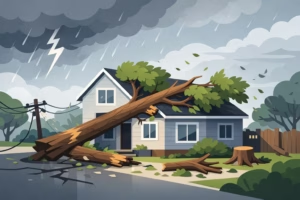
Wet snow and ice create a different kind of stress. Their added weight can bend limbs far beyond their normal range, pulling branches downward until they crack or split from the trunk. Even after snow melts, a partially failed limb may remain suspended in the canopy and fall later without warning.
Weak or Narrow Branch Attachments
Many tree failures begin where two stems meet. A strong branch union has wood that grows around and interlocks with the trunk. A weak union often has included bark, meaning bark is trapped between two stems instead of solid wood connecting them.
Included bark creates a narrow, V-shaped attachment that may look normal from the ground. As the stems increase in size, they press against each other and force the union apart. A mature tree with co-dominant stems, which are two or more main trunks competing from the same point, may eventually split under wind, snow, or its own weight.
Internal Decay and Disease
A tree can look green and healthy while decay develops inside the trunk or at the base of a major limb. Fungi, old wounds, insect activity, and previous storm damage can all allow decay organisms into the wood. As sound wood is lost, the tree may not have enough structural strength to resist ordinary weather conditions.
Warning signs can include mushrooms or fungal growth near the base, hollow areas, loose or peeling bark, cavities, sawdust-like material, and dead sections in an otherwise leafy canopy. None of these signs alone provides a complete diagnosis, but they are good reasons to have the tree inspected.
Rapid Growth and Excessive Limb Weight
Fast-growing trees can produce long, heavy limbs before their supporting structure has developed enough strength. Unpruned trees may also become top-heavy, with dense growth concentrated at the ends of branches. That lever effect places more force on the point where the limb attaches to the trunk.
This does not mean a large tree is automatically unsafe. It means mature trees benefit from thoughtful pruning that reduces excessive end weight while preserving a natural, balanced canopy. Topping a tree or removing too much live growth at once can create more problems, including weak regrowth and stress-related decline.
Previous Damage and Improper Pruning
Old wounds do not always cause failure, but they can become weak points. A limb cut too close to the trunk, a large tear from a past storm, or damage from vehicles and construction can compromise a tree’s ability to seal off injury and add supportive wood around it.
Improper pruning can also leave a canopy unevenly weighted or encourage weak new shoots. Trees should be pruned with their species, age, condition, and location in mind. Safe tree care is not simply about making branches shorter. It is about managing risk while supporting the tree’s long-term health.
When Is a Split Tree Dangerous?
Any new crack or split in a trunk or large limb should be taken seriously, particularly if the tree is near a place where people park, walk, work, or spend time. The situation is more urgent when the split is widening, fresh wood is exposed, a limb is hanging, or the tree has shifted or begun leaning.
A split tree is also a higher priority if it is near utility lines. Homeowners should never attempt to cut, pull, climb, or brace a tree that could contact electrical equipment. Keep people and pets away from the area and contact the utility provider or a qualified tree service for the appropriate response.
After a storm, avoid standing directly under damaged limbs to inspect them. A branch that appears caught in the canopy may be under tension and can release unexpectedly. Taking clear photos from a safe distance can help a tree professional understand the condition before arriving on site.
Can a Split Tree Be Saved?
Sometimes, yes. The right solution depends on the size and location of the split, the health of the tree, the amount of remaining sound wood, and what the tree could damage if it fails. A small split in a healthy, lower-risk tree may be managed with selective pruning and monitoring. A large split through a main trunk may make removal the more responsible choice.
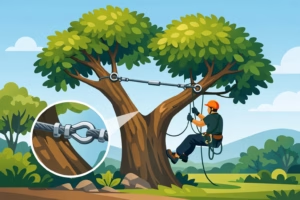
For certain trees with valuable, sound structure, cabling and bracing can provide supplemental support. Properly installed support systems are designed to reduce movement and lessen stress on weak unions. They are not a cure for severe decay or a substitute for removing a tree that presents an unacceptable hazard.
Timing matters. A crack that is stable today can worsen quickly after another wind event or a period of heavy rain that softens the soil. Early evaluation often provides more options than waiting until a limb is hanging over the home or the trunk has fully separated.
What to Do After You Notice a Split
Your first priority is to keep the area clear. Move vehicles, outdoor furniture, and equipment away if it can be done without entering the drop zone. Keep children, pets, tenants, and visitors away from the affected area.
Do not try to pull the split closed with rope, ratchet straps, or hardware from a home improvement store. Improvised repairs can increase tension, cause sudden failure, and make the eventual professional work more difficult. Avoid cutting branches near the crack, too. Removing the wrong limb can shift weight abruptly and worsen the split.
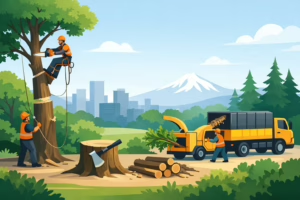
Instead, schedule a qualified inspection. An experienced crew can evaluate whether pruning, cabling and bracing, emergency limb removal, or full tree removal is appropriate. The work should be planned around safe access, nearby structures, the tree’s condition, and applicable ANSI and OSHA safety practices.
Preventing Future Tree Splits
Not every split can be prevented, especially during severe weather. Regular care does reduce many common risks. Young trees can benefit from structural pruning that encourages one strong central leader and well-spaced limbs. Mature trees benefit from periodic inspection, deadwood removal, and weight reduction where branches have become long or unbalanced.
Pay attention to changes after storms and throughout the growing season. New cracks, peeling bark around branch unions, recurring dead limbs, fungal growth, and a canopy that suddenly looks sparse on one side are all worth addressing early. Trees near homes, driveways, play areas, and property lines should receive extra attention because the consequences of failure are greater.
If you see a split trunk or damaged limb on your property, M & R Tree Services can provide a professional assessment and recommend a safe, practical path forward. Acting before the next storm gives you more control over the work, the cost, and the safety of the people who rely on your property every day.