
A branch does not have to look dramatic to be dangerous. Homeowners often ask, can dead branches fall suddenly, and the honest answer is yes. A limb that has been dead for months or even years can stay in place longer than expected, then break without much warning during a windy afternoon, a rain event, or even on a calm day.
That unpredictability is what makes deadwood a real safety issue around homes, driveways, sidewalks, fences, and parked vehicles. If a dead branch is hanging over an area people use every day, waiting to see what happens is rarely a good plan.
Can dead branches fall suddenly even in mild weather?
Yes. Wind and storms raise the risk, but they are not the only reason a dead branch fails. Once a branch has died, it begins to dry out and lose flexibility. Healthy wood can bend under stress. Dead wood is more brittle, so it is much more likely to crack and drop when weight shifts or internal decay advances.
That is why a dead limb can come down after light rain, after a temperature swing, or with no obvious trigger at all. In some cases, the branch has been weakening internally for a long time. From the ground, it may still look attached. In reality, the connection point may already be compromised.
This is also why dead branches high in the canopy deserve professional attention. The higher the limb, the harder it is to judge its condition accurately from below. A branch that seems stable can be one gust away from failure.
Why dead branches become hazardous
A dead branch is not just inactive growth. It is a structural problem. Trees depend on living tissue to move water and nutrients and to maintain strength through the canopy. When a branch dies, that support system stops working in that section.
Over time, several things can happen. The branch can dry out and become brittle. Fungi and decay organisms may start breaking down the wood. The attachment point where the branch connects to the trunk or a larger limb can weaken. If the branch is large, its own weight may add enough strain to cause a sudden break.
There is also a difference between a small dead twig and a large dead scaffold limb. Small deadwood may be more of a maintenance issue. Large dead branches over a roof, play area, walkway, or neighboring property are a safety risk. The size of the limb, its height, and what sits below it all matter.
Signs a dead branch may be close to falling
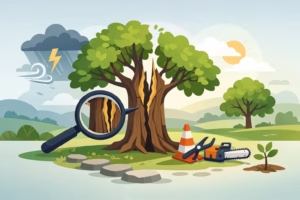
Some warning signs are visible, but not all. A branch with no leaves during the growing season is one of the most common indicators, especially when the rest of the tree has normal foliage. Bark that is peeling away, large cracks, hollow spots, or visible fungus can also suggest the limb is dead or decaying.
You may notice smaller sticks dropping first. That can be an early sign the larger branch structure is drying out or breaking down. In some cases, the branch has started to separate at the union, creating a visible split where it meets the trunk.
Still, there is an important trade-off here. Some branches are dormant-looking for seasonal reasons, and some trees naturally shed small limbs. On the other hand, some dangerous branches show very little from the ground until they fail. That is why visual guesses have limits, especially with mature trees.
Can dead branches fall suddenly after a storm?
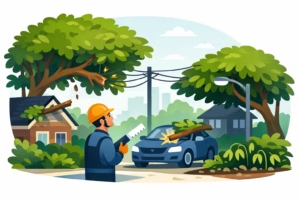
Absolutely, and not always during the storm itself. A storm can weaken a limb without bringing it down right away. After the weather passes, the branch may remain hung up in the canopy or partially cracked. That creates a delayed hazard.
Property owners sometimes assume the danger is over once the wind stops. In reality, post-storm conditions are when many compromised limbs finally come down. Water weight, hidden fractures, and shifted branch load can all lead to failure hours or days later.
This matters for cleanup decisions. If you see a hanging limb, a split branch, or debris caught overhead, keep people away from the area. That type of damage should be assessed by a qualified tree service with the equipment and training to handle unstable wood safely.
Trees most likely to drop dead limbs
Any species can develop dead branches, but risk tends to rise with age, storm exposure, past improper pruning, root stress, disease, and poor structural form. Large shade trees with heavy lateral limbs deserve particular attention because their branch weight can be substantial.
Fast-growing trees sometimes produce weaker branch attachments. Older trees may contain internal decay that is not obvious from the outside. Trees crowded near structures can also be harder to inspect fully, which allows problems to go unnoticed longer.
Local conditions matter too. In the Vancouver, Washington area, wet weather, seasonal wind, and storm events can expose existing weaknesses quickly. A branch that tolerated one season may not make it through the next.
Why deadwood should not be ignored
The biggest issue is simple: dead branches do not heal. A living tree can sometimes compartmentalize damage and continue growing around a problem area, but deadwood does not regain strength. It usually gets weaker over time, not safer.
Ignoring dead branches can also lead to a larger service need later. A limb that could have been pruned safely may eventually tear and damage the trunk, split a larger section of canopy, or hit a roof, vehicle, or fence. In some cases, one failed branch exposes the tree to additional stress and future decline.
For landlords and property managers, there is also the liability side. If a visibly dead limb is hanging over a tenant area, parking space, or public-facing walkway, delay carries risk beyond the tree itself.
What professional inspection looks for
A professional assessment goes beyond identifying whether a branch is alive or dead. An experienced crew looks at branch size, attachment strength, canopy balance, signs of decay, storm damage, and the targets below. They also evaluate whether the issue is isolated to one limb or part of a broader tree health problem.
That distinction matters. Sometimes the right solution is straightforward pruning. Other times, repeated deadwood, trunk defects, or structural weakness may point to cabling, bracing, or removal. It depends on the species, the condition of the tree, and the level of risk around the property.
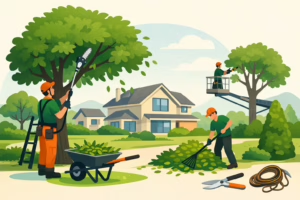
A safety-focused company should also approach the work using proper climbing, rigging, and jobsite procedures. High-risk pruning is not just about cutting a limb. It is about controlling how that limb moves, what it could strike, and how to protect people and property throughout the process.
When to call right away
If a dead branch is large, hanging, cracked, or positioned over a roof, driveway, entry path, play space, or power-adjacent area, it should be addressed promptly. The same goes for branches that dropped debris recently or trees that show new damage after wind or heavy rain.
This is not a wait-and-see situation if the branch could injure someone or damage something important. Emergency response may be appropriate when the limb is actively split, partially detached, or blocking access after a storm.
For homeowners who want a clear answer instead of guesswork, this is where a local tree service earns its value. M & R Tree Services helps property owners identify hazardous limbs, handle storm-related branch failures, and complete pruning or removal work with safety standards in mind.
The safest next step if you suspect deadwood
If you think a branch is dead, keep people out from under it and avoid trying to pull it down yourself. Dead limbs can twist, swing, or break unpredictably, especially when they are suspended high in the canopy. Ladders, ropes, and homeowner tools do not reduce that risk in any reliable way.
The safer approach is to have the tree evaluated before the branch makes the decision for you. A timely inspection can often prevent property damage, reduce liability, and give you a clear plan for what needs immediate attention and what can be scheduled.
Dead branches have a habit of looking harmless right up until they are not. If something overhead seems off, trust that instinct and get it checked before a brittle limb turns into an emergency.