
That large tree in the side yard may look like one line item on a quote, but the real price of removal is tied to risk, access, equipment, and cleanup. A smart tree removal cost review helps homeowners look past the bottom-line number and understand what they are actually paying for – and what could be missing from a quote that seems unusually low.
For most property owners, tree removal is not a routine purchase. It usually comes up when a tree is dead, leaning, storm-damaged, crowding a structure, or creating ongoing risk. In those moments, price matters, but so do safety, insurance, and whether the crew has the training and equipment to complete the work correctly. The cheapest quote can end up being the most expensive one if it leads to property damage, incomplete cleanup, or avoidable hazards.
Tree removal cost review: what drives the price
Tree removal pricing is rarely based on height alone. Size matters, but it is only one part of the job. A smaller tree in a tight backyard with fence lines, power lines, and limited access can be more complicated than a taller tree standing alone in an open front yard.
The biggest factor is usually risk. If a crew can safely drop a tree in one controlled direction, the work is more straightforward. If the tree has to be dismantled piece by piece with rigging to protect a roof, driveway, landscaping, or neighboring property, labor time increases and the equipment demands are higher.
Tree condition also affects cost. A healthy tree can be more predictable to climb and cut. A dead, cracked, hollow, or storm-split tree may require a different approach because brittle wood and structural weakness increase the hazard for workers and the surrounding property. When a tree is compromised, a company may need additional safety measures, specialized equipment, or a crane-assisted removal.
Access is another major pricing variable. If crews can bring equipment close to the tree, the work is usually faster. If they must carry brush and wood long distances, work around narrow gates, or avoid hardscape features, labor goes up. The same is true when removals take place on steep slopes or soft ground where heavy equipment cannot be used easily.
What a professional quote should include
A proper quote should tell you more than a single dollar amount. In any useful tree removal cost review, the first question should be what the price covers. Homeowners often assume all companies include the same things, but that is not always the case.
The scope of work should be clear. Does the quote include full tree removal down to ground level, or is it only cutting the tree and leaving the wood on site? Is brush hauling included? Are large logs removed or stacked? Is stump grinding part of the job, or priced separately? These details can shift the total significantly.
Cleanup standards matter as well. One company may include complete debris removal and jobsite cleanup, while another may leave sawdust, chips, and cut sections behind. Neither is automatically wrong if it is clearly stated, but it changes the value of the quote.
It is also worth confirming whether traffic control, permit coordination, or emergency scheduling affects the total. In some situations, especially after storms, urgent response comes at a premium because the company is mobilizing crews and equipment outside normal scheduling windows.
Why two tree removal quotes can be far apart
When homeowners compare bids, the gap between estimates can be surprising. That difference often reflects more than profit margin. It can point to very different operating standards.
A lower quote may come from a crew with minimal insurance, less training, less specialized equipment, or a plan to do only the bare minimum. A higher quote may reflect a company that follows ANSI standards, complies with OSHA requirements, maintains proper coverage, and builds enough labor and equipment into the job to do it safely.
That does not mean the highest quote is automatically the best one. It does mean you should compare the method, not just the number. Ask how the tree will be removed, what protection measures will be used, whether the crew is insured, and what happens if hidden complications appear once work begins.
In many cases, a fair quote sits in the middle – high enough to support safe, complete work, but not inflated with unnecessary add-ons. A trustworthy company should be able to explain the price in plain language.
Tree removal cost review and safety trade-offs
Tree work is high-risk work. Homeowners are often comparing prices for the same visible outcome – the tree is gone – but the process behind that outcome can vary a lot.
For example, one crew may use controlled rigging to lower large sections safely away from a home, while another may rely on more aggressive cuts and less protection. One company may assign enough trained workers to keep the site moving efficiently and safely. Another may send a smaller crew that takes longer or is forced to improvise. Those choices affect both cost and risk.
This is where value matters more than simple price. If a quote includes a qualified crew, appropriate equipment, strong cleanup, and clear safety procedures, homeowners are usually getting more than removal. They are paying for risk reduction, property protection, and a cleaner finish.
That is especially true for trees near homes, garages, fences, utility areas, and shared property lines. Jobs with real exposure should be handled by professionals who understand technical removals, not treated like routine yard work.
When emergency removal changes the cost
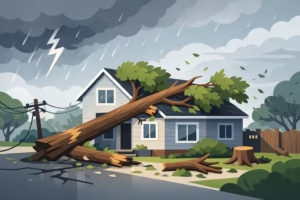
Emergency tree removal is its own category. If a tree has fallen, split, or become unstable after a storm, pricing may be higher than a standard scheduled job. That is not unusual. Emergency response often means dispatching a crew quickly, working in dangerous conditions, or stabilizing a partially failed tree before full removal can begin.
There is also a practical reality many homeowners face after severe weather – demand spikes. Reputable companies may be balancing multiple urgent calls across the area while prioritizing the highest-risk situations first. In those cases, speed, safety, and communication become just as important as price.
If the tree is on a house, blocking access, or threatening additional damage, it makes sense to focus on immediate stabilization and removal by a qualified crew. Cost still matters, but waiting for the absolute lowest price can create a larger loss if the situation worsens.
What homeowners should ask before approving the job
A good quote review comes down to a few practical questions. Ask whether the company is licensed for the work it performs, fully insured, and experienced with removals similar to yours. Ask what equipment will be used, whether cleanup is included, and whether stump grinding is separate.
It is also reasonable to ask about safety standards and work practices. Professional tree care is not just about getting the tree down. It is about doing it in a controlled way that protects people, structures, and the landscape around the jobsite.
If the estimator cannot clearly explain the scope, timeline, and method, that is a concern. Clear communication is part of professional service. Homeowners should feel informed, not rushed.
Choosing value over the lowest number
A careful tree removal cost review should leave you with a better question than What is the cheapest option? The better question is What level of service, safety, and completion am I getting for this price?
That approach usually leads to better decisions. A fair quote from an experienced local company may cost more than a bare-bones estimate, but it can also mean fewer surprises, better cleanup, and a lower chance of damage or delays. For homeowners in Vancouver and nearby communities, that peace of mind matters when the work involves large trees, tight access, or urgent hazards.
At M & R Tree Services, that is how we believe tree work should be priced and performed – with clear communication, reliable service, and a strong commitment to safe, professional standards. If you are comparing estimates, do not just review the total. Review the work behind it, because the right tree removal job should leave your property safer, cleaner, and easier to manage after the crew pulls away.