A mature tree can look healthy from the street while decay is developing deep inside its trunk, roots, or major limbs. Knowing the top signs of tree decay helps homeowners recognize when a tree may need professional attention before high winds, heavy rain, or a falling branch turns a maintenance issue into property damage.
Tree decay is not always a reason to remove a tree. Some trees can remain stable for years with proper pruning or structural support. The concern is whether decay has weakened the parts of the tree that support its canopy, stand near a house or driveway, or could reach people, vehicles, and utility lines if they fail.
Top Signs of Tree Decay to Watch For
Mushrooms or fungal growth at the base
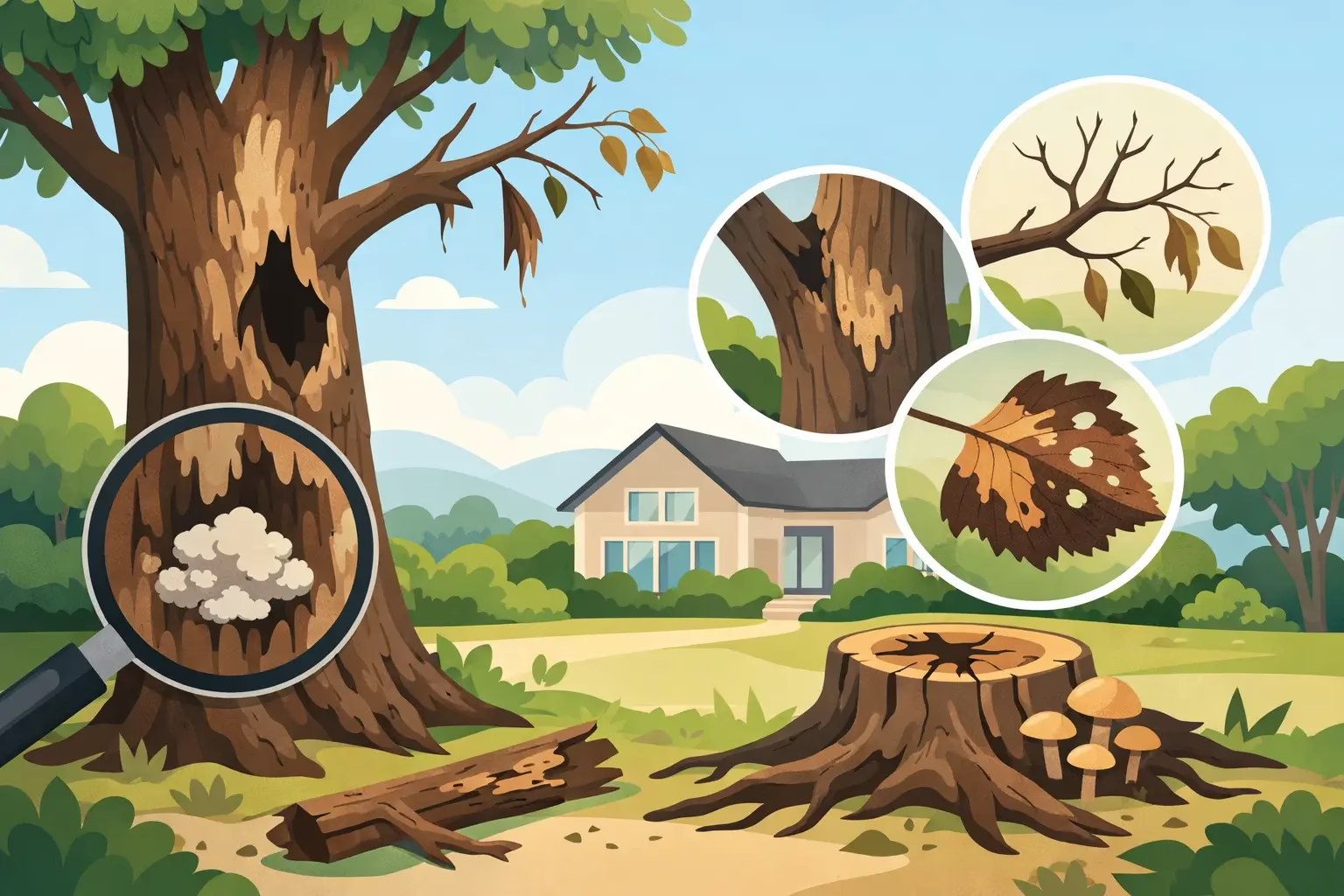
Mushrooms, shelf-like fungi, or conks growing from a trunk, root flare, stump, or major branch are among the clearest warning signs. Fungi do not automatically mean a tree is about to fall, but they often indicate that wood-decaying organisms are breaking down the tree’s internal structure.
Pay close attention to fungus appearing near the base of a large tree, especially if it returns season after season. Decay in this area can affect the root system and lower trunk, which are responsible for holding the tree upright. A professional assessment can help determine whether the tree has enough sound wood remaining to stay stable.
Cavities, hollow areas, and visible openings
A hollow trunk, deep cavity, or opening where bark has fallen away deserves a closer look. Trees can compartmentalize some injuries and continue growing around damaged areas. However, a large cavity may conceal extensive internal decay that cannot be judged by appearance alone.
Openings near a trunk union, where two major stems connect, can be especially concerning. These areas already carry substantial weight and movement during wind events. If decay has developed inside that union, the risk of splitting may increase.
Cracks and splitting bark
Not every crack is an emergency. Some bark naturally develops shallow fissures as a tree matures. The more serious concern is a deep crack running vertically along the trunk, across a large limb, or through the connection between two stems.
Fresh cracks may expose lighter-colored wood beneath the bark, and some widen after storms or periods of rapid growth. A crack combined with a leaning limb, a cavity, or dead branches should be evaluated promptly. Avoid standing beneath the area or trying to remove a heavy branch yourself.
Dead, dying, or dropping branches
Dead branches in the upper canopy can be one of the most visible signs that a tree is under stress. They may have no leaves when the rest of the tree has leafed out, show dry and brittle twigs, or lose bark and break unexpectedly. Branch dieback can result from disease, root damage, insect activity, drought, or internal decay.
A few small dead twigs are common and may only require routine pruning. Large dead limbs over a roof, sidewalk, play area, parking space, or neighboring property are different. They should be removed by a trained tree crew using proper equipment and safe work practices.
Peeling bark and soft or crumbly wood
Loose bark alone does not prove decay, since some species naturally shed bark as they grow. What matters is what lies beneath it. Soft, spongy, darkened, wet, or crumbly wood can indicate that the tree’s structure is deteriorating.
You may also notice wood fibers that pull apart easily around an old pruning wound, storm break, or damaged section of trunk. Do not probe deeply into the tree or remove bark to investigate. That can create another wound and may make the situation harder to evaluate accurately.
A new or worsening lean
A tree that has always grown at a slight angle may be perfectly stable. A new lean, a lean that has become more noticeable, or a tree that appears to have shifted after a storm calls for a professional inspection.
Look at the soil around the base. Raised soil, exposed roots, cracks in the ground, or a lifting root plate can signal that the root system is moving. This is particularly urgent for large trees near homes, fences, driveways, streets, and power lines. Keep people and pets away from the area until the tree can be assessed.
Root problems and trunk-base damage
Much of a tree’s health and stability is determined below ground. Construction damage, soil compaction, trenching, excessive mulch, drainage changes, and vehicle traffic can injure roots without producing immediate symptoms in the canopy.
Decay at the root collar, where the trunk widens into the roots, is especially significant. Watch for sunken areas, dead bark, mushrooms, insect activity, or a hollow sound near the base. A tree can retain a full canopy while its anchoring roots are declining, so outward leaf coverage is not a guarantee of safety.
Weak branch unions and included bark
When two trunks or large stems grow closely together, bark can become trapped between them. This is called included bark. Instead of forming a strong connection of overlapping wood, the stems may create a narrow V-shaped union that is more prone to splitting under snow, wind, or the weight of a dense canopy.
Included bark is not decay by itself, but decay can develop where moisture and debris collect in the union. Depending on the tree’s condition, professional pruning, cabling, or bracing may help reduce the chance of failure. In other cases, removal may be the safer option.
When Tree Decay Becomes Urgent
Tree decay should be treated as urgent when there is a visible crack, a major hanging limb, sudden leaning, root movement, or damage after a storm. The same is true if a decayed tree could strike a building, occupied area, vehicle, utility line, or public walkway.
Do not attempt to cut, climb, cable, or brace a compromised tree on your own. Decayed wood can fail without warning, and even an experienced homeowner cannot reliably see how much solid wood remains inside a trunk. Tree work also involves fall hazards, chainsaw hazards, and unpredictable movement of heavy limbs.
If a tree is contacting or threatening a power line, stay clear and contact the utility provider. Never handle branches near energized lines. For all other hazardous tree concerns, a qualified local tree service can inspect the tree, identify the likely source of failure, and recommend the appropriate next step.
What a Professional Tree Assessment Can Tell You
A proper evaluation looks beyond the obvious damage. A tree professional considers the size and location of decay, the condition of roots and branch unions, the tree species, canopy weight, recent weather exposure, and the potential target beneath the tree. A small cavity in an open area may be manageable, while the same defect over a home’s roof may require faster action.
The recommendation may be selective pruning to remove deadwood, structural support through cabling and bracing, ongoing monitoring, or complete removal. The right option depends on risk, not just on whether a tree has a visible defect. A good tree care company should explain what it sees, what work is recommended, and why that recommendation fits your property.
For homeowners in Vancouver, Washington, and nearby communities, M & R Tree Services provides professional tree inspections, trimming, emergency response, structural support, and removal performed with a focus on safe work practices and ANSI and OSHA standards.
A decaying tree rarely becomes safer by waiting through another windstorm. If you have noticed fungus, cracks, dead limbs, or a changing lean, arrange an assessment while the work can be planned safely and before the problem becomes an emergency.