A mature tree can look full and healthy from the ground while carrying dead, cracked, or overcrowded limbs high above a driveway, roof, or walking area. Knowing how pruning improves tree health helps property owners make maintenance decisions before a small concern becomes storm damage, a fallen limb, or a more serious tree failure.
Pruning is not simply about making a tree look neater. Done correctly, it is a targeted form of care that removes compromised growth, manages structural concerns, and gives the tree a better chance to use its energy effectively. Done poorly, however, excessive cutting can create wounds, stimulate weak regrowth, and leave a tree more vulnerable to decay and stress.
For homeowners and property managers in Vancouver, Washington, regular professional pruning is especially valuable. Our wet winters, wind events, and fast-growing vegetation can expose weaknesses that are easy to miss until branches begin rubbing a roofline or breaking under added weight.
How Pruning Improves Tree Health
Healthy trees naturally shed some small branches over time, but they cannot always correct structural problems on their own. Professional pruning supports the tree by removing growth that is dead, diseased, damaged, or poorly positioned. This reduces unnecessary strain and helps preserve stronger, healthier limbs.
A properly selected cut is made with the tree’s natural defenses in mind. Trees do not heal wounds the way people do. Instead, they compartmentalize injured tissue and grow around it. Cuts placed in the correct location and limited to what the tree can tolerate give it the best opportunity to respond well.
Pruning can also improve air movement and light penetration within a crowded canopy. This does not mean stripping out the center of the tree or removing large amounts of foliage. Healthy leaves produce the energy a tree needs. The goal is selective thinning where it serves a clear purpose, such as reducing branch crowding, addressing crossing limbs, or improving clearance around a structure.
Removing Deadwood Reduces Risk and Decay
Dead branches are more than an appearance issue. They can fall without warning, especially during heavy rain, high winds, or snow and ice events. Deadwood may also provide an entry point for insects and decay organisms, depending on the species and condition of the tree.
Removing dead or broken limbs helps protect people, vehicles, roofs, fences, and nearby landscaping. It also allows an arboricultural professional to inspect the tree’s remaining structure more clearly. In some cases, dead branches are isolated damage. In others, they are a sign of a larger concern, such as root stress, disease, previous storm damage, or decay within a major limb.
Better Structure Helps Trees Handle Weather
A tree with several competing leaders, tightly joined limbs, or long, overextended branches may be more likely to fail in a storm. Pruning can reduce this risk by improving weight distribution and encouraging a more stable branch structure.
Young trees benefit from early structural pruning because small corrections can guide their development before major limbs become heavy and difficult to manage. Mature trees require a more conservative approach. Removing large limbs from an established tree can create significant wounds, so the work must balance risk reduction with the tree’s long-term health.
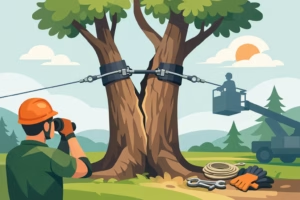
In some situations, pruning alone is not enough. A tree with weak branch unions or a heavy, valuable limb over a target may need cabling or bracing in addition to selective pruning. If extensive decay, root failure, or severe structural damage is present, removal may be the safer recommendation. The right decision depends on the tree’s condition, species, location, and the potential consequences if it fails.
Pruning Supports Growth, But It Is Not a Cure-All
It is common to think of pruning as a way to make a tree grow faster. The reality is more nuanced. Removing a limited amount of poor-quality growth can help a tree direct resources toward stronger branches and healthy foliage. But aggressive pruning can have the opposite effect.
When too much canopy is removed, a tree loses the leaves it needs to produce energy. Some species respond by sending up fast-growing shoots, often called water sprouts or suckers. These shoots can be weakly attached and may create a denser, less stable canopy over time.
This is why topping is not a healthy pruning method. Topping removes large portions of a tree’s upper canopy and leaves large wounds and weak regrowth behind. It may make a tree temporarily shorter, but it often increases maintenance needs and future failure risk. A professional pruning plan focuses on appropriate reduction cuts, selective thinning, and removal of specific problem limbs rather than indiscriminate cutting.
Timing Matters for Vancouver-Area Trees
There is no single pruning season that is right for every tree. Dormant-season pruning is often useful for many deciduous trees because the branch structure is easier to see and the tree is not actively producing leaves. However, some trees should be pruned at different times to reduce disease risk or avoid removing flowers and fruit that develop on older wood.
Safety concerns should not wait for the ideal season. A hanging limb over a home, a split branch after a windstorm, or a tree interfering with utility lines needs prompt evaluation. Emergency pruning may be necessary to stabilize a dangerous condition, even if it is not the preferred time for routine maintenance.
Spring and summer growth can also reveal issues that were less visible in winter. Dense foliage may expose branches rubbing against siding, hanging over a roof, blocking a driveway, or growing too close to service lines. A qualified tree care team can determine whether selective pruning is appropriate now or whether monitoring and planned maintenance will better serve the tree.
What Professional Pruning Looks For
A responsible pruning visit starts with more than a quick look at low branches. The crew should consider the entire tree, including canopy condition, branch attachments, visible cavities, past cuts, trunk damage, and the space around the tree. The property itself matters, too. A limb over an open lawn presents a different level of risk than the same limb over a bedroom, parked vehicle, or neighbor’s fence.
M & R Tree Services approaches tree work with safety and clear communication at the center of the job. Work practices should follow applicable ANSI standards and OSHA safety requirements, particularly when climbing, operating equipment, working near structures, or managing storm-damaged limbs.
Professional equipment and experience matter because pruning often involves risks that cannot be evaluated from a ladder. Overhead limbs can shift as cuts are made. Decay can weaken wood that appears sound from the outside. Nearby power lines require special caution and, in many cases, coordination with the utility provider. These are not conditions for guesswork.
Signs Your Tree May Need Pruning
Property owners should schedule an assessment when they notice dead branches, broken limbs, branches rubbing against each other, or growth extending over a roof or driveway. Other concerns include a dense canopy that catches wind, limbs with visible cracks, low clearance over walkways, and branches interfering with buildings or service lines.
After a storm, look for hanging branches, fresh splits, newly leaning limbs, or debris caught in the canopy. Do not stand beneath damaged limbs or attempt to pull them down. A branch that appears lightly caught can release suddenly and carry much more weight than expected.
Regular maintenance is usually more affordable and less disruptive than waiting for a large limb to fail. It also gives you time to make informed choices about pruning, structural support, or removal instead of reacting during an emergency.
A well-pruned tree should still look like a tree, not like it has been cut back into submission. When your trees need safer clearance, healthier structure, or attention after a storm, a professional evaluation can protect both the landscape you value and the people who live around it.