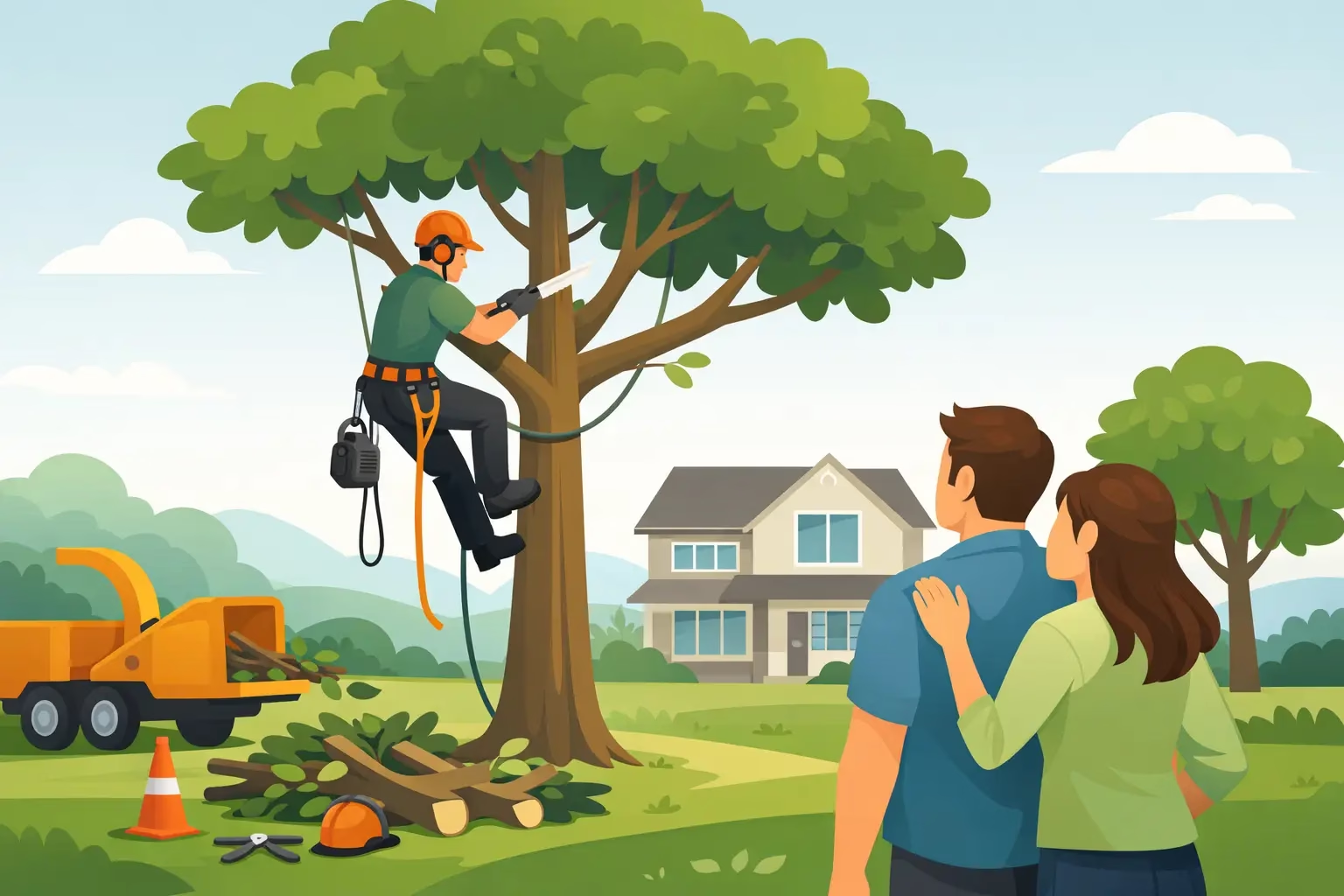
A branch hanging over a roof, a tree split after a windstorm, or limbs pressing into power-line clearance can make tree work feel urgent. But the fastest-looking solution is not always the safest one. ANSI standards tree work gives professional crews a framework for making sound decisions that protect people, homes, trees, and surrounding property.
For homeowners in Vancouver, Washington, and nearby communities, these standards offer a practical way to evaluate a tree service company. You do not need to memorize every technical requirement. You do need to know what safe, professional work should look like before someone starts cutting above your home, fence, driveway, or neighbor’s yard.
What ANSI Standards Mean for Tree Work
ANSI stands for the American National Standards Institute. In professional arboriculture, two ANSI standards are especially relevant: ANSI A300, which addresses tree care practices, and ANSI Z133, which addresses safety requirements for arboricultural operations.
ANSI A300 helps guide how qualified professionals approach pruning, support systems, planting-related care, and other aspects of tree management. It is designed to promote work that considers tree health and structure instead of treating every tree as a simple cutting job. ANSI Z133 focuses on worker safety, including climbing practices, chainsaw use, personal protective equipment, jobsite hazards, aerial lifts, and safe work around electrical hazards.
These standards are not a promise that every tree can be saved. Sometimes removal is the responsible choice, especially when a tree is severely decayed, storm-damaged, leaning toward a structure, or creating an unacceptable risk. The standards help professionals determine the right method for the conditions rather than applying the same solution to every property.
ANSI standards also work alongside OSHA requirements. OSHA regulations establish enforceable workplace safety rules, while ANSI standards provide detailed industry guidance for performing arboricultural work properly. A professional company should take both seriously.
Why Standards Matter on a Residential Property
Tree work often takes place in tight spaces. A crew may be working above your garage, next to a fence, near landscaping, or within a few feet of a neighboring property. There is little room for guesswork when heavy limbs, rigging equipment, chainsaws, and elevated workers are involved.
A standards-based approach begins before the first cut. The crew should assess the tree’s condition, identify dead or weak limbs, look for decay, consider the direction of lean, and evaluate targets below the work area. A target can be a roof, vehicle, utility line, play area, sidewalk, or anything else that could be damaged or put people at risk.
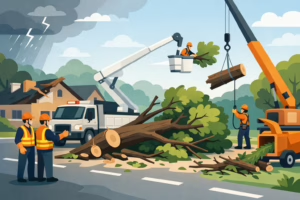
This planning matters even more after storms. Wind and rain can leave branches suspended in a canopy, crack trunks that look intact from the ground, and destabilize root systems. A damaged tree may fail differently than a healthy one. Rushing into a storm cleanup without a proper assessment can turn a property issue into an emergency.
The Difference Between Pruning and Topping
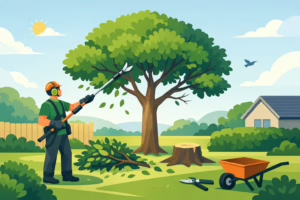
One of the clearest signs of informed tree care is the difference between proper pruning and topping. Pruning removes selected branches for a defined reason, such as clearing a roof, reducing risk from deadwood, improving structure, or providing appropriate clearance. Cuts should be made with the tree’s growth and recovery in mind.
Topping is the severe cutting back of large branches or the main stem to stubs or indiscriminate lateral cuts. It may make a tree look smaller for a short period, but it can create weak new growth, increase stress, encourage decay, and leave a tree more vulnerable to future failure. If a tree has outgrown its location, the better long-term answer may be selective reduction, structural pruning, cabling and bracing, or removal. The right option depends on the species, condition, age, location, and risk level of the tree.
What Professional ANSI Tree Work Looks Like
Homeowners do not need to supervise a crew’s technical process. Still, knowing the basics can help you ask better questions and feel confident about the work taking place on your property.
A professional crew starts with a site-specific plan. That includes determining where debris can safely land, whether limbs need to be lowered with ropes, how access will work, and how the work zone will be kept clear. On a small open lot, branches may be removed in manageable sections. On a crowded residential lot, controlled rigging and careful lowering may be necessary to avoid damage.
Proper equipment is another part of the picture. Depending on the job, crews may use climbing systems, aerial lifts, ropes, rigging devices, chainsaws, chippers, stump grinders, and protective equipment. Equipment alone does not make a job safe. It must be used by trained people who understand the tree, the work plan, and the limitations of the site.
Communication also matters. Homeowners should know what work is being done, what access the crew needs, and whether vehicles, gates, pets, or outdoor items need to be moved. A dependable company will explain the scope before work begins and address reasonable concerns rather than leaving you to guess what will happen in your yard.
Tree Removal Requires More Than Cutting
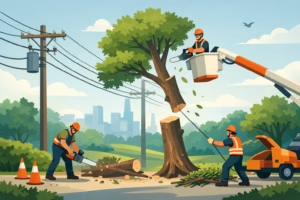
Tree removal is often the most visible type of tree work, but it is also one of the highest-risk services. A large tree cannot simply be cut at the base when it is close to a home, power lines, sheds, or neighboring structures. Removal may require dismantling the tree from the top down, lowering sections by rope, using an aerial lift, or coordinating a specific drop zone.
The method depends on the tree and the site. A straight, open-grown tree in a clear area may be removed efficiently in larger sections. A decayed tree leaning over a house may need a much slower, more controlled process. The extra time is not wasted effort. It is what protects the property below.
Electrical hazards demand special care. Trees near energized lines should never be treated as a typical trimming or removal project. Specialized qualifications, clearance requirements, and utility coordination may be necessary. If you see limbs contacting or threatening power lines, keep people away from the area and contact the utility provider or an appropriately qualified tree service. Do not attempt to move branches yourself.
Cabling and Bracing Can Be Part of Responsible Care
Not every tree with a split leader, heavy limb, or structural weakness needs to come down immediately. In some cases, a properly designed cabling or bracing system can reduce movement and provide additional support. This can be useful for valuable mature trees with a correctable structural concern.
Support systems are not a cure for advanced decay or a substitute for removal when risk is too high. They also require proper installation and periodic inspection. A cable installed without regard for tree growth, hardware placement, or the actual source of failure can create more problems than it solves. The decision should follow an assessment of the tree’s condition and the potential consequences if it fails.
Questions to Ask Before Hiring a Tree Service
The best questions are direct. Ask whether the company follows ANSI A300 practices and ANSI Z133 safety standards, whether it complies with applicable OSHA requirements, and how it plans to protect your home and surrounding property. Ask what is included in the estimate, whether cleanup and hauling are included, and whether stump grinding is a separate service.
For pruning, ask why each major cut is recommended. A qualified professional should be able to explain whether the goal is clearance, deadwood removal, risk reduction, structural improvement, or another specific outcome. Vague advice to “cut it back” is not the same as a thoughtful pruning plan.
It is also reasonable to ask about experience with trees similar to yours. A mature Douglas fir, maple, cedar, oak, or fruit tree can have very different structural characteristics and maintenance needs. Local experience helps a crew recognize common issues in the Pacific Northwest, including storm exposure, saturated soil, conifer weight, and fast seasonal growth.
When to Call for an Assessment
Call for professional help if you notice a new lean, soil lifting around the base of a tree, cracks in the trunk, large dead limbs, fungal growth associated with decay, split leaders, hanging storm debris, or limbs rubbing against your roof. These signs do not always mean a tree will fail, but they deserve prompt evaluation when people or property could be affected.
M & R Tree Services approaches tree trimming, removal, emergency response, stump work, and structural support with the care these jobs require. Safe work begins with an honest assessment and a clear plan, not a quick promise made from the curb.
When a tree on your property raises questions, getting a professional opinion early can give you more options and more control over the outcome. A timely assessment may turn a high-stress situation into a planned, safer project.