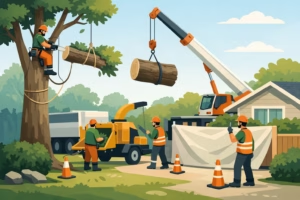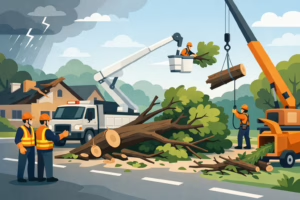
A tree can look healthy from the ground while hiding a split trunk, root damage, decay, or a limb that is one windstorm away from failing. That is why arborist consultation cost is often a practical investment, not an extra expense. A qualified assessment gives homeowners and property managers a clearer answer before they commit to trimming, removal, cabling, or emergency work.
What Does an Arborist Consultation Include?
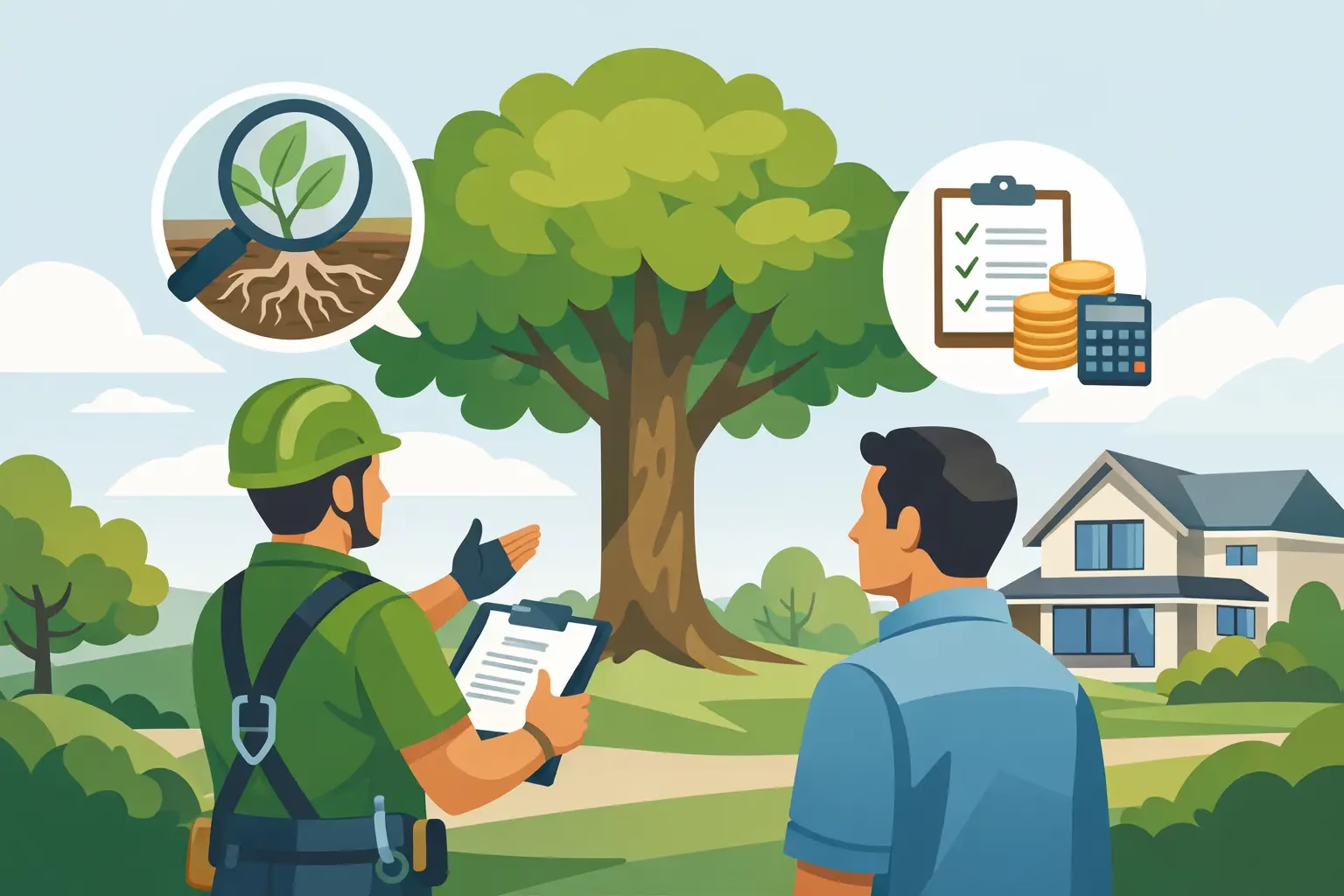
An arborist consultation is a professional evaluation of a tree’s health, structure, location, and risk. It is different from a quick estimate for routine tree removal or pruning. A service estimate focuses on the work requested. A consultation may address the larger question: What does this tree need, and is it safe to keep?
During an on-site assessment, the arborist may inspect the trunk for cracks, cavities, decay, and insect activity. They may evaluate limb attachments, deadwood, canopy weight, root flare, soil conditions, and the tree’s proximity to your home, driveway, power lines, fences, or neighboring property. For trees that have been damaged by storms, the assessment may also determine whether the tree can be stabilized or needs prompt removal.
The result may be a verbal recommendation, a written care plan, a risk assessment, or documentation for a property manager, insurer, or permit application. The level of detail requested has a direct effect on price.
Typical Arborist Consultation Cost in Vancouver, WA
The arborist consultation cost for a basic property visit commonly falls in the range of about $100 to $300. Some local tree service companies may offer a no-cost estimate when the visit is limited to pricing a clearly defined service, such as removing a dead tree or grinding a stump. That estimate should not be confused with a detailed arboricultural consultation.
A more involved assessment, especially one that includes written findings, photographs, species-specific care recommendations, or risk documentation, can cost several hundred dollars. Complex reports for construction planning, legal matters, insurance claims, or high-value specimen trees may cost $500 to $1,000 or more.
There is no single price that fits every property. A mature fir over a roof, a large maple showing signs of decay, and a young ornamental tree with leaf problems require very different levels of inspection and professional judgment.
What Affects the Cost of an Arborist Visit?
The most significant factor is the purpose of the appointment. If you need a straightforward quote for trimming or removal, the visit may be brief. If you need a professional opinion about a tree’s long-term condition, safety, and treatment options, the arborist will need more time to inspect the site and explain the findings.
Tree size and accessibility matter as well. Tall trees, trees on steep slopes, and trees growing close to structures require a more careful visual inspection. Dense landscaping, limited access, or multiple trees can add time to the visit. In the Vancouver area, winter storms and saturated soils can also create root and stability concerns that deserve closer evaluation.
Documentation raises the cost because it involves more than a conversation at the curb. A written report may include observations, photos, risk ratings, recommended work, and priorities for monitoring. This type of record can be valuable when you need to communicate with an HOA, tenant, insurance provider, contractor, or adjacent property owner.
Timing can also affect pricing. A scheduled assessment during regular business hours is usually simpler to arrange than a same-day visit after a storm. When a tree has already failed, is leaning toward a structure, or has damaged a roof or access route, emergency response and immediate safety measures become the priority.
Consultation vs. Free Tree Service Estimate
Homeowners often ask whether they need a consultation or simply a free estimate. The answer depends on what you need to decide.
A free estimate is usually appropriate when the scope is clear. You know that a stump needs to be removed, a dead limb needs pruning, or a tree needs to come down. The tree professional can review access, equipment needs, cleanup, and safety requirements, then provide a price for the job.
A paid consultation makes more sense when the solution is not obvious. Perhaps a large limb has a visible crack, a tree has begun leaning, mushrooms are growing near the base, or you are unsure whether aggressive pruning will help or harm the tree. It is also useful when you want an objective plan for several trees instead of making decisions one issue at a time.
Ask the company directly whether the visit is a service quote, a diagnostic consultation, or both. You should also ask whether a consultation fee can be applied to approved work. Some companies may credit part of the assessment cost toward pruning, removal, cabling, bracing, or other recommended service.
When Paying for Professional Advice Can Save Money
The least expensive option is not always the most affordable outcome. Removing a large tree that could have been safely pruned or supported may cost more than necessary. On the other hand, delaying action on a structurally compromised tree can lead to roof damage, broken fencing, blocked driveways, or a much more complicated emergency removal.
Professional advice is especially worthwhile when a tree is close to a home, garage, play area, parking space, or utility line. It is also valuable after significant wind, heavy rain, snow, or ice. Storm damage is not always obvious. A limb may remain suspended in the canopy, or a root plate may shift without the tree falling immediately.
A consultation can help prioritize work when your property has several concerns. Instead of treating every tree as an emergency, you can identify which issues need immediate attention, which should be scheduled soon, and which can be monitored through the next season. That gives you a practical plan and more control over your property maintenance budget.
How to Get a Useful, Accurate Assessment
Before scheduling, write down what has changed. Note when you first noticed a lean, dead branches, leaf loss, cracking, drainage changes, or storm damage. If the concern is seasonal, photos from earlier in the year can help show the difference.
Be ready to explain your goal for the tree. Some owners want to preserve a mature shade tree if it can be done safely. Others need clearance from a roof, walkway, or utility area. A qualified tree professional should explain the available options and the trade-offs, not pressure you toward unnecessary work.
For high-risk tree work, experience and safe operations matter. Ask whether the company follows ANSI tree care standards and OSHA safety requirements, carries appropriate licensing and insurance, and has the equipment and crew capability for the recommended work. A low initial price has little value if the work creates avoidable risk to your property or the people around it.
What to Expect After the Visit
A good consultation should leave you with a clear next step. That may be targeted pruning to remove dead or overextended limbs, structural cabling or bracing, monitoring for changes, treatment recommendations, or removal when the tree cannot be made reasonably safe.
At M & R Tree Services, the focus is on providing practical recommendations backed by safe, professional tree care. For homeowners in Vancouver, Washington and nearby communities, a timely assessment can replace uncertainty with a plan that protects both the tree and the property around it.
If a tree has changed suddenly, is damaged after a storm, or is growing too close to a structure, do not wait for the problem to become an emergency. Request an assessment, ask what the visit includes, and make the next decision with reliable information in hand.