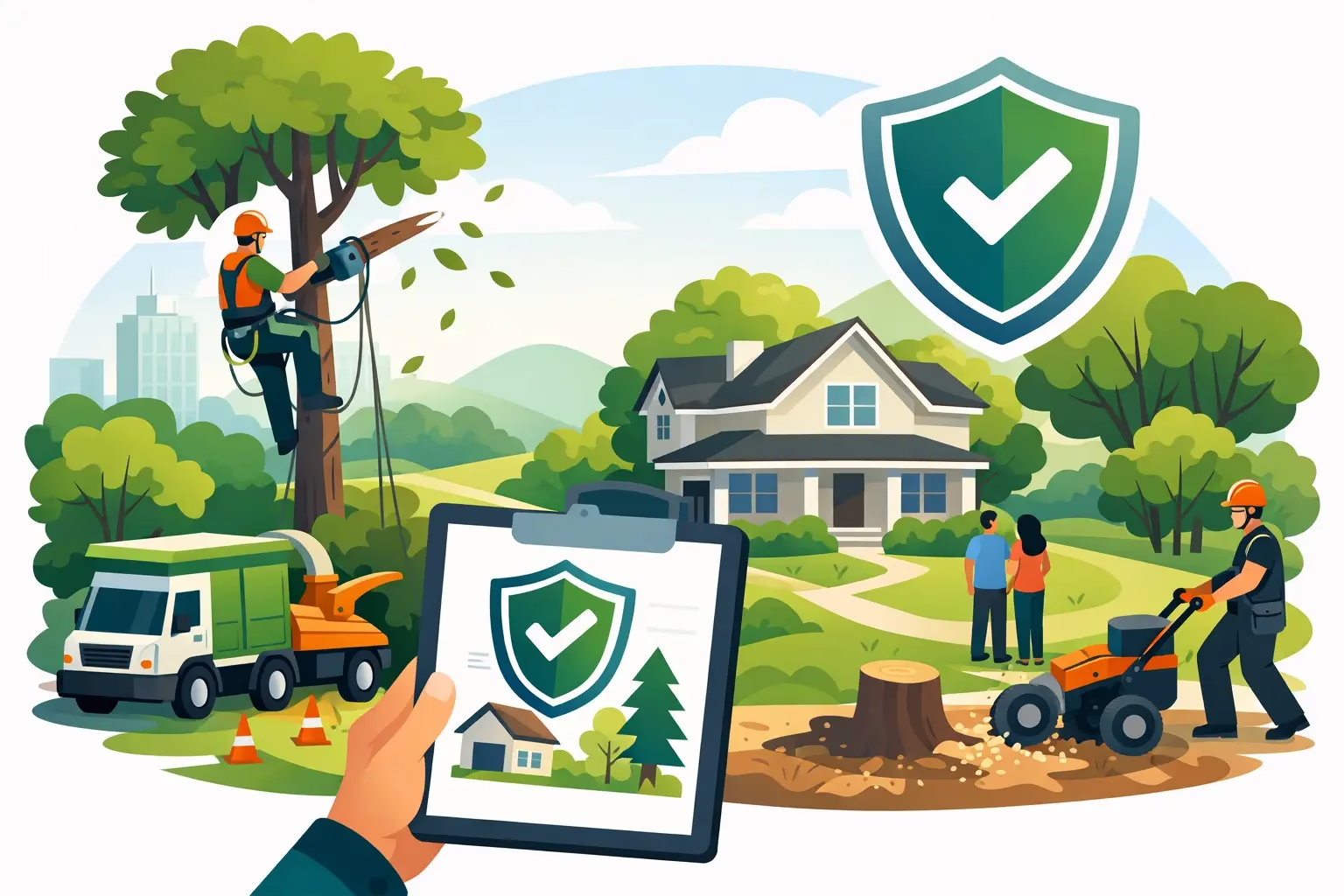
A large limb hanging over a roof, a storm-damaged tree leaning toward a driveway, or a removal near power lines can turn into a serious liability quickly. The insured tree company benefits go beyond peace of mind: they help protect homeowners, tenants, neighbors, and the property itself when high-risk work is underway.
Tree service is not the same as routine yard work. Crews work at height, use powerful equipment, manage heavy wood, and often operate close to homes, fences, vehicles, and utility areas. Choosing a company that carries appropriate insurance is one of the clearest ways to make sure the job is handled with accountability.
Why insurance matters for tree work
Even experienced professionals can encounter conditions that change fast. A trunk may be more decayed than it appears from the ground. Wind can shift a suspended limb. Equipment may need to be positioned in a tight access area. The goal of professional planning is to control these risks, but insurance provides an important layer of financial protection if something unexpected happens.
A reputable tree company should be ready to discuss its insurance coverage and provide proof when requested. Do not treat that request as awkward or unnecessary. It is a normal part of hiring a qualified contractor for work that could affect your home and the people around it.
Insurance does not replace careful work practices. It should accompany them. Proper job planning, trained crews, appropriate protective equipment, and compliance with OSHA requirements and ANSI tree care standards all matter just as much. The strongest choice is a company that treats safety as part of every phase of the work, not as paperwork checked after the fact.
Insured tree company benefits homeowners can see
The most immediate benefit is protection from avoidable financial exposure. If a contractor without proper coverage damages a roof, fence, irrigation system, vehicle, or neighboring property, the homeowner may face a difficult claims process or be left trying to recover costs from an uninsured business.
With an insured contractor, there is an established process for addressing covered incidents. That does not mean every situation is automatically covered or that homeowners should skip reviewing the contract. Coverage depends on the policy, the work performed, and the circumstances. Still, working with an insured company is far safer than relying on a crew that cannot show documentation.
Protection when property is close to the work zone
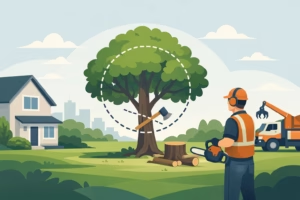
Many residential tree projects happen in confined spaces. A mature tree may stand between a house and a fence, overhang a garage, or extend over a neighbor’s yard. In these situations, removal often requires controlled lowering, careful rigging, and a clear drop-zone plan.
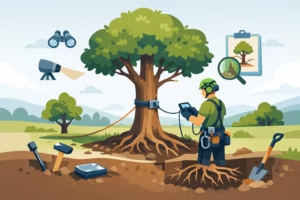
An insured company has a direct business reason to take those precautions seriously. Protecting nearby structures is not simply good customer service. It is central to performing responsible tree work. Before the job begins, the crew should assess access, tree condition, obstacles, traffic, utilities, and the safest method for completing the work.
Coverage related to worker injuries
Tree work carries real physical risks. Climbers, ground crews, and equipment operators can be injured by falls, saws, falling limbs, uneven ground, and changing weather conditions. Workers’ compensation coverage, where applicable, helps protect employees injured while doing their jobs.
For a property owner, that matters because hiring an uninsured worker can create unwanted legal and financial complications after an injury. A professional company should protect its team as well as its customers. Crews who are properly trained, equipped, and covered are better positioned to focus on the job safely.
Greater accountability from start to finish
Insurance is not a guarantee of quality, but it is a meaningful sign that a company operates as a legitimate business. Established tree service providers understand that customers need clear communication, written estimates, safe work practices, and a reliable plan for cleanup.
That level of accountability is especially valuable when a project involves several services, such as tree removal followed by stump grinding, limb hauling, or storm debris cleanup. You want one team that can explain the scope, protect the site, and leave the property in orderly condition.
Insurance, licensing, and safety standards are different
Homeowners often hear the words licensed, bonded, and insured used together. They are related trust signals, but they do not mean the same thing.
Licensing generally shows that a business meets state or local requirements to operate. Insurance can provide financial protection for covered property damage or injuries. A bond may offer a separate form of consumer protection under specific conditions. Requirements vary by location and by the type of work being performed, so it is reasonable to ask a contractor what credentials and coverage apply to your project.
Safety standards are another category. Compliance with OSHA regulations and ANSI standards speaks to how a company approaches jobsite safety and professional tree care. A company can carry insurance and still cut corners. That is why homeowners should consider the whole picture: insurance documentation, experience, training, work methods, equipment, reviews, and the clarity of the estimate.
When insurance is especially important
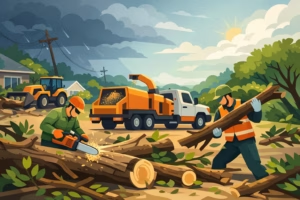
Every tree project deserves careful contractor screening, but some situations have higher stakes. Emergency storm work is one example. After severe weather, damaged trees may be under tension, tangled in other branches, or resting against structures. The pressure to act quickly is understandable, yet it should not lead to hiring the first person with a chainsaw who arrives at the door.
Removal near homes, driveways, roads, utility lines, or neighboring properties also requires a qualified and insured team. The same is true for tall trees, dead or decaying trees, and trees with heavy limbs over commonly used areas. These jobs may require advanced rigging, specialized equipment, traffic awareness, or coordination with the utility provider.
Routine pruning can carry risk as well, particularly when a tree has poor structure or limbs extend over a building. Proper pruning is not simply removing as much growth as possible. It requires an understanding of tree health, branch unions, weight distribution, and the long-term structure of the tree.
Questions to ask before you hire
A dependable tree company should welcome practical questions. Start by asking whether the company is insured and whether it can provide a current certificate of insurance. Confirm that its coverage is appropriate for the work being performed, rather than accepting a vague verbal assurance.
Ask how the crew plans to protect your home, landscaping, driveway, and neighboring property. For removals, find out whether the tree will be climbed and dismantled in sections, taken down with equipment, or accessed by another method. There is no single best approach for every job. The right method depends on the tree’s condition, available space, hazards, and access.
You should also ask what is included in the estimate. Will debris be removed? Is stump grinding included or quoted separately? Who is responsible for permits if they are needed? What happens if the crew finds hidden decay or a condition that changes the scope of work? Clear answers upfront prevent misunderstandings later.
Be cautious when a price seems dramatically lower than every other estimate. Lower cost can sometimes reflect a simpler job plan or reduced overhead, but it can also signal missing insurance, inadequate equipment, or unsafe shortcuts. Fair pricing should be paired with clear documentation and a crew capable of doing the work correctly.
A safer choice for Vancouver-area properties
At M & R Tree Services, safe, reliable tree care means treating every property with respect and preparing for the conditions that make each job unique. From careful pruning to emergency storm cleanup, homeowners deserve a team that works with professional standards and communicates clearly before work begins.
If a tree is threatening your home, blocking access, showing signs of decline, or simply overdue for professional care, ask for a clear assessment and proof of appropriate coverage. Taking that extra step before the first cut helps protect your property and gives you confidence that the work is in capable hands.