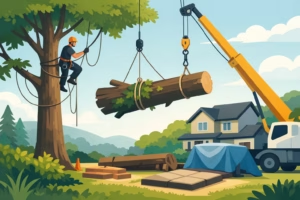
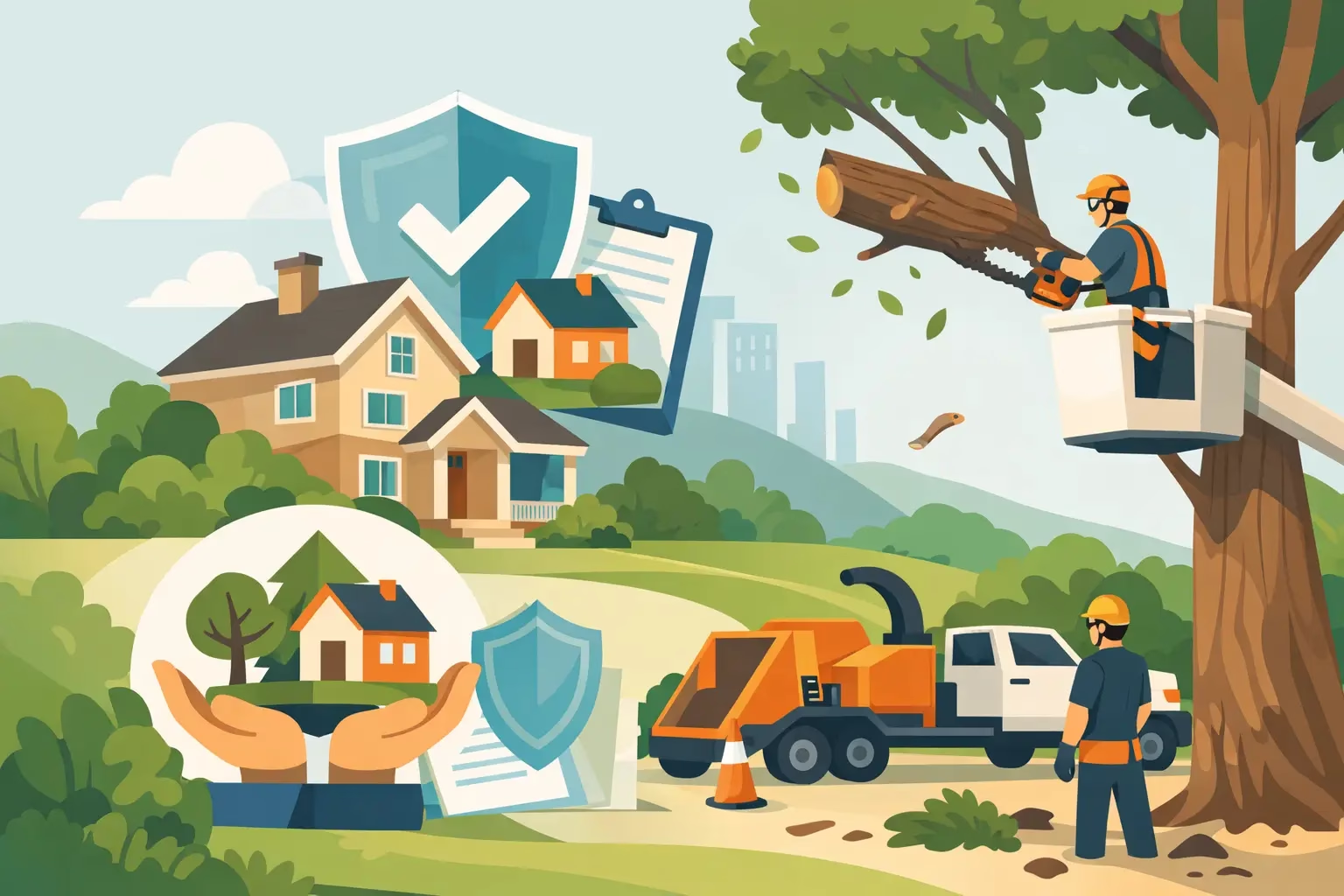
A fallen limb can damage a roof in seconds. Removing the rest of the tree may take a skilled crew, specialized equipment, traffic control, and work near power lines or neighboring property. That is why tree service insurance requirements should be part of every hiring decision, not a detail discussed after damage occurs.
For homeowners and property managers in Vancouver, Washington, proof of insurance is one of the clearest signs that a tree company takes safety and accountability seriously. Price matters, but a lower quote can become very expensive if an uninsured worker is injured or a tree removal goes wrong.
What tree service insurance requirements mean
There is no single insurance policy called “tree service insurance.” Instead, a qualified company carries a combination of coverages designed for the risks of pruning, climbing, rigging, crane work, stump grinding, hauling, and emergency storm response.
The exact legal requirements can vary by state, the company’s business structure, the type of work, and the contract. Washington and Oregon can also have different registration, licensing, and employment requirements. A reputable contractor should understand the rules that apply where the work is being performed and be prepared to provide current documentation before starting.
For a property owner, the practical standard is straightforward: ask what coverage is in place, verify that it is current, and make sure it fits the work being quoted.
The coverage a professional tree company should carry
General liability insurance
General liability coverage helps protect against third-party property damage and certain injury claims. If a limb strikes your fence, a truck is damaged during a removal, or debris damages a neighbor’s property, this is generally the policy expected to respond.
Coverage limits matter. A small pruning job over an open yard has different exposure than dismantling a large dead tree above a home, garage, driveway, or utility line. The right limits depend on the job, but a company should be able to discuss its coverage confidently rather than offering vague assurances that it is “fully insured.”
General liability does not automatically mean every loss will be covered. Policies contain conditions and exclusions, and an insurer reviews the facts of each claim. Still, active liability coverage is a baseline requirement for responsible tree work.
Workers’ compensation coverage
Tree work is physically demanding and high risk. Climbers, ground crews, equipment operators, and emergency-response teams can be exposed to falls, chainsaw injuries, struck-by hazards, and electrical hazards. Workers’ compensation coverage is intended to provide benefits when employees are hurt on the job.
This protection matters to the homeowner because an injured worker may otherwise look for recovery from the property owner or other responsible parties. Do not assume a crew is covered because the company has a truck, branded shirts, or a business card. Ask directly whether the people performing the work are employees or subcontractors and whether workers’ compensation coverage applies.
A company that uses subcontractors should also have a process for verifying their insurance. The homeowner should not have to sort out who employed whom after an accident.
Commercial auto insurance
Tree crews move chippers, bucket trucks, trailers, stump grinders, logs, and heavy equipment. Personal auto policies may not provide appropriate coverage for vehicles used in a commercial operation. Commercial auto insurance helps address accidents involving company vehicles while traveling to, from, or during a job.
It may seem separate from the tree work itself, but it is not. A loaded trailer, a truck positioned in a narrow driveway, or equipment being moved on a public street creates real exposure. Commercial auto coverage is another sign that a company operates as a professional business.
Equipment and umbrella coverage
Equipment coverage protects the company’s own saws, chippers, trucks, and machinery. It is not usually the homeowner’s main concern, but it supports reliable operations when equipment is damaged or stolen.
An umbrella or excess liability policy provides additional protection above the limits of underlying liability policies. It may be especially relevant for large removals, commercial sites, projects near high-value structures, or work involving substantial property exposure. Not every routine pruning job needs the same insurance profile, which is why the job scope should guide the conversation.
Insurance is not the same as a bond, license, or permit
These terms are often used together, but they serve different purposes. Insurance addresses covered losses and claims. A contractor bond may provide a limited source of financial protection if a contractor fails to meet certain obligations. Registration or licensing shows that a business has met applicable state or local requirements. A permit may be needed for a specific tree removal, protected tree, right-of-way, or other local condition.
None of these replaces the others. A licensed business can still have expired insurance. An insured business may still need a permit before removing a tree. Before work begins, confirm the company’s credentials and ask whether local rules, utility coordination, or homeowner association approval affect the project.
How to verify a tree company’s insurance
A legitimate company should not be offended by reasonable questions about insurance. Tree removal can affect your home, your neighbors, and the crew working on site. Asking for proof is good property management.
Request a certificate of insurance that identifies the insured business, the insurer, the policy type, and the effective dates. Compare the business name on the certificate with the name on the estimate and contract. If the names do not match, ask why. A trade name, parent company, or subcontractor relationship may be legitimate, but it should be clear.
For larger or higher-risk work, call the insurance agency listed on the certificate and verify that the policy is active. Do not rely only on a screenshot sent by text or an old certificate from a previous year. You can also ask whether the policy covers the type of tree work being performed, particularly if the project involves cranes, elevated work, line clearance, or subcontracted labor.
Some commercial property managers may request to be named as an additional insured for a specific project. That can be appropriate in certain contracts, but it is not automatically necessary for a typical residential job. The company’s insurer or agent can explain whether it is available and what it means.
Warning signs that deserve a closer look
Be cautious when a contractor says insurance is unnecessary because the job is small, asks you to pull a permit in your own name without explaining why, or refuses to provide documentation before collecting a deposit. Other concerns include cash-only pressure, no written scope of work, an unusually low price for dangerous removal work, and a crew that cannot identify who employs them.
Insurance alone is not proof of quality. It should sit alongside a clear written estimate, defined cleanup expectations, appropriate equipment, trained personnel, and safe work practices. A company should also evaluate hazards before cutting begins, including decay, lean, access limitations, underground obstacles, overhead utilities, and nearby structures.
Why safety standards still matter after insurance is verified
Insurance is a financial backstop, not a substitute for prevention. The best outcome is a job completed without injury, property damage, or an insurance claim.
Professional tree work should be planned around recognized safety practices, including proper personal protective equipment, controlled drop zones, sound rigging methods, equipment inspections, and crew communication. OSHA requirements and ANSI tree care standards help establish the practices expected in a professional operation. They matter during routine trimming and matter even more when a storm has left a tree unstable.
Emergency situations can make homeowners feel pressure to hire the first available crew. If a tree has fallen on a structure, blocks access, or presents an immediate hazard, keep people away from the area and contact qualified help. If electrical lines are involved, treat the situation as an emergency and contact the utility provider before any tree work begins.
Choose protection that matches the risk
The right tree company will provide more than a verbal promise. It will explain the work, identify the risks, carry appropriate coverage, and perform the job with care for your property and the people around it. At M & R Tree Services, that commitment includes professional tree care built around safe work practices, clear communication, and dependable local service.
Before approving your next tree removal, pruning, or storm cleanup project, take a few minutes to review the insurance documentation and written scope. That small step can help protect your home, your budget, and everyone on the job site.